
Idea 1
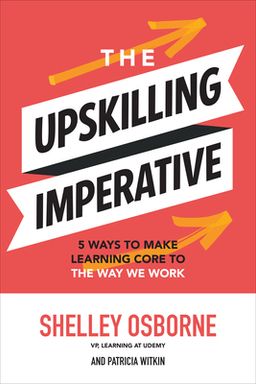
The Upskilling Imperative: Building a Culture of Continuous Learning
How can you keep your skills—and your team—relevant in a world that changes faster than ever? In The Upskilling Imperative, Shelley Osborne, Vice President of Learning at Udemy, argues that the only sustainable advantage in today’s workplace is the capacity to learn continuously. The new career mantra is simple: if you stop learning, you stop leading. Osborne contends that the modern world of automation, AI, and shifting technology makes learning inseparable from work itself, and that companies who fail to build learning cultures will fall behind.
This book is both a manifesto and a playbook for embedding learning into the DNA of organizations. Osborne moves beyond the outdated image of training as a boring, one-time compliance event and presents learning as a dynamic, shared responsibility that drives engagement, creativity, and organizational agility. She explores why traditional development programs no longer work, what science now tells us about how adults learn best, and how leaders can foster psychological safety where people can fail, reflect, and grow. Most importantly, she presents five core practices for creating a true learning culture: fostering agile learners, making feedback fuel growth, thinking like marketers, integrating learning into the workflow, and signaling its value daily.
From Job Security to Learnability
Osborne opens by diagnosing a major shift in the world of work: the half-life of skills has shrunk to about five years, while careers can last over five decades. In this new era, neither employees nor organizations can afford complacency. Upskilling—continually adding new competencies to stay relevant—is no longer optional. Rather than fearing the speed of technological change, Osborne sees it as an invitation to reimagine learning as an ongoing, energizing process that fuels satisfaction and innovation.
She calls this the “upskilling imperative.” Companies that embed ongoing learning into every level of their operations not only retain talent but also become more resilient. Employees, meanwhile, must see learning as a lifelong journey rather than a phase that ended with school. For them, professional joy and psychological safety come from staying in motion—constantly evolving their skills and perspectives.
Why Traditional Training Fails
Osborne draws on both her experience as a classroom teacher and corporate learning leader to expose why conventional training feels lifeless. It’s often mandatory, generic, and disconnected from real work. “Training,” she notes, has long been treated as punishment or reward, not a vital aspect of performance. In contrast, modern workers—especially Millennials and Gen Z—expect on-demand, personalized, engaging learning experiences that mirror the digital ecosystems they already use daily.
Learning science supports this shift. Osborne introduces research on the forgetting curve (Hermann Ebbinghaus), “spaced repetition,” and cognitive load theory. These show that true learning happens when we apply information in meaningful contexts, revisit it over time, and feel safe enough to experiment. Neuroscience and behavioral psychology confirm that fear and boredom kill learning, while trust, curiosity, and emotion ignite it. (This echoes insights from Carol Dweck’s Mindset and Brené Brown’s work on vulnerability.)
What a Learning Culture Looks Like
For Osborne, a learning culture goes beyond training programs—it’s a living ecosystem. Everyone, from executives to interns, “owns” learning. L&D professionals become facilitators, not gatekeepers. Learning becomes democratized; access to growth isn’t limited to top performers. Managers evolve into coaches, feedback conversations become everyday events, and growth mindset becomes the norm. Learning happens inside the flow of work rather than outside of it.
Osborne draws on examples from organizations like Udemy, Accenture, and PCL Construction. At Udemy, she institutionalized programs like DEAL Hour—Drop Everything And Learn—where everyone pauses work to learn together. Accenture’s “Durable Learning” model illustrates how learning science principles—like relevance, effort, spacing, and social learning—build long-term retention. At PCL Construction, continuous development is woven into career paths, with leadership programs for all employees, not just executives. These stories show that when learning becomes routine and visible, engagement and innovation skyrocket.
The Five Ways to Build a Learning Core
The book’s heart is structured around five powerful practices that any organization can adopt:
- Develop and Foster Agile Learners: Encourage lifelong adaptability and curiosity. Make learning accessible, self-directed, and visible at all levels.
- Feedback Is Fuel: Create a feedback-safe culture where growth replaces fear, honest conversation sparks improvement, and reflection builds momentum.
- Think Like a Marketer: Promote learning with creativity and storytelling—make it attractive, meaningful, and contagious.
- Put Learning into the Flow of Work: Remove barriers; make learning frictionless and intertwined with everyday tasks.
- Signal the Value of Learning: Let leadership model learning behavior and celebrate it publicly.
Later chapters expand on how to make the business case for learning—connecting upskilling to measurable results like retention, agility, and innovation—and how to maintain momentum over time. Osborne argues that learning cultures are organic and must be continuously refreshed. Like organisms, they survive through curiosity and adaptation.
Why This Matters Now
Osborne’s message arrives in the age of remote work, automation, and rapid disruption. When uncertainty is the norm, learning is no longer the supportive “side dish” to work—it’s the main course. The organizations that will thrive are those whose people feel both confident and curious about change, not rattled by it. The same applies to individuals building careers that must span multiple decades and industries; learnability is now the ultimate form of job security.
In short, The Upskilling Imperative is both an invitation and a challenge. It asks: are you willing to make learning a natural part of who you are and how your organization operates? If the answer is yes, then what follows is a clear roadmap for doing just that—one that blends science, heart, and strategy into a vision for work that’s both human and future-ready.