
Idea 1
The Art of Thriving in Uncertainty
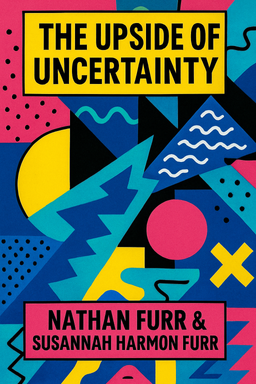
Most people treat uncertainty as a threat—a condition to escape or eliminate. Yet the book argues the opposite: uncertainty is the birthplace of possibility. You are biologically wired to fear the unknown because evolution rewarded caution, but in modern life those instincts often misfire. The authors propose reframing this fear as fuel for creativity, growth, and discovery. The central premise: how you frame uncertainty determines how you experience and respond to it.
This shift starts with perception. Behavioral science (Kahneman and Tversky’s framing effect) shows that you react not just to facts but to how they are presented. The same reality—95% success vs. 5% failure—feels radically different depending on the frame. Likewise, when you reframe the unknown as a doorway to learning, your brain moves from defensive avoidance to exploratory curiosity. That mental switch sets off a cascade: you feel safer, you act sooner, and you see new possibilities.
From Threat to Opportunity
Uncertainty can be intentionally reinterpreted. The evolutionary frame—“uncertainty is danger”—can be replaced with a transilience frame—“possibility always brings uncertainty.” Amy and Michael, an expatriate couple facing job loss, adopted this mindset and treated their limbo as a degree program in uncertainty. Instead of panicking, they explored patiently and discovered fitting career and housing options. You can do the same: call discomfort an experiment, not a verdict.
Reverse Insurance and the Learning Zone
Complete safety can stunt life’s spark. The authors coin “reverse insurance”—the idea that too much certainty causes stagnation, while moderate uncertainty nurtures creativity. Like a thermometer, if your uncertainty temperature runs too low, you’re bored; too high, you’re panicked. Aim for the learning zone—where challenge feels exciting but manageable. Restauranteurs, inventors, and creatives often keep one process deliberately unstable to invite fresh ideas.
Tools for Navigation
The book organizes its practical tools around an uncertainty first-aid cross: four interlocking strategies—Reframe (north), Prime (east), Do (south), and Sustain (west). You use them like a compass whenever life feels foggy. Reframe changes perception; Prime prepares your runway; Do helps you act and experiment; Sustain builds resilience for long journeys. Clare and David Hieatt’s Hiut Denim story exemplifies all four: they reframed rural decline as a craft revival, primed by lowering expenses, acted by building a tiny factory, and sustained through community rituals until success emerged.
Building Practical Readiness
The book teaches preparation as a companion to courage. Risk maps (like Tina Seelig’s risk‑o‑meter) help you see where fear belongs and where opportunity hides. A portfolio of personal real options—side projects, savings, fallback networks—creates freedom to experiment. Runways (time + money to iterate) and landing strips (backup choices) help you leap without panic. The message: priming your life enables you to dance with uncertainty rather than freeze before it.
Action and Adaptation
Doing replaces guessing. Through bricolage (making do with what’s at hand), pivoting (using learning to shift direction), and experimentation (testing fast and cheap), the book encourages real-world action over analysis paralysis. The Danish wind engineers who built crude turbines out of truck parts succeeded sooner than their U.S. lab competitors—a reminder that messy iteration beats theoretical perfection. Each test, even failed, becomes a shot toward insight—the authors call this the “10,000 shots” mindset: volume creates luck.
Values, Not Mercenary Goals
Anchoring action in personal values makes you failure‑proof. Pursuing learning, dignity, or care—as DHH, Naomi Shihab Nye, or the Hieatts do—protects meaning even when outcomes fluctuate. Values-based decisions generate persistence, empathy, and consistent direction amid volatility. When you act from values, each result reaffirms who you are, not just what you achieve.
Emotional and Cognitive Cleanliness
Sustain tools combine emotional hygiene and reality checks. Being your own doula (a guide through transitions) means caring for your feelings the way you’d support someone in labor—with naming, soothing, and small comforts. Hope, routines, and community sustain exploration. Meanwhile, reality checks—sorting knowns from unknowns, probabilistic thinking, and learned optimism—keep your perspective balanced, so anxiety becomes manageable and actionable.
Inviting Magic and Serendipity
The book closes with a paradox: uncertainty sometimes delivers gifts you could never engineer. By living “as if” your desired reality already exists (Ellen Langer’s experiment with hotel cleaners or Václav Havel’s politics of truthful living), you magnetize allies and coincidences. Helping others amplifies luck through reciprocity, and facing mortality reminds you to act boldly while meaning still counts. Magic happens when preparation meets openness.
Taken together, these lessons form a practical philosophy for uncertain times. You reframe fear as possibility, prime for safe experiments, act through bricolage and fast cycles, sustain emotional and cognitive clarity, and invite meaning and magic. Uncertainty stops being a storm to survive—it becomes the wind that carries you forward.