
Idea 1
Rethinking Stress: Turning Pressure into Power
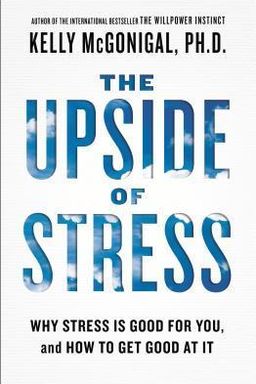
Do you ever wish your days were less stressful? Kelly McGonigal’s The Upside of Stress argues that you shouldn’t try to escape stress at all. In fact, she claims stress isn’t the enemy—it’s an essential part of a meaningful life. Drawing on cutting-edge research and real-world applications, McGonigal contends that how you think about stress—your stress mindset—is what determines whether it harms or helps you. By seeing stress as something that energizes, connects, and strengthens you, you can turn everyday pressures into sources of courage, growth, and purpose.
From Stress as Toxic to Stress as Transformative
For decades, scientific and popular culture messages have warned us that stress kills—raising our risk of everything from colds and heart disease to depression and early death. Yet McGonigal’s change of heart began when she read a massive study showing that stress increased mortality only for those who believed it was harmful. Those who experienced high stress but viewed it as manageable or meaningful actually lived longer than people with little stress. This paradox overturned the author’s own career-long teaching that stress was toxic and led her to investigate a simple but radical idea: what if believing stress is bad for you is actually the real problem?
Across the book, McGonigal reframes stress not as a sign of failure or danger, but as information about what you value. Stress arises, she insists, whenever something important to you is at stake—your work, your family, your goals, or your identity. When you understand this, stress becomes a guide rather than an obstacle.
The Power of Mindset
Borrowing from the work of psychologist Carol Dweck and mindset science, McGonigal explains that your beliefs about stress shape everything from your emotions to your physiology. She describes two core perspectives: the “stress-is-harmful” mindset, which leads people to avoid challenges and engage in unhealthy coping, and the “stress-is-enhancing” mindset, which helps people find meaning, connect with others, and cultivate resilience. This subtle mental shift has measurable biological consequences. In one of Alia Crum’s landmark studies at Harvard, participants who watched a three-minute video describing stress as energizing showed higher levels of DHEA—a hormone that helps the brain grow stronger—during a job interview than those who viewed stress as damaging.
McGonigal uses dozens of studies like this to show that “your mind can shape your biochemistry.” Simply viewing stress as energy for action can produce a healthier cardiovascular response and even improve performance under pressure. Harvard researcher Jeremy Jamieson found that students who reframed exam anxiety as helpful performed better on the GRE months later. Stress, in other words, changes its meaning—and its impact—depending on your mindset.
Three Powers of Stress: Energy, Connection, and Growth
McGonigal structures her framework around three benefits of embracing stress: Engage, Connect, and Grow. These map onto what she calls the new science of stress responses:
- Engage: Stress mobilizes energy for action. When you interpret anxiety as excitement, adrenaline becomes a performance enhancer instead of a saboteur.
- Connect: Stress releases oxytocin, increasing empathy and courage. It strengthens social bonds and motivates caregiving, transforming fear into compassion.
- Grow: Stress helps you learn from hardship. It fosters resilience, meaning-making, and post-traumatic growth through reflection and community.
Each part of the book delves into one of these powers, showing how to transform stress from threat into resource. You’ll learn how adrenaline can sharpen focus instead of inducing panic, how caring for others under strain enhances physical health, and how even trauma can lead to deep psychological growth when we find meaning in adversity.
Why Rethinking Stress Matters
Stress is unavoidable; meaningfully engaging with life requires it. Yet most stress-reduction advice rests on avoidance—an impossible goal that often leads to disengagement and despair. McGonigal urges readers to replace this futile pursuit with a stress-embracing orientation built on trust in your body and your capacity to cope. “A meaningful life is a stressful life,” she writes, reminding us that the moments we value most—raising children, working toward a dream, or fighting for justice—inevitably bring tension.
Ultimately, The Upside of Stress is a practical manifesto for resilience. It’s grounded in scientific rigor and softened by human stories: students conquering exam anxiety through reframing, a yoga instructor turning panic into purpose, soldiers learning to view adrenaline as courage, and trauma survivors transforming pain into service. The real message? You don’t need a stress-free life—you need a better relationship with stress. That’s how stress becomes not a sign you’re breaking down, but a signal that you’re showing up for what matters most.