
Idea 1
Living Beyond Statistics: The Human Equation
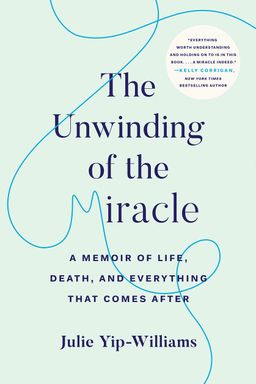
How can you live fully when your prognosis is spelled out in numbers? In this book, Julie confronts metastatic colon cancer while excavating her family's buried secrets, her immigrant past, and her drive to survive. The work argues that living beyond a diagnosis means reclaiming agency from statistics and destiny. Julie contends that although numbers, probabilities, and medical data dictate treatment, they should never dictate the meaning of your life.
This narrative unfolds through survival in many forms—statistical, familial, spiritual, and emotional. First comes the tension between numbers and personhood: six-percent survival rates threaten to reduce her existence to mathematics. Julie and her husband Josh wrestle with those numbers, reframing them as tools for planning rather than as verdicts. Then the book dives into ancestral trauma—the revelation that Julie’s grandmother ordered her death at birth because she was born blind. Surviving that episode becomes a metaphor for defying fatalism again decades later when cancer returns.
From statistics to story
Julie learns that numbers offer comfort to clinicians and families seeking order in chaos but fail as predictors of individual destiny. She uses them tactically—analyzing chemotherapy odds, surgical benefits, and trial data—yet refuses to shrink herself to a percentage. Josh’s rational calculations raise her survival odds from six to sixty percent through reasoning about fitness, age, and care quality. Julie’s counterbalance is narrative defiance; she remembers surviving infancy, the Vietnam War, refugee boat journeys, and multiple surgeries, reminding herself that she’s beaten probabilities all her life.
The legacy of survival and secrecy
The family secret—the attempt to kill her as a newborn—reveals a legacy of survival haunted by shame. Vietnamese poverty and superstition framed deformity as bad luck, explaining how moral horror grew out of scarcity and fear. This history shapes Julie’s adult psyche: she feels compelled to prove her worth, equating accomplishment and love with continued existence. The Times Square billboard celebrating her final chemo session becomes a public antidote to the lifelong silence of being unwanted. Her decision to disclose the family secret transforms inherited guilt into collective healing, challenging cultural norms that demanded quiet compliance.
The practical spirituality of bargaining
Julie’s relationship with faith is transactional and passionate. Influenced by Buddhist ancestor rites and American Christianity, she negotiates with God: if she must have cancer, protect her family; if she cannot be cured, let her children thrive. This bargaining fuses philosophy with action—each prayer is matched by disciplined planning. Hope behaves like a stubborn organism she can neither destroy nor fully trust. In her world, faith is not passive belief but dialogue and confrontation with fate.
Preparing children and shaping legacy
Julie writes letters to her daughters, pairing mundane household instructions with courage lessons: life is not fair; pain enlarges compassion; grief can be transformed into love. She plans physical and emotional continuity—designing a home with radiant floors, setting up mentors, even getting a dog named Chipper to sustain daily rhythm after she's gone. Each act of planning expresses love through practicality. She knows death cannot be prevented, but unpreparedness can be. (Compare with Atul Gawande’s Being Mortal: both argue for preparation as liberation.)
Travel, solitude, and inner steadiness
Before cancer, Julie traveled alone across continents. That solitude becomes her rehearsal for facing medical isolation—the MRI tube is another uncharted terrain, chemo another endurance trek. Solitude builds muscle for navigating uncertainty with calm, teaching her that independence and self-reliance are preparatory spiritual disciplines for crisis.
Acceptance and full living
Toward the end, Julie redefines invincibility not as endless fight but as fearless presence. Quoting Camus, she embodies the 'invincible summer' within winter fatigue. Acceptance doesn’t mean surrender; it liberates attention from constant fear of death to deliberate acts of living—music lessons, family dinners, travel to the Galápagos. She recognizes paralysis, not cancer, as the real thief of joy.
Community medicine and love’s infrastructure
Julie’s story culminates in acts of communal care: nurses who hold her hand, cousins who arrange a billboard, and support groups that share loss openly. She learns that compassion is a form of medicine, transforming sterile hospitals into human environments. Through community rituals she replaces inherited isolation with collective resilience.
In its totality, this book is about the mathematics of survival, the metaphysics of meaning, and the morality of preparation. It teaches you that hope must coexist with realism, rage with gratitude, and planning with surrender—and that life, even in decline, can be an act of profound creation.