
Idea 1
You Already Have What It Takes to Succeed
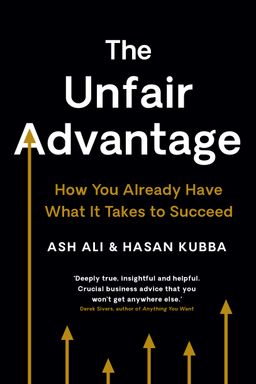
Have you ever looked at a wildly successful entrepreneur and wondered, “What do they have that I don’t?” In The Unfair Advantage: How You Already Have What It Takes to Succeed, founders Ash Ali and Hasan Kubba set out to answer that exact question. Their core argument flips the usual narrative of startup success on its head: it’s not a level playing field, and success isn’t solely the product of hard work or intelligence. Instead, it’s built on a constellation of circumstances, traits, and opportunities—what they call your Unfair Advantages.
Ali and Kubba argue that by identifying and leveraging these unique advantages—rather than chasing someone else’s blueprint—you can work smarter, not harder. The world may be unfair, but that unfairness can be used in your favor once you see clearly where your strengths lie.
The Myth of Meritocracy
Much of business literature celebrates a “hustle” culture, built around the seductive idea that endless hard work guarantees success. Ali and Kubba call this story a seductive lie. Life isn’t meritocratic; success depends not only on drive but on external factors such as wealth, connections, education, and timing. They use Evan Spiegel’s story—the privileged founder of Snapchat—as an emblem of this imbalance. Spiegel didn’t just have talent and ambition; he had wealthy parents, elite schooling, and mentorship from world-class business leaders. His success was built upon a mountain of existing advantages.
Rather than lamenting this inequality, the authors propose a new lens: accept the unfairness of life, identify what hand you were dealt, and play it wisely. Knowing that luck and privilege exist can give you peace and clarity instead of resentment or victimhood.
The Dual Engines of Success: Hard Work and Luck
Ali and Kubba insist that financial and entrepreneurial success is massively both—luck and hard work. They echo LinkedIn co-founder Reid Hoffman, who said his own achievements stem “massively from both.” The book analyzes stories like Oprah Winfrey’s—a woman whose improbable rise intertwined trauma, talent, and timing—and Warren Buffett’s, whose “ovarian lottery” of being born in mid-20th-century America gave him opportunities unavailable to most. Such examples illustrate the reality-growth mindset that the authors advocate: a practical blend of belief in personal agency and acceptance of randomness.
This balanced philosophy protects you from burnout and bitterness. If you lean too far into “it’s all luck,” you become passive. If you believe “it’s all you,” disillusionment awaits when effort doesn’t yield quick reward. Reality lies between: work relentlessly, but acknowledge forces beyond your control.
The MILES Framework
The authors translate their theory into a practical tool—the MILES Framework—a system for assessing your assets and advantages. Each letter stands for one critical factor of success:
- Money – the capital you possess or can raise.
- Intelligence & Insight – the way you see patterns, connect ideas, and learn.
- Location & Luck – being in the right place at the right time and knowing how to increase serendipity.
- Education & Expertise – what you know and the skills you’ve developed through both formal learning and self-teaching.
- Status – your network, reputation, and self-confidence.
At the foundation of MILES lies Mindset. It’s the one advantage everyone can cultivate, regardless of where they start. The authors stress that growth, perseverance, and vision determine how far your other advantages can take you. As they write, mindset is the fertile soil from which every other advantage grows.
Turning Disadvantages into Advantages
A defining insight of the book is that even seeming disadvantages can morph into power. Sara Blakely’s story—with her failed law career and years of rejection selling fax machines—proves that resilience and outsider perspective can drive innovation. Her frustration with traditional hosiery led to Spanx, the billion-dollar shapewear brand. Similarly, Tristan Walker turned his experience as a young Black man struggling with razor burn into a thriving company, Walker & Co. In both cases, hardship bred insight. You don’t need every advantage; you just need the right ones and the awareness to use them fully.
Why It Matters
Understanding unfair advantages reshapes how you define success. It eliminates guilt and envy—two emotions that poison motivation—and replaces them with clarity. You stop trying to become the next Elon Musk or Mark Zuckerberg and start building on your unique foundation. Whether your assets are cultural awareness, social empathy, or technical expertise, knowing your MILES allows you to grow deliberately instead of blindly hustling.
Ultimately, The Unfair Advantage helps you redefine what winning means. It’s not about competing on equal terms—it’s about identifying and amplifying what’s already in your corner. Life might be unfair, but if you learn to work the system rather than fight it, you really do have what it takes to succeed.