
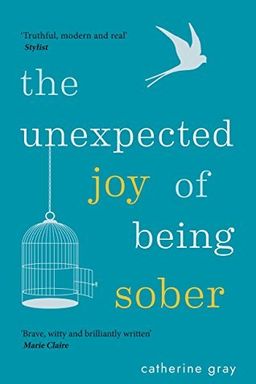
The Unexpected Joy of Being Sober cover

The Unexpected Joy of Being Sober

by Catherine Gray

In The Unexpected Joy of Being Sober, Catherine Gray reveals how giving up alcohol leads to unexpected happiness, improved health, and greater life satisfaction. Challenging societal norms, Gray offers practical insights and real-life experiences to showcase the rewarding journey of sobriety.

The Unexpected Joy of Choosing Sobriety

What if giving up alcohol could make your life bigger instead of smaller? In The Unexpected Joy of Being Sober, Catherine Gray dismantles the widespread illusion that drinking equals fun, freedom, and connection. She argues that sobriety is not a punishment or an admission of failure—it’s a reclamation of joy, authenticity, and clarity. Through personal stories and research, Gray invites you to reimagine life without the buzz, showing how refusing the bottle can open the door to genuine happiness.

The Cultural Myth of Drinking

For twenty years, Gray believed that alcohol was the gateway to technicolor living. With every celebration, heartbreak, or party, she reached for a drink. Society seemed to agree: memes, ads, and movies all painted booze as a liquid joy-maker. Yet when she found herself waking up in jail cells, losing relationships, and spiraling into shame, the fantasy began to crack. The book starts by confronting this myth head-on: alcohol has been anointed as the “fun king,” but Gray argues that it quietly erodes our bodies, our relationships, and our sense of self.

From Darkness to Light

Gray’s memoir unfolds through the lens of transformation—from excessive drinking to a fulfilled sober life. The first half plunges readers into the chaos of addiction: the blackouts, the broken promises, the desperate attempts at moderation. The second half, however, reveals the unexpected brilliance of life without alcohol. Sobriety, she learns, is not a grayscale existence but a vivid expansion of everything she thought she’d lose. She gains time, energy, money, and self-respect. She even discovers how to dance sober—something she once thought impossible.

Why This Book Matters

Gray’s work sits at the intersection of memoir and self-help. It is both a confession and a manual, created to start a more honest conversation about our societal relationship with alcohol. In her view, sobriety needs a “rebrand.” It’s not reserved for the broken or the failed; it’s an empowerment choice. Through humor and vulnerability, she reframes addiction not as a moral weakness but as a common, understandable human response to an addictive substance. You don’t have to hit rock bottom to benefit from the joy of being sober.

The Themes You’ll Explore

Throughout the book, Gray explores several interconnected themes:

  • How the culture of drinking persuades us to ignore addiction.
  • Why failed moderation attempts teach us that abstinence is simpler than control.
  • The emotional detox that comes when you stop numbing feelings with alcohol.
  • The neuroscience behind habit formation, cravings, and healing.
  • The practical side of living sober—socializing, dating, and finding joy without drinking.

A Movement, Not Just a Memoir

Gray’s book is part of a growing “quit lit” movement (alongside Annie Grace’s This Naked Mind and Holly Whitaker’s Quit Like a Woman). But her approach is especially personal—shifting from confessional darkness to radiant optimism. She dismantles shame around addiction and replaces it with compassion. Her journey mirrors an emerging cultural shift: from seeing sobriety as restriction to seeing it as liberation.

Key message: Sobriety isn’t the absence of something—it’s the presence of everything that matters. It’s stepping into real life, unfiltered, and finding that clarity feels better than any buzz ever could.


The Trap of Moderation

Gray confesses that, for years, she tried to be a “normal drinker.” Like many professionals and friends around her, she saw the moderate drinker as the holy grail—a person who could enjoy wine ‘responsibly.’ Her failed moderation attempts are both comical and heartbreaking: hiding alcohol in gym bags, counting units in golden notebooks, switching from wine to cider, and leaving notes to herself that read, ‘THREE BEERS ONLY.’

Why It Doesn’t Work

Alcohol rewires the brain to seek more. As one glass lowers inhibition, the next becomes inevitable. Gray explains this cycle using expert insights from psychotherapist Hilda Burke and neuroscientist Alex Korb: moderation fails because alcohol is a disinhibitor and addictive by nature. Once it enters your system, the part of your brain responsible for restraint goes offline.

“The chains of habit are too light to be felt until they are too strong to be broken,” Gray quotes Samuel Johnson—capturing how slowly moderation morphs into dependence.

The Mirage of Control

Gray’s golden notebook becomes a symbol of self-delusion. Every rule—no free drinks parties, drink water between rounds, limit to three nights per week—inevitably collapses. The effort proves exhausting. She learns the paradox that it takes far more energy to control drinking than to stop altogether. This realization shifts her mindset from self-blame to self-liberation: she’s not weak; she’s fighting chemistry.

Learning From Failure

Every failed attempt becomes a lesson, not a defeat. Gray reframes relapse as research. Each experiment teaches her something about her triggers and the futility of moderation. It’s through these small humiliations—like watering down a friend’s gin and replacing bottles from the bin—that she learns abstinence is simpler, lighter, and ultimately the only sustainable path forward.


Society’s Alcohol Blind Spot

Gray broadens the conversation from personal recovery to cultural conditioning. She argues that our society doesn’t just tolerate alcohol—it celebrates it, markets it, and shames those who refuse it. Sobriety, she says, suffers from a PR problem. Calling sobriety 'boring' and drinking 'fun' has become a collective delusion.

The Matrix Analogy

Gray compares the drinking culture to The Matrix: millions of people plugged into a false reality, believing that happiness depends on clinking glasses. Living sober feels like unplugging—you suddenly see what others cannot. Everywhere she looks, she spots “drink-pushing” messages: witty pub boards, glamorous TV characters, gift cards that equate wine with hugs. Once you unplug, the absurdity of it all becomes glaring.

The Economics of Addiction

Gray exposes how governments and industries profit from alcohol dependence. In the UK, for instance, alcohol tax revenue far exceeds public costs from addiction treatment. This economic paradox keeps the myth alive. She cites figures showing more Britons die from alcohol-related causes than traffic accidents, yet we continue to glamorize drinking on screen and in advertising.

Rebranding Sobriety

The book argues that we need to normalize not drinking. Sobriety should be seen like veganism—an empowered lifestyle choice, not a shameful confession. Gray joins voices like Annie Grace (This Naked Mind) and Holly Whitaker (Quit Like a Woman) in redefining abstinence as radical self-care. As she says, “Sobriety is the new drunk.”


Addictive Voice Recognition

One of Gray’s most transformative lessons is learning to separate her addictive impulses from her authentic self. Using Jack Trimpey’s Rational Recovery method (Addictive Voice Recognition Therapy), she identifies the sly voice in her head—the one whispering, “Just one won’t hurt.”

Naming the Villain

Gray personifies her addictive voice as Voldemort—the serpentine manipulator inside her mind. When Voldemort whispers persuasive arguments for drinking (“It’s medicine for stress,” “It’s just one night”), she learns to mock him, debate him, and ultimately silence him. This externalization transforms guilt into strategy; the voice becomes an opponent, not her identity.

The Science of Decisions

Neuroscientist Alex Korb explains that making definitive decisions—such as “I don’t drink”—calms the brain’s limbic system. Uncertainty fuels anxiety; clarity quiets it. Gray echoes this by tattooing the phrase “nqtd” (“never question the decision”) after her friend Holly Whitaker’s motto. Each time she refuses the debate, her peace grows stronger.

Why It Works

Addictive voice recognition is about awareness. Once you identify the voice, you can choose not to obey it. In doing so, you starve it of energy until it fades into silence. For Gray, Voldemort shrinks from a booming tyrant to a squeaky toy. He no longer controls her choices.


The Neuroscience of Healing

Gray balances memoir with scientific insight, explaining what happens when addiction hijacks the brain. Drawing on neuroscientists Dr. Alex Korb and Dr. Marc Lewis, she reveals how drinking rewires neural pathways to treat alcohol as the solution to every stressor. Sobriety, then, is not just a moral choice—it’s neurological recovery.

From Addiction to Adaptation

Repeated drinking strengthens the brain’s reward circuits—the “Addictive Engine”—while weakening the prefrontal cortex, the rational ‘bridge’ that makes decisions. Gray relates this to everyday experiences: craving the first drink, losing control after the second, and horrifying overindulgence after the third. Over time, the bridge collapses.

Rewiring Takes Time

Sobriety begins the process of neuroplastic repair. Studies show the brain rebuilds healthy pathways within six months to a year of abstinence. Gray likens this to trading a chaotic motorway for a calm coastal road. The further she travels down sobriety, the stronger and smoother the trail becomes.

Exercise and Healing

She highlights the role of physical activity in repair—running, yoga, swimming—all of which stimulate the growth of new neurons in the hippocampus. Exercise becomes her substitute for alcohol: a natural dopamine trigger that restores joy instead of robbing it.


Learning to Socialize Sober

The social world can feel perilous when you stop drinking. Gray humorously calls it learning to ‘party in HD.’ Without alcohol blurring reality, every silence feels loud and every eye contact vivid. Yet over time, she finds socializing sober brings richer, more genuine connection than she ever imagined.

Facing the Fear

Gray recounts her first sober party—a night of sugar-fueled anxiety and awkward bathroom hiding. It’s comedic but relatable. Gradually, she learns coping strategies: leaving early using her “trapdoor technique,” carrying a soft drink at all times, and reframing vulnerability as strength. When she tells others she doesn’t drink, she discovers that honesty disarms judgment.

Authentic Connection

Without wine chatter and “fake bonds,” Gray’s friendships deepen. She writes that sober bonding is like cement—slow but solid—unlike the glue-stick relationships formed through booze. She begins to see that her old self was performing; her new self is participating. The reward is presence.

Redefining Fun

Gray discovers sober raves, tea bars, yoga events, and sunrise walks—new ways to celebrate that don’t end in hangovers. She learns to dance sober, laugh sober, and even attend weddings sober. The joy isn’t diminished; it’s multiplied. “Being sober,” she writes, “is the superpower of knowing you can trust yourself.”


Emotional Recovery and Mindfulness

Once the physical detox fades, emotional healing begins. Gray admits that quitting alcohol unleashed feelings she had numbed for decades—shame, grief, loneliness. But instead of drowning these emotions in wine, she learns to surf them through mindfulness.

Facing Feelings

Gray embraces the Buddhist idea that emotions are visitors, not permanent residents. She describes her inner critic as “Poor Little Rich Girl,” a mental guest who stomps around complaining about trivialities. Instead of battling her, Gray offers silent understanding until the storm passes. Techniques like naming emotions, breathing exercises, and guided meditation help her detach from destructive thought loops.

The Gift of the Golden Pause

The greatest gift of mindfulness, she says, is choice—the ability to pause before reacting. When panic rises or sadness hits, she practices a compassionate awareness: “I am not my thoughts.” This shift gives her sovereignty over her mind, something drinking had stolen. Emotional honesty becomes not a risk but a relief.

Living Awake

Sobriety, Gray finds, is a daily mindfulness practice. It’s living awake rather than asleep, seeing life in full color, even when it’s painful. As writer Matt Haig says in Reasons to Stay Alive, which she quotes, “You need to feel life’s terror to feel its wonder.” In that paradox lies the joy of being sober.


Sobriety as Liberation, Not Loss

By the book’s end, Gray reframes sobriety not as restriction but expansion. She argues that fear of deprivation keeps people trapped. Once you stop drinking, you realize you’re not losing pleasure—you’re reclaiming peace, time, and authenticity. Sobriety becomes a gateway to genuine joy.

The Joy-to-Freedom Ratio

For Gray, the math is simple: sobriety is 95% exquisite and 5% savage. Early recovery is tough—cravings, social awkwardness, emotional turbulence—but the long-term rewards dwarf those struggles. Hangover-free mornings, clear memories, better relationships, and financial stability all stack toward lasting happiness.

Reclaiming Self-Respect

Perhaps the most profound change is internal. She no longer wakes with dread or shame. Instead of running from herself, she stands firm. Her refrain—“I deserve not to drink”—captures the book’s ethos. Sobriety is self-worth made visible.

The Unexpected Joy

Ultimately, the “unexpected joy” is multidimensional: physical vitality, emotional serenity, creative freedom, and connection to the real world. Gray doesn’t promise perfection—her father’s death reminds her that grief still hurts—but she shows that pain endured sober brings growth, not destruction. Sobriety, she concludes, isn’t about waking up from the dream—it’s waking up into it.

Dig Deeper

Get personalized prompts to apply these lessons to your life and deepen your understanding.

Go Deeper

Get the Full Experience

Download Insight Books for AI-powered reflections, quizzes, and more.