
Idea 1
The Education of Pain and the Politics of Suffering
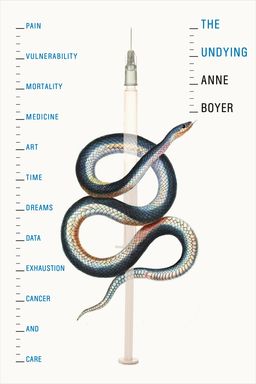
What does it mean to turn pain—something often thought of as isolating and mute—into a language powerful enough to speak back to the world? In The Undying, poet and essayist Anne Boyer explores this question through her own experience with aggressive, triple-negative breast cancer. The book asks how we come to understand illness not just as a private catastrophe but as a public indictment of the systems that profit from suffering. Boyer’s argument runs sharply against the grain of modern cancer narratives: where most see survival as proof of heroic self-management, she sees it as evidence of a social structure that demands suffering be made marketable.
Drawing from history, philosophy, literature, and her own body’s testimony, Boyer argues that pain doesn’t destroy language—it transforms it. She contends that the ways we narrate illness reveal our deepest politics: who gets cared for, who is abandoned, and who pays for the privilege to live. Her core claim is fierce and intimate—to be sick in this world is to become a mirror of its cruelties. Yet, she insists, this mirror can be turned back upon the world to show the truth of its arrangements.
Pain as a Radical Form of Knowledge
Boyer’s central concept of an "education in pain" reframes suffering as a form of political and poetic insight. Through chemotherapy, surgeries, and long months of recovery, she becomes the student of how pain not only disassembles the body but exposes the hidden machinery of power. Pain shows its paradoxical democracy: everyone can feel it, but unequal systems make some people endure it far more. She describes how hospitals, pharmaceutical companies, and neoliberal labor structures convert the sick into data points and consumers—how confinement to the bed turns into both solitude and surveillance.
Boyer draws on thinkers like Elaine Scarry and Hannah Arendt, who viewed pain as inexpressible. Against them, she writes that pain is not ineffable but forcibly silenced. Watching others flinch, hearing the cries of animals, feeling the phantom reactions of her amputated nerves—these become proof that pain speaks across bodies and species. Her writing insists that human empathy often fails not because pain is incomprehensible, but because society trains us not to listen.
Illness and the Market of Survival
One of Boyer’s major provocations concerns the myth of survivorship. She dismantles the pink-ribbon industries that have turned cancer into a spectacle of empowerment and consumption. The “awareness” economy, she notes, sells cure-themed cosmetics and fracking drills painted pink while ignoring racial and economic inequalities that determine who dies. The problem isn’t just who survives—it’s that the culture celebrates survival as a moral achievement rather than diagnosing the conditions that kill. Boyer’s portraits of online cancer communities, abandoned patients, and fraudulent medical studies reveal that health itself has become a neoliberal luxury.
Beauty, Violence, and the Broken Dictionary of Pain
Throughout the book, Boyer’s writing oscillates between lyric and critique—between wanting to make beauty of her suffering and hating that beauty for its false consolation. She transforms her experience into language that refuses pity and instead demands comprehension. She treats illness as a form of artistic resistance: each sentence reclaims the power that the world tries to take from the sick. “To write pain,” she suggests, “is to repair history’s failed language.” Her reflections align with those of writers like Audre Lorde and Kathy Acker, whose cancer works treated the body as both battlefield and text.
Ultimately, The Undying is not only a memoir of illness but a manifesto for how we might inhabit fragility differently. Boyer asks you to imagine pain as communication, illness as communal rather than private, and writing itself as an act of solidarity with the forsaken. When she survives, she refuses the title “survivor,” choosing instead to call herself undying—someone who remains aware, awake, and insubordinate within systems designed to make her disappear.