
Idea 1
Markets as Truth Machines
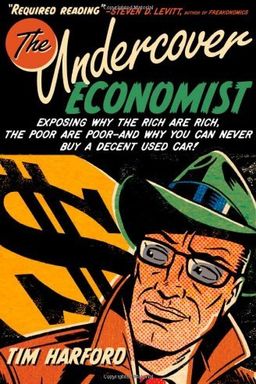
Why does a cup of coffee cost more at a station kiosk than at a quiet café around the corner? Why are beaches surrounded by luxury housing, and why do traffic jams persist even when new roads are built? In The Undercover Economist, Tim Harford argues that prices are not arbitrary; they are the economy’s truth-telling devices. They reveal scarcity, incentives, and hidden power. When markets function well, prices communicate vital information about costs and desires. When they fail, distortions emerge—rents, congestion, pollution, and corruption.
Harford blends historical insights, real-life examples, and intuitive logic to show how economic principles quietly shape our daily choices—from a cappuccino to driving, investing, or voting. The book teaches you how to read the hidden signals behind every price tag and how to discern when markets allocate resources efficiently and when they enrich insiders at others’ expense.
From Scarcity to Profits
Every economy begins with scarcity. David Ricardo’s 19th-century theory of rents explains how limited resources—fertile land, oil fields, or urban space—create differential rewards. Harford updates Ricardo’s logic to modern city landscapes: the landlord of a prime Starbucks site at a busy station exit can charge huge rent because location is scarce, not because coffee beans are expensive. Scarcity endows its owners—whether landholders, patent owners, or monopolists—with bargaining power.
You feel this scarcity when flats near Central Park or offices in London’s West End command astronomical prices. Some scarcity is natural (you can’t make more riverfront); some is artificial, created by regulation or cartels (for instance, London’s Green Belt limiting supply or OPEC restricting oil output). Learning to distinguish between natural and artificial scarcity helps you see whether high prices reward genuine value or exploitation.
The Price–Signal Connection
Harford’s “world of truth” imagines perfect markets where prices articulate the real marginal cost of everything. In such a world, people buy only when products are worth at least what they cost to make, and firms earn just enough to stay afloat. Prices act like broadcast beacons, aggregating information about costs, consumer preferences, and global shocks. You can trace a frost in Brazil or a drought in Kenya by watching how coffee or roofing material prices shift. Kenneth Arrow’s work complements this view: markets are efficient given fair starting positions, so redistribution should target endowments (who starts with what) rather than distort prices themselves.
In real economies, prices often lose truthfulness. Monopoly power, information problems, and externalities introduce lies and noise. Harford’s answer is not to scrap markets but to repair them—to restore incentives that make prices tell the truth again.
Information, Incentives, and Deviations from Truth
Markets fail when information is asymmetric or when players can hide their true costs and values. Akerlof’s “lemons” problem explains why car buyers overpay for junk and underpay for quality, driving good cars off the lot. In health insurance, the same logic causes escalating premiums and shrinking coverage as healthy people exit the pool. Spence’s signalling (costly education as quality proof) and Stiglitz’s screening (contract menus that induce self-selection) show how markets adapt to hidden information. Still, inefficiencies persist when signals are too costly or easily faked.
In contrast, well-designed institutions—transparent rules, competition, and credible enforcement—help markets recover truthful signaling. From auction design to anti-corruption reform, the goal is to align incentives so people reveal, not conceal, value.
When Prices Lie
The book’s global journey—from London traffic to Chinese factories and Cameroonian ministries—reveals a single theme: prices only tell the truth when participants can’t profit by distortions. Traffic congestion results because the marginal cost of one more car trip is unpriced. Political corruption persists because public roles reward rent extraction, not service. Financial bubbles arise when investors buy based on belief about others’ beliefs, severing prices from underlying value.
Ultimately, Harford leaves you with an organizing lens: every economic problem is about incentives and information. Learn how they interact, and you can see through the surface of everyday life—whether it’s a cappuccino markup or a trillion-dollar policy debate. Markets work wonders when they transmit truth; they fail when scarcity, secrecy, or power bends that signal.