
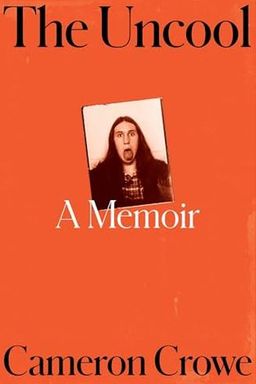
The Uncool cover

The Uncool

by Cameron Crowe

The journalist and Academy Award-winning filmmaker shares real-life events that inspired “Almost Famous.”

Teenage America, Unmasked

When did you learn that high school wasn’t just classes and crushes, but a full-blown economy, a theatre of status, and a crash course in adulthood played for real stakes? In Fast Times at Ridgemont High, Cameron Crowe argues that American adolescence is a public apprenticeship—where work, sex, friendship, and authority collide in a compressed arena. Crowe contends that if you want to understand what shapes adult Americans, you have to watch how the "kids" (his word, deliberately reconsidered) build identities under pressure: at lunch court, under fluorescent fryers, on prom night, and in the fluorescent quiet of a free clinic.

To make his case, Crowe embedded—literally. At 22, he returned undercover as a 17-year-old senior at a Southern California public school (Ridgemont High), spent a year earning the trust of students, then interviewed them afterward to verify details. The result is a day-in-the-life ethnography with the pace of a novel and the precision of reportage (think Studs Terkel’s Working meets American Graffiti). The book’s core claim: adolescence is not a rehearsal; it is the first act—messy, consequential, and already adult.

Work as a Status Engine

Crowe shows that in late–1970s/early–1980s Southern California, jobs—not grades—quietly rule. The lunch court’s social map is a fast-food supply chain: 7‑Eleven on the outskirts; Burger King, Denny’s, and Swenson’s closer in; at the center, the Carl’s Jr. royal court, presided over by senior fryer Brad Hamilton. "I’m in fast food," Brad says with solemn pride. It’s comic and serious at once. With cars, gas money, and weekend freedom on the line, work becomes a proxy for adulthood—and a way to measure who’s "arrived." (Sociologist Murray Milner Jr. later documented similar status markets in Freaks, Geeks, and Cool Kids.)

Sex, Scripts, and Consequences

The book’s beating heart is Stacy Hamilton and Linda Barrett’s friendship. Linda, two years older, dispenses playbook wisdom with breezy authority; Stacy, fifteen, follows it into grown-up stakes—initiation with "the Vet" at the baseball dugout, a risky entanglement with smooth talker Mike Damone, and then a pregnancy and secret abortion. Crowe’s point isn’t shock value; it’s priorities. No adult sees the panic of arranging a ride to the clinic, or the calculus of whether to tell a boy who can’t commit to picking up the phone, much less a person.

Authority as Theatre

Crowe paints teachers and deans as performers with scripts of their own. Mr. Hand, the fiery U.S. history teacher, is a McGarrett-from–Hawaii Five‑O disciplinarian who believes school is practice for functioning in life; he’s no “contract grader,” and his three-bell system is sacred. Mr. Vargas, the chipper biology teacher, leads students to cadaver labs with unnerving cheer. Lieutenant Flowers, the new disciplinarian, plays cop on campus—until he literally acts like one with a student and loses the role. Adults aren’t the enemy; they’re fellow actors on the Ridgemont stage, with their roles and blindspots.

Rituals that Rule the Year

Homecoming week, TOLO (Totally Outrageous Week), the Talent Show, Prom, and Disney’s Grad Nite turn the year into a set of rites. They look trivial from a distance, but within the fishbowl they set the beats of aspiration and humiliation—who gets crowned, who gets pelted with eggs, who wears the Mist-Blue Newport II tux, who sneaks whiskey onto Tom Sawyer Island, and who gets nabbed in Disneyland’s juvenile security office. These rituals function like corporate summits for a teen economy: they consolidate power, redistribute prestige, and memorialize who mattered (and who didn’t) in yearbook shots and sepia photos.

Comedy with Teeth

Yes, it’s funny. Jeff Spicoli is high before dawn and orders a pizza delivered to biology; he spins a tale about Mick Jagger gifting him a necklace. But Crowe won’t let comedy dilute reality. A picture of a car plunging off El Dorado Bridge runs in the local paper, and Spicoli bursts into class to show it off—only to realize the boy crying at his desk just lost his father and sister in that crash. The laughter evaporates. Life barges in.

Why It Matters

Crowe reframes “the kids” as citizens already making consequential choices about sex, work, money, and belonging. Adults target them like a market; institutions paint them green (literally, at Ridgemont) and call it discipline. But Fast Times insists that teen life is not a holding pattern. There are promotions and demotions (Brad’s fall from Carl’s to Jack in the Box to Captain Kidd, then redemption at 7‑Eleven); there are public votes (homecoming, prom) and private verdicts (abortion, betrayal, forgiveness). The book’s empathy is its argument: take teens seriously or miss the country as it’s being formed.

In the pages ahead, you’ll see how work becomes identity, why sex scripts collide with reality, how performance ("The Attitude") shapes romance, what authority gets right (and wrong), how rituals choreograph the year, and how race and sports complicate dreams. You’ll also follow the class clown to his most surprising scene: a pop quiz in adulthood at his own bedroom door.


Work Runs the School

Crowe exposes a counterintuitive truth: at Ridgemont, jobs—not GPA—are the everyday engine of identity, freedom, and status. You may remember letterman jackets as the pinnacle; here, the throne is a fryer. If you can clock in, you can drive. If you can drive, you can date, eat out, and escape. Work is the currency; lunch court is the exchange.

Lunch Court as a Labor Market

Look closely at the crowded courtyard and you’ll see concentric rings of prestige mapped to employers. The 7‑Eleven kids camp at the margins; Burger King, KFC, Denny’s, and Swenson’s sit closer in; and at the oak-tree center is Carl’s Jr.—Ridgemont Drive’s crown jewel. Why? Location, food quality (char‑broiled burgers matter when taste doubles as craft), cleanliness, and the magic of a drive‑thru intercom. Power concentrates where the best jobs (and therefore best shifts and tips) do. (This echoes the way adults map themselves to firms and zip codes—cf. David Brooks on “status-laden geographies.”)

Brad Hamilton: The Rise, Fall, and Return

Senior Brad Hamilton embodies "work as identity." As Carl’s chief fryer, he is calm in chaos, the guy who knows when oil turns and fries sing. He recruits friends, trains them, and relishes the little lordship of the heat lamps. He even shows up off-shift: the truest sign of belonging. Then a suspect customer complains, "These fries taste like metal," and Brad’s franchise‑true manager caves, comping the meal and demoting Brad to bathroom duty. The humiliation crescendos when he blows up and quits—only to be framed for theft days later. In the fast‑food world, the power to accuse is as potent as the power to promote.

Down the Ladder: Jack, Captain Kidd, 7‑Eleven

Jack‑in‑the‑Box mornings strip prestige and add absurdity. Brad fields the 100% Guaranteed Breakfast and a customer who weaponizes the guarantee. When Brad protests the scam, a new manager fires him on the spot. At Captain Kidd Fish and Chips, the pirate cosplay uniform turns dignity into a bit; Brad is ordered to deliver fourteen boxes of cod to IBM in full buccaneer kit. Halfway down the freeway, mocked by drivers, he peels off the hat and sword and keeps going—then keeps going past the IBM exit altogether. The job has become a mask he refuses to wear.

Redemption at 4 A.M.

Brad’s comeback arrives in a quiet 7‑Eleven. A gunman storms in, spray‑paints the camera, shoves a .45 at him, and demands the hidden safe. The phone rings. Time dilates. Brad’s legs shake—but so does his patience with being humiliated by people with clipboards or guns. He throws fresh coffee on the robber’s hand, snatches the .45, and holds until the cops arrive. The next day, he’s a local hero; even his old Carl’s manager calls, sniffing for reflected glory. Brad declines—he’s already been promoted to district with 7‑Eleven. Work humiliated him; work redeems him. It’s the adult loop in miniature.

Takeaways for You

• Status systems hide inside institutions you’d dismiss (a cafeteria, a food court). Map them if you want to understand who has leverage.
• A job can be a costume or a craft. Treat it like a craft and it becomes identity; treat it like a costume and it becomes a joke you eventually refuse to tell.
• Crisis reveals character faster than praise. One midnight decision can rewrite your place in a community.

(Context: Crowe’s focus on labor foreshadows Barbara Ehrenreich’s Nickel and Dimed by two decades, but with a teenager’s vantage—how first jobs silently shape economic sense and self‑respect.)


Sex Scripts vs. Real Life

High school teaches sex twice: once in fluorescent-lit lecture halls with purple mimeographs and once in cars, dugouts, jacuzzis, and bedrooms where the real test lacks a study guide. Crowe’s most intimate throughline follows Stacy Hamilton (15) and her guide, Linda Barrett (17), as they navigate initiation, desire, and consequences.

Linda’s Playbook, Stacy’s Firsts

Linda, older and fiercely assured, believes most boys are "pussies"—too insecure to make the first move—so she teaches Stacy to lead. Stacy follows the script with "the Vet," a 25‑year‑old she meets while hostessing at Swenson’s. He’s flattered by her confidence and they have sex at the school dugout under a lightbulb and a graffiti scrawl (“Heroin in the neck / Lincoln was here—Sieg Heil / Led Zeppelin”). Stacy floats home to Led Zeppelin’s "Stairway to Heaven" on the clock radio. It reads like a victory lap—until the Vet ghosts her after she confesses she’s fifteen. The script didn’t include this ending.

Performance Pressure, Private Panic

Next comes Mike Damone, Ridgemont’s vibe‑driven consigliere in a cardigan. He sells The Attitude (more later) but, in private, stumbles through sex on a red couch in the Hamiltons’ pool changing room. He orgasms in under two minutes and wants to leave. Stacy is left measuring which is more fragile: her pride or his. Days later, she suspects she’s pregnant. The playbook becomes triage: dodging her mother’s foxhound nose for lies, navigating the free clinic’s euphemisms (“Have you made plans for the baby?”), and scheduling an abortion while keeping school, work, and friendships intact.

The Abortion: Alone in Plain Sight

Crowe writes the abortion with clinical calm and human ache. Stacy endures the phone call, the waiting rooms, the exam: the emerald anesthetic, the jar filling with purplish tissue, the scraping of instruments. Damone promises a ride—twice—and flakes. She calls Mark “the Rat” Ratner, the shy boy who actually cares, and he drives her without questions. In the reception area, a different couple waits: he reads a magazine; she stares, deer‑like. Two girls lock eyes. No one in their grown‑up world will ever know this sisterhood exists.

Lessons They Didn’t Teach

The sex‑ed classes obsess over cutaway diagrams and scare films (Desi Arnaz’s Braking Point). Meanwhile, real instruction happens over Bob’s Big Boy coffee and Q‑tips: Linda’s blow‑job lesson with a banana; Stacy mocking the contradiction of being called a “slut” for being deliberate; Brad’s bathroom daydream of Linda in a bikini collapsing into humiliation when Linda opens the door mid‑masturbation. Everyone is performing a version of who they’re told to be. Few are practicing how to apologize, how to call back, how to show up at 2:00 p.m. when you said you would.

What You Can Use

• Advice is a script; reality is improv. Keep the friendship (Linda–Stacy) but test the script against your values.
• The most adult act in sex is logistics—rides, money, time, privacy. Plan that, and you reduce harm for everyone.
• Don’t confuse swagger for readiness. Damone can coach confidence but not care.

(Context: The book pairs with Peggy Orenstein’s later work on teen sexuality—showing how gendered scripts, performance anxiety, and secret kindnesses shape outcomes more than anatomical knowledge.)


The Attitude’s Short Shelf Life

If high school is theatre, Mike Damone is a self‑styled director. He teaches The Attitude: don’t show need; project inevitability; control the order at dinner; and, when making out, "whenever possible put on the first side of Led Zeppelin IV." It’s part pickup coach, part con man, and part armor against rejection. Crowe admires the performance—and unmasks its limits.

Damone’s Five-Point Plan

He mentors Mark “the Rat” Ratner. Advice includes: never reveal how much you like her; call the shots (Charthouse first, then a movie); act like wherever you are is the place to be; order for both of you; and soundtrack intimacy with Zeppelin. It’s comically specific and occasionally effective (Damone can spark conversation with a stranger by pretending he knows her psych textbook). For a kid from Philly who "developed The Attitude where life is cheap," it’s survival wrapped as charm.

Reality Checks

But watch Damone in rooms that don’t obey his script. He orders a pizza to biology class and earns a legend. Yet when the Rat finally asks Stacy out, Damone’s system crashes on contact with decency: the Rat forgets his wallet, Damone bails him out with a comically staged "I found it the other day"… and later sleeps with Stacy anyway. He breaks the friend code he preached. Then, when Stacy needs him most, he can’t even deliver a ride. "My mom wants me to stay with the house. Some people are coming over to look at it." The Attitude shrivels under responsibility.

Humbling Consequences

Ridgemont has its own karma. Stacy’s protector Linda scratches PRICK PRICK PRICK down Damone’s Toyota. In Public Speaking, a personal-growth counselor invites classmates to "speak to" Damone’s persona. Stacy stands and says he hides behind a façade. He snaps back—"You don’t know me!"—and loses the crowd. Later, Damone and the Rat together spend a weekend erasing the Rat’s mooning from 1,500 yearbooks (a prank Damone encouraged, swearing it’d be airbrushed). The literal erasure is poetic justice: your show is not the story. Friendship—messy, humbling work—outlasts the performance when Damone apologizes and helps the Rat clean up.

Upgrade Your Script

• Use confidence for approach, not cover. The Attitude can open a door; it can’t carry a relationship through it.
• Replace “order for both of you” with consent and curiosity. Control is a party trick; care is compelling.
• Your reputation is editable. When you mess up, name it, fix it, and do the unglamorous labor (like erasing every page).

(Comparison: Where Neil Strauss’s The Game glamorizes performance, Crowe keeps the camera on the morning after—the phone call, the ride, the flake.)


Authority: Scripts and Blindspots

Ridgemont’s adults aren’t faceless; they’re characters. Crowe renders them with empathy and edge, revealing how much adolescent life depends on which script an adult is playing—and whether they know they’re in a play at all.

Mr. Hand’s Hard Line

Arnold Hand, the sweat‑ringed U.S. history teacher, hates the "contract" fad that lets kids skip class in exchange for a worksheet. He worships the three-bell system, flings chalk like grenades, and models himself on Steve McGarrett of Hawaii Five‑O. When surfer Jeff Spicoli drifts into class late, Hand tears up his add card to shreds—expelling him from existence—then chalks I DON’T KNOW on the board and leaves it there all week. It’s theatre and pedagogy both. His philosophy: class trains you to "function in life." He believes truancy is practice for drift; punctuality is practice for power.

Lieutenant Flowers’s Overreach

The new dean of discipline arrives like a noir cop—name plate over the breast, razor moustache, gold badge gleam. He seals fence holes, issues student parking tickets, and physically escalates with students. When he shoves a gun through Spicoli’s car window in the Adult School lot during a pot bust, the theater becomes real. Lawsuits fly; Flowers is fired and ends up a night guard at Knott’s Berry Farm. The lesson: act like a cop on campus and the script will replace you.

Mr. Vargas’s Ghoulish Curiosity

The chipper biology teacher’s mandatory cadaver field trip is a teen urban legend, then a fact. He cheerily peels open an old man’s chest cavity and holds up "this is the human heart" while classmates wager on whether he’ll go that far. Linda Barrett runs out. Others stare until their future pulses on a tray. Vargas isn’t cruel; he wants awe. But adults forget awe can wound and widen at once.

Coach Ramirez and the Gamble on Glory

Ramirez fights the budget committee for jerseys, helmets, and a movie camera to make the "complete winning football department." His trump card is Charles Jefferson, the wrecking-ball end with an NFL body and complicated pride. Ramirez isn’t wrong: with Jefferson on a vendetta after his Mustang gets totaled and welded to the flagpole ("LINCOLN SURF NAZIS" spray‑painted on the door), Ridgemont beats Lincoln. But charisma is a loan, not a plan. Jefferson gets arrested in a Radio Shack break‑in with "two dudes," loses his scholarship, and vanishes from roll call. Ramirez’s season has a peak and a cliff. Authority gambles; kids bear the odds.

Try This If You’re the Adult

• Name your script. If you’re doing McGarrett, admit it; students already know.
• Protect dignity first. Enforcement without humiliation keeps relationships viable.
• Awe responsibly. Science can overwhelm; scaffold it with consent and care.

(Context: Crowe anticipates later debates about school policing and trauma-informed teaching, without slogans—just scenes that force you to pick a side.)


Rituals, Pranks, and Power

Ridgemont runs on events. TOLO Week, homecoming, the Talent Show, prom, and Grad Nite aren’t extras; they’re the system’s executive sessions where status is allocated and memory is minted. Crowe makes these weeks feel like campaign seasons—full of posters, pranks, and spin.

TOLO: Manufactured Spirit

A.S.B. president Kenneth Quan, a one‑man pep machine, launches TOLO (Totally Outrageous) Week with dress‑up themes: Tourist Day, Li’l Abner Day, Hollywood Day, Red & Yellow Day, Punk/Disco Day. Even skeptics cave to costumes. A pie fight spills beyond its ring; rumors fly; Lincoln’s band crushes with "Get Down Tonight." Spirit is performance—but it moves bodies. The week climaxes with homecoming, where Charles Jefferson’s rage becomes Ridgemont’s edge.

Homecoming: Eggs, Glory, and Film

The bleachers are full; the cheerleaders (newly rebranded Commissioners of Spirit) spell out names; Richie Raider, male mascot, whoops in headdress. Cindy Carr and Quan are crowned under fireworks and hailstorms of eggs. Ramirez’s camera whirs as Jefferson, stopped at the five, hauls two Lincoln defenders into the end zone by force of will. Ridgemont wins. Nights like this write the brochure—and, months later, the court dates.

Talent Show and Public Failure

Drama prince Gregg Adams hosts; the jazz band plays; girls perform “Boogie Wonderland”; baton twirler Rhonda Lewis drops her baton—three times—to Spicoli’s merciless electronic beeps from a pocket football game. Paul Norris sings his original "The World" a cappella, gets heckled, shouts "KISS MY ASS," and walks off. It’s hilarious and brutal—proof that school audiences behave like any crowd when fear meets a microphone.

Prom and Grad Nite: Romance vs Logistics

At the Sheraton’s "Lagoon Room," tuxedos from Regis Formalwear advertise class: the Camel Camelot, the Yellow Seville, and the kingly Mist‑Blue Newport II (Shasta’s pick). Couples scan silver hearts taped to cork walls and wonder if they chose the right date—or the right story. The true epic is Grad Nite: five yellow buses to Disneyland, gangsters hats for everyone, strict dress code, and ironclad no‑alcohol rule. Damone smuggles Jack Daniel’s to Tom Sawyer Island using a hidden cache—then gets hauled into juvenile security and Houdini’s his way out by staging a fake seizure. The kids aren’t saints, and the mouse has cops under the castle (figuratively here; literally in Disney World).

Why These Weeks Matter

• Rituals create a shared index—this is when we were brave, or cruel, or kissed under confetti.
• Pranks distribute power. The green‑paint “LINCOLN SURF NAZIS” hit, the Hendrix tribute hoax, the yearbook moon—they’re DIY civics lessons.
• Institutions curate memory; students curate meaning. The yearbook will say one thing; your Disneyland sepia photo says another.


Sports, Race, and Spotlight

Athletics at Ridgemont is aspiration and anthropology in one shot. Crowe contrasts two stars—football’s Charles Jefferson and soccer’s Steve Shasta—to show how spotlight can empower and distort, and how race and class shadow timing and fate.

Charles Jefferson: Talent Under Siege

Jefferson, a black student with NFL caliber shoulders and silence for armor, is tired—of slurs in bathrooms ("Send Kunta Kinte Jefferson back to Africa"), of fan‑graffiti appropriations ("Bonenose Jefferson Was Here"), of being handled as a commodity. UCLA dangles a $40,000 scholarship; a shiny blue Mustang appears; and suddenly Jefferson misses practice. When his Mustang is wrecked and welded to the school flagpole as a “Lincoln Surf Nazis” prank, he returns like a storm. Ridgemont wins; Lincoln bleeds; Ramirez’s camera gets its reel. Two days before the make‑or‑break last game, Jefferson gets arrested in a Radio Shack break‑in with “two dudes.” He loses the scholarship. Teachers stop calling his name at roll. The system devoured his rage and offered no net.

Steve Shasta: Self‑Mythmaker

Shasta, the sloe‑eyed left‑footed soccer savant, has media savvy and leisure to practice strategies until dusk (“Dogmeat Five,” “All‑Out Crush”). He’s nice to reporters in a way that quotes cleanly ("It all clicked"). To handle admirers, he invents a persona—he’s "celibate" in season—to dodge drama and cultivate mystique. He talks about "falling for" girls as a risk to his focus. He accepts a Yale scholarship and signs yearbooks "Best wishes, Steve Shasta." He’s not a villain; he’s a pro in high school. But his polish sharpens the ache in Jefferson’s storyline: two gifts, two spotlights, two ladders of safety.

What It Teaches

Crowe never lectures about race; he sets frames. Jefferson’s body is public, his anger policed, his narrative truncated by a single night. Shasta’s body is celebrated, his privacy protected by a benevolent myth. Both are teenagers translating talent into futures. Only one has the room to make it a brand. (Compare Friday Night Lights for a rural Texas version of this split.)

For Coaches, Parents, Fans

• Don’t bank an institution’s morale on one kid’s volatility. Build depth, not dependence.
• Teach myth‑making alongside skill, but pair it with mentors who can absorb the shocks fame invites.
• See which ladders have nets—and which expect teens to work without one.


Spicoli’s Comedy, With Consequences

Jeff Spicoli could be written as a cartoon—stoned dawn surfer, pizza-in-class icon, Tonight Show fantasist. Crowe gives him the jokes and still sneaks you the cost: how detachment treats tragedy, how authority sometimes redeems a slacker, and how a single knock can rewrite a year.

The Gags That Work

He wakes before dawn to smoke three bowls, surf, and occasionally attend first period in a wet peasant shirt. He orders Mr. Pizza to biology; he deadpans “This is a frame! There’s no birthday party for me here!” when escorted into Hand’s class; he shows off a newspaper front page of a car midair and calls the photos "bitchin’." He even spins a fantastical encounter with Mick Jagger, who supposedly uses Jeff’s necklace as a coke spoon and then gifts it to him. Everyone laughs—until they don’t.

The Moment It’s Not Funny

The El Dorado Bridge crash isn’t a meme. Louis Crowley, who just lost his father and sister (caught in that very photograph), sobs in journalism class as Spicoli waves the color front page. For a month no one speaks to Jeff. Comedy depends on reading the room. He didn’t. The cost is social exile.

Aloha, Mr. Hand

On Ditch Night, mushroom micro‑dose queued up, Spicoli heads for a Laguna party—when his mother says a teacher is climbing the stairs. Mr. Hand enters, briefcase in tow, and calmly claims the eight hours Jeff wasted of his class time. He gives a private crash course on U.S. foreign policy in Jeff’s own room and then packs up at 7:45 p.m. Hand doesn’t try to be cool; he tries to be just. Spicoli thanks him, asks if Hand gets a “guy like me” every year, and hears: "Why don’t you come back next year and find out?" Then the tiniest grin: "Don’t worry. You’ll probably squeak by." It’s a détente with dignity on both sides.

What to Carry

• Humor without empathy isolates. Read the room, especially in grief.
• Discipline can be personal and humane. A teacher who comes to your house for a teach‑back believes you’re worth the time.
• You can be a legend and still need to pass. "Squeak by" is grace with standards.

(Context: Spicoli predates the pop-culture stoner archetype he helped create, but Crowe’s version—less meme, more human—is closer to a Chekhov short story with Doritos.)

Dig Deeper

Get personalized prompts to apply these lessons to your life and deepen your understanding.

Go Deeper

Get the Full Experience

Download Insight Books for AI-powered reflections, quizzes, and more.