
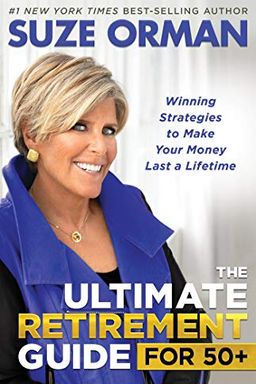
The Ultimate Retirement Guide for 50+ cover

The Ultimate Retirement Guide for 50+

by Suze Orman

Suze Orman''s ''The Ultimate Retirement Guide for 50+'' provides essential strategies to ensure your money lasts a lifetime. From downsizing to smart investments, this guide offers actionable insights to secure your financial well-being and peace of mind in retirement.

Designing a Fearless and Fulfilling Retirement After 50

How can you prepare for a retirement that could last 30 years—or more—without sacrificing your peace of mind today? That’s the question that drives Suze Orman’s The Ultimate Retirement Guide for 50+, a compassionate yet practical manual for people entering the second half of their lives. Orman argues that the modern retirement landscape has fundamentally changed. Gone are the days when pensions guaranteed a steady income for life. Instead, today’s retirees must build and manage their own financial foundations in an increasingly uncertain world of volatile markets, dwindling social safety nets, and rising lifespans.

Orman’s central claim is that retirement is not just about finances—it’s about confidence, courage, and taking deliberate action. She contends that many people approaching retirement are paralyzed by fear: fear of not having enough, fear of making a mistake, and fear of facing family expectations. Her book aims to help readers overcome that fear by creating a clear, actionable plan that balances financial security with emotional well-being.

Why Retirement Has Changed Forever

Orman opens with a story about her own mother, who lived longer than expected and ran out of money, forcing Orman to step in and cover her bills. Her mother’s journey mirrors that of millions of Americans who didn’t plan for the possibility of living into their 90s. Today, with people living longer and traditional pensions disappearing, retirees can no longer rely on old formulas. Instead, they must build flexible financial strategies that accommodate 20, 30, or even 40 years of post-work life.

The realities are stark. Nearly half of Americans over 55 have nothing saved for retirement. Fewer than one in five workers can expect traditional pension income. Most retirees must depend on Social Security and personal savings, all while facing rising healthcare and housing costs. Against this backdrop, Orman’s book is both a financial guide and a call to emotional readiness. She insists that you can still create a comfortable retirement—if you start making wise, deliberate moves right now.

The Mindset Shift: From Anxiety to Empowerment

At the heart of Orman’s philosophy is a mindset shift: retirement planning should move from fear-based to empowerment-driven. Many people approaching their 50s or 60s let financial regret and shame prevent them from taking action. Orman dismantles that paralysis by emphasizing progress over perfection. You can’t go back and make better financial decisions in your 40s—but you can change how you handle money starting today.

“It’s always better to do nothing than to do something you don’t understand.”

This guiding principle sets the tone of the book. Orman’s advice isn’t about chasing trendy investments or complex strategies. Instead, she helps readers focus on the controllable: paying down debt, living below their means, saving in the right accounts, and protecting themselves with insurance and essential legal documents. Financial serenity, she argues, comes not from risky growth but from clarity and preparedness.

The Pillars of a Strong Retirement Plan

Across nine chapters, Orman outlines key pillars for retirement success—adjusting spending habits, eliminating debt, saving strategically, investing smartly, and protecting one’s health and legacy. She tailors her advice to life stages: what to prioritize in your 50s, 60s, and 70s. For example, people in their 50s must focus on cutting costs, paying off high-interest debts, funding retirement accounts, and buying long-term care insurance. Those in their 60s should keep saving, plan to work until 70, invest conservatively, and prepare to enroll in Medicare. By 70, retirees should have a withdrawal plan, steady income streams, and their legal affairs in order.

She provides step-by-step checklists in every chapter, making it easy to act without feeling overwhelmed. Each recommendation fits into a broader philosophy: build a retirement based on simplicity and security. If your financial moves increase your sense of confidence and control, you’re doing something right.

The Emotional Equation of Financial Independence

Emotions often complicate financial decisions—especially when family enters the equation. Orman advises learning to say “no” compassionately to adult children or grandchildren when their requests jeopardize your financial future. “There are loans for college,” she reminds readers, “but there are no loans for retirement.” This means prioritizing your needs over others’ expectations isn’t selfish; it’s an act of long-term love.

In real-world examples, she shows how families can balance intergenerational support while protecting retirement goals. Adult children living at home should contribute to household costs, even symbolically, to learn responsibility. Aging parents needing care should consider compensation agreements or downsizing. The common thread: financial generosity must never come at the expense of financial security.

Bringing It All Together

Ultimately, The Ultimate Retirement Guide for 50+ invites you to see retirement not as a finish line but as a new chapter still within your control. Orman helps you confront reality without panic—showing that even small changes can snowball into major results over time. She mixes compassion with tough love: urging you to live simply, invest wisely, protect what matters, and stay informed.

Retirement, in Orman’s worldview, isn’t about escaping work—it’s about creating freedom. And real freedom comes when your money decisions align with your values, your future is protected, and you wake up knowing you’ll be okay no matter what happens next.


Prioritizing Family Without Sabotaging Your Future

One of the hardest conversations you’ll ever have is the one where love meets money. Suze Orman devotes considerable attention to family relationships, explaining that your instinct to help your children, grandchildren, or parents can easily derail your financial security. She calls this the “family trap” of retirement planning: the tension between caring for those you love and caring for your own long-term needs.

Loving Without Enabling

Orman stresses that the most loving act you can perform for your family is to secure your own future. Helping an adult child pay for unnecessary luxuries—a vacation, a fancy car, or the latest phone—only delays their growth and undermines yours. The only time you should offer financial help, she says, is when it supports needs, not wants, and when it helps your loved one become more self-sufficient.

She also suggests setting boundaries early. If your adult children move back home, it’s crucial that they contribute to household expenses. Doing so reinforces responsibility and ensures that your support doesn’t evolve into dependency. Even if you don’t need their contribution, you can save that money for them as a future gift. This psychological reframing turns enabling into empowerment.

When Helping Parents Hurts

Orman draws attention to the hidden costs of caregiving. Caring full-time for an aging parent may seem noble, but it can devastate your financial trajectory. You’d not only forfeit your income but also lose valuable employer-sponsored benefits such as health insurance and retirement contributions. If parents need full-time care, she recommends considering paid caregivers or arrangements where you’re compensated for your time through family resources or your siblings’ contributions.

If you’re helping parents manage their assets, Orman advises exploring whether they can sell their home or downsize to fund their care. This approach preserves your resources and ensures they’re cared for with dignity. The guiding principle: care and compassion must be balanced with realism.

The Gift of Experiences Over Stuff

Instead of showering grandchildren with expensive gifts, Orman suggests gifting experiences—trips, outings, or shared hobbies. Research shows that experiences bring greater and longer-lasting happiness than possessions. Beyond saving money, this strategy creates deeper memories and closer bonds while keeping your retirement funds intact.

“Putting your retirement goals first isn’t selfish—it’s an act of fierce love,” Orman reminds her readers. “The more secure you are, the less you’ll burden those you love later.”


Breaking Free From Debt Before You Retire

Debt, Orman warns, is one of the greatest threats to a peaceful retirement. While it’s now common for retirees to carry mortgages or credit card balances, the consequences of doing so can be severe. According to financial journalist Chris Farrell, the average household headed by someone over 65 now carries more than twice the debt load of retirees two decades ago—a worrying trend that gnaws away at emotional and financial security.

Why Debt Multiplies in Retirement

Orman explains that every dollar you owe in retirement represents future freedom you’ve already spent. Since retirees typically live on fixed incomes, monthly payments siphon off resources you could use for healthcare, travel, or emergencies. Worse, high-interest debt, such as credit card balances, snowballs quickly and undermines any investment progress you’ve made.

Strategies to Eliminate Debt

To tackle debt head-on, Orman recommends a simple hierarchy: pay off high-interest credit cards first, then auto loans, and finally your mortgage. Working longer, if feasible, can accelerate this process while allowing your investments to keep growing untouched. Even working part-time or consulting in your area of expertise helps you preserve your nest egg while shrinking liabilities.

She urges you not to divert funds toward supporting adult children or luxury purchases until every cent of high-interest debt is gone. “Your future self,” she insists, “will thank you for every payment you made today.”

Retiring debt-free isn’t just a financial goal—it’s an emotional one. The absence of monthly bills, Orman suggests, delivers a sense of calm that no investment portfolio can match.


Living Below Your Means to Live Above Fear

For Orman, the ultimate financial skill isn’t earning more—it’s wanting less. She argues that cutting expenses before you retire isn’t about deprivation; it’s about trading short-term indulgence for long-term peace. Downsizing, she writes, can be one of the most liberating steps you’ll take to secure a worry-free future.

The Discipline of Simplification

Start by differentiating between needs and wants. Ask of every purchase: “Will this decision support or hurt my retirement goals?” This conscious filtering process transforms consumption into purpose-driven spending. Moving to a smaller home, driving a used car, or canceling subscriptions might seem small—but together they free up hundreds or thousands each month for debt payments or savings.

The Power of a Smaller Home

Downsizing housing is a key lever in Orman’s blueprint. It lowers not only the mortgage or rent, but property taxes, insurance, and maintenance costs. Many people resist selling a longtime family home because of sentimental attachment. Orman reminds readers that memories stay with you—not the walls themselves. Selling that home could buy you financial serenity and unlock equity you can actually enjoy during retirement.

She adds a practical caveat: if you plan to age in place, make sure your current home won’t become a financial or physical burden decades from now. Consider remodeling for accessibility and budgeting for rising utilities, taxes, and healthcare costs over time.

“Living below your means but within your needs,” Orman writes, “is the golden rule of financial freedom.”


Mastering Saving and Investing for Longevity

With people living longer than ever before, Orman underscores that your retirement money must stretch for decades. Achieving that longevity requires strategic saving and smart investing—not mere hope. She teaches how to use both tax-advantaged accounts and balanced portfolios to maximize growth while minimizing risk.

Where to Save

She differentiates between tax-deferred and tax-exempt accounts. In tax-deferred plans such as traditional IRAs or 401(k)s, you get an upfront tax break but pay taxes when you withdraw. In Roth accounts (Roth IRA or Roth 401(k)), you pay taxes now but can withdraw tax-free later—a major advantage given future tax uncertainties. Orman strongly favors Roth options, especially for those still working in their 50s and 60s.

She also recommends keeping an emergency cushion of two years’ worth of living expenses in cash or certificates of deposit (CDs). Online banks often pay better interest rates, making them preferable for building these low-risk reserves. These funds serve as a shock absorber, letting you avoid withdrawing from investments during market downturns.

How to Invest

Orman cautions that overly conservative investing can be just as dangerous as being reckless. Keeping everything in bonds may protect your principal but leaves you exposed to inflation. On the other hand, holding too many stocks can make your portfolio volatile when you need stability most. She suggests a simple formula: subtract your age from 110 to determine the ideal stock allocation. So if you’re 65, hold around 45% in stocks and 55% in bonds.

Her preferred vehicles are low-cost index funds and broad-based exchange-traded funds (ETFs), which offer diversification and low fees. Avoid stock-picking or high-fee mutual funds. On the bond side, she urges placing emphasis on quality—such as U.S. Treasury or top-rated corporate bonds—to act as ballast when markets wobble.

Balanced investing, Orman notes, isn’t about chasing big wins—it’s about ensuring you never run out of money when you need it most.


Making Your Money Last: The 4% Rule and Beyond

Once you retire, the central financial challenge shifts from accumulation to distribution: how much can you safely spend each year without outliving your money? Orman introduces one of the most cited concepts in retirement planning—the 4% rule—but she also questions its one-size-fits-all simplicity.

Understanding the Rule

The rule suggests withdrawing 4% of your total savings annually, adjusting for inflation, to ensure your money lasts roughly 30 years. For instance, with a $600,000 nest egg, your first withdrawal would be $24,000, then slightly more each following year. But Orman challenges this to be too rigid, especially given longer life spans and market volatility. She instead recommends withdrawing closer to 3%, or 3.5% if you retire at 70.

Adapting to Market Conditions

Orman points to financial experts like Kailey Hagen, who argue that retirees should adapt spending based on market performance—a flexible withdrawal strategy. For example, withdraw less during recessions and more during strong market years. Also, lifestyle changes over time should influence your spending: retirees tend to front-load expenses early when they’re active and scale back later.

If your guaranteed income (Social Security, pensions, or annuities) doesn’t cover essential expenses, Orman suggests filling the gap with an income annuity—essentially a private pension ensuring predictable payments for life. The overarching goal is psychological: the more of your fixed costs covered by predictable income, the more freedom you have to enjoy your retirement without anxiety.


Delaying Social Security: A Long-Term Advantage

Orman is adamant on this point: delaying Social Security benefits until age 70 is one of the smartest financial choices most Americans can make. Collecting benefits earlier may seem tempting, but it could mean leaving hundreds of thousands of dollars on the table over a lifetime.

Why Waiting Pays

Claiming benefits at 62 reduces your monthly checks by as much as 30%. Waiting until 70 increases them by up to 76% compared to early claiming. Orman frames the choice as buying “longevity insurance.” Given that many people are living into their 90s, maximizing monthly income ensures stability later in life, when working or adjusting investments might not be possible.

When Earlier May Make Sense

That said, Orman acknowledges—echoing experts like Christy Bieber from The Motley Fool—that everyone’s situation is different. Those in poor health or with shorter life expectancies may benefit by claiming earlier. The total payout across a lifetime typically balances out; what changes is the size and timing of checks. Thus, she encourages evaluating not only personal health and life expectancy but also spousal benefits and overall financial context before deciding when to file.

Patience, in Social Security planning, often equals prosperity. Delaying may be the single highest-risk-free return strategy available to modern retirees.


Why You Need a Trustworthy Financial Advisor

Even with decades of financial wisdom condensed into one book, Orman insists: you don’t have to do this alone. A skilled, ethical financial advisor can be invaluable in keeping you informed and disciplined throughout the planning process. However, she cautions that not all advisors are created equal.

Choosing the Right Advisor

Orman urges readers to choose only fiduciary advisors—professionals legally required to put your interests first. Avoid those who earn commissions for selling financial products. The best advisors charge transparent, flat or percentage-based fees (typically around 1% of the portfolio).

She suggests starting with certified financial planners listed through respected organizations and running background checks through FINRA’s BrokerCheck tool. During the selection process, prepare questions about how they’re compensated, their investment philosophy, and how they handle market downturns. You’re looking for a partner, not a salesperson.

Staying Engaged

Hiring an advisor doesn’t absolve you of responsibility. Stay involved, ask questions, and never sign off on strategies or products you don’t understand. As Orman often reminds her audience, “You are your own best financial advocate.” Collaboration with a trusted expert can bring objectivity—especially in emotionally charged times, such as the loss of a spouse or a market crash.

Financial advice is most powerful when it’s used as a guide, not a crutch. The ultimate accountability, Orman concludes, will always rest with you.

Dig Deeper

Get personalized prompts to apply these lessons to your life and deepen your understanding.

Go Deeper

Get the Full Experience

Download Insight Books for AI-powered reflections, quizzes, and more.