
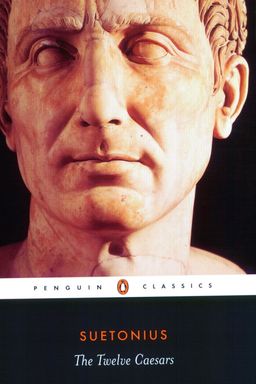
The Twelve Caesars cover

The Twelve Caesars

by Suetonius

The Twelve Caesars by Suetonius offers a riveting exploration of the Roman Empire''s first twelve emperors. Through vivid biographical sketches, the book unveils the triumphs, tragedies, and human flaws of the rulers who shaped Rome. From Julius Caesar''s ambition to Nero''s artistic dreams, this work provides a timeless reflection on power and leadership.

Ambition and the Making of Empire

Across Suetonius’s portraits of Rome’s rulers, you see the same driving question: how does private ambition become the machinery of empire? Starting with Julius Caesar’s hunger for distinction and ending with Domitian’s paranoid control, the book traces how charisma, conquest, and constitutional improvisation produce a new political order—the Empire—while exposing its permanent tensions between power and legitimacy.

At its core, this narrative is about the conversion of personal triumph into public regime. Caesar’s restless ambition fuses military brilliance and rule-breaking; Augustus refines those techniques into principled stewardship; Tiberius shows how efficiency corrodes under suspicion; and Caligula, Nero, and Domitian each test the limits of personal rule until spectacle and fear replace civic partnership. You watch how the imperial system grows from republican seeds but gradually transforms into monarchy masked as constitutional restoration.

From Republic to Empire: Caesar’s Experiment

You begin with Julius Caesar, who turns ambition into revolution. His refusal to submit to Sulla, his campaigns in Gaul, and his crossing of the Rubicon all reveal how military success can erase republican boundaries. Caesar’s genius lies not only in battlefield command but also in public theater: triumphs, entertainments, and reforms that bind the people while alarming aristocrats. His reforms—the calendar, census, and grain laws—make governance efficient but concentrate authority. The result is a new kind of ruler: a man who legislates as he conquers. Assassination restores republican ritual only briefly; the Empire’s logic, built on charisma and the army’s loyalty, endures.

Augustus and Constitutional Illusion

Augustus perfects this balance. He presents himself as the restorer of the Republic, but what he restores is order under his watch. Through tribunician power, selective clemency, and reforms of Senate and provinces, he invents the principate: autocracy disguised as cooperation. His cultural patronage—Virgil, Horace, temple restorations—turns moral renewal into state ideology. The first emperor becomes both priest and manager, showing how symbolic restraint can conceal absolute control.

Military and Ritual Foundations of Power

Throughout Suetonius the army and ritual serve as twin pillars. Caesar’s legions make him kingmaker; Augustus’s careful pay and settlements stabilize the frontier; later emperors from Claudius to Vespasian rely on donatives and discipline to win allegiance. Honors—triumphs, temples, divine titles—create legitimacy, but also peril: when rulers push divinity too far (Caligula’s self-deification or Domitian’s demands for worship), they provoke rebellion. You recognize an enduring Roman truth: authority must be staged through both force and ceremony.

From Reform to Excess

After Augustus, the pattern repeats with distortion. Tiberius begins dutifully, then drifts into isolation and terror; Caligula moves from public joy to violent narcissism; Claudius engineers impressive reforms but lets freedmen and wives dominate; Nero turns the throne into a stage; and Domitian seals the century with oppression wrapped in architectural grandeur. Each ruler reveals how unbalanced personality can overwhelm constitutional design. You see the Empire’s paradox: even monumental reform cannot neutralize personal vice.

Themes of Continuity and Warning

Viewed together, these biographies form a meditation on the mechanics of power. Suetonius portrays rulers not just as characters but as case studies: how generosity becomes tyranny, how clemency becomes strategy, how spectacle replaces service. The shift from Caesar’s reforms to Domitian’s paranoia teaches you that Rome’s system depends less on law than on personal equilibrium. The Empire can survive cruelty, but not contempt; it can endure extravagance, but not disbelief in civic virtue. You end understanding that Roman politics, for all its grandeur, is an experiment in managing the human side of power.

Central Insight

Ambition builds empire, but temperament governs its fate. From Caesar to Domitian you learn that power without balance turns achievements into cautionary tales.

(Note: Read Suetonius not just as historian but psychologist; compare with Tacitus’s moral stoicism or Plutarch’s ethical biography—each sees in political power a mirror for human nature.)


Caesar’s Revolution and Legacy

Julius Caesar serves as the prototype for all later emperors. You see in him a blueprint for how military success, personal charisma, and political theater can overturn an entire constitution. His life is a continuous experiment in ambition turned system.

Ambition and Conquest

Starting with his refusal to divorce Cornelia under Sulla, Caesar defines independence as political virtue. His campaigns in Gaul—a massive space bounded by natural frontiers—show logistical genius and ruthless control. The pirate episode illustrates his conviction that delay equals defeat; he avenges humiliation with crucifixion. You watch a man who turns personal affronts into public vengeance, a recurring trait in Roman rulers.

Breaking the Republic

The Rubicon scene dramatizes the moment law collapses: hesitation, omen, decision. When Caesar crosses, he transforms civic process into military rule. His triumphs—five in total—and reforms of the Senate, calendar, and grain supply codify how to govern by spectacle and decree. His generosity to veterans and clemency toward foes mask structural domination. His assassination returns ritual but cannot undo transformation; Octavian inherits the full logic of personal, centralized power.

Leadership Paradox

Suetonius portrays Caesar as merciful yet avaricious, visionary yet transgressive. You learn that clemency becomes a political weapon; discipline coexists with indulgence. His affairs, greed, and sacrilege reveal the personal weaknesses behind institutional success. His memoirs—clarity without ornament—teach posterity how narrative controls legacy. (Compare with modern self-presentation tactics: Caesar’s commentaries are early PR documents.)

Core lesson

Caesar proves that reform and revolt are two faces of the same genius. His blend of ambition and generosity founds the imperial pattern: power justified by benefit, extinguished by envy.

(Note: Caesar’s arc parallels Alexander’s—both turn conquest into personal legend. Suetonius’s anecdote of the sigh before Alexander’s statue at Gades symbolizes this transhistorical ambition.)


Augustus and the Art of Stability

After revolution comes reconstruction. Augustus organizes victory into political elegance. You watch him refine Caesar’s raw ambition into institutional permanence without blatant monarchy.

Crafting Legitimacy

Augustus inherits chaos and responds with diplomacy. He reconciles enemies, partners in the Triumvirate, and transforms defeat at Actium into the foundation of empire. His restraint—refusal of dictatorship, partial acceptance of honors—begins the long experiment in constitutional disguise. He engineers the balance between Senate prestige and imperial command, keeping strategic provinces under his control to ensure stability.

Administrative and Cultural Renewal

He reforms taxation, provincial governance, and moral law while funding monumental construction: the Forum Augustum, Temple of Mars the Avenger, Palatine Apollo. Cultural patronage becomes political strategy: poets and architects articulate Roman renewal. By blending religion, aesthetics, and administration, Augustus makes government feel moral again. The closure of the Temple of Janus and restoration of shrines transform peace into sacred policy.

Succession and Fragility

Despite his orderliness, succession exposes limits. His adoption of heirs and moral legislation cannot prevent scandal—Julia’s exile, premature deaths of Gaius and Lucius, and reluctant inclusion of Tiberius. You learn that designed stability depends on fortune. Augustus’s system of delegated powers survives because he institutionalizes duties, not individuals.

Essential takeaway

Moderation can establish longevity. Augustus’s achievement is psychological: he teaches Rome that autocracy can feel republican. Yet the mask slips easily for successors who lack his tact.

(Parenthetical comparison: Machiavelli’s admiration for princes who combine strength and restraint echoes in Augustus’s careful avoidance of tyranny while wielding total control.)


From Restraint to Repression: Tiberius and Caligula

The following pair—Tiberius and Caligula—form a sharp contrast that reveals the psychological cost of imperial inheritance. Tiberius begins as an unwilling ruler defined by competence and caution; Caligula erupts as theatrical excess. You witness how isolation and indulgence break the delicate contract between emperor and Rome.

Tiberius: Efficiency Turned Fear

Tiberius continues Augustus’s system with technical rigor: reforming the army, safeguarding finances, and respecting senatorial procedures. Yet his temperament shifts. Retreating to Capri, he governs through informers, uses treason trials liberally, and transforms legality into punishment. Sejanus’s rise and fall exemplify paranoia institutionalized. His initial moderation devolves into cruelty; competence cannot shield character. You learn that introspection becomes tyranny when fear governs policy.

Caligula: Spectacle and Self-Worship

Caligula opens his rule with grace—paying legacies, recalling exiles, building temples—but soon slides into delusion. He stages naval parades across bridges of ships, dresses as gods, and turns palace rooms into brothels. Extravagance joins cruelty: murders for entertainment, incest rumors, and horse-consul plans. Suetonius uses him as moral warning: when power’s imagery replaces its service, death swiftly follows. Caligula’s assassination by his guards proves ritual overreach leads to literal execution.

Dual lesson

Whether by withdrawal or extravagance, rulers who cease to engage civic reason create terror. Tiberius hides behind law; Caligula behind divinity. Both end where politics becomes pathology.

(Compare with modern leadership patterns: isolation and narcissism are perennial dangers when institutions cannot check personality.)


Claudius to Nero: Administration and Excess

Claudius and Nero reveal the Empire’s pendulum between reform and ruin. Claudius the timid scholar transforms mockery into competence; Nero the flamboyant artist converts favor into catastrophe. Their courts, dominated by wives and freedmen, illustrate how proximity replaces principle.

Claudius: Unexpected Engineer

Elevated by accident after Caligula’s murder, Claudius legitimizes himself with cash and construction. He builds aqueducts, drains Lake Fucinus, and constructs the harbor at Ostia—projects of astonishing technical scale. He reforms provinces, restores senatorial authority in Achaia and Macedonia, and revises citizenship policy. Yet influence seeps from freedmen and wives: Messalina’s scandals and Agrippina’s ambition distort efficient rule. His death, possibly by poison, underlines that domestic intrigue becomes constitutional hazard.

Nero: The Performer Tyrant

Nero begins with charm and artistry—music festivals, public generosity—but degenerates as adulation becomes addiction. The Neronia, the Golden House, and his public singing make performance state policy. His crimes—poisoning Britannicus, murdering Agrippina, executing opponents—expose moral collapse. When the Great Fire and military revolts come, his theatrical detachment seals his doom. He dies by suicide, lamenting the loss of a performer, not an emperor.

Key insight

Reform needs restraint; art needs responsibility. Claudius proves capability without charisma can still secure results; Nero proves charisma without conscience destroys nations.

(Note: Suetonius’s alternating images of scholar and showman foreshadow later historical discussions of technical versus performative leadership.)


Crisis and Recovery: From Civil War to Flavian Reform

The fall of Nero opens Rome’s most turbulent transition: the Year of Four Emperors. Suetonius condenses chaos into lessons on legitimacy. Galba’s stinginess, Otho’s desperation, Vitellius’s indulgence, and Vespasian’s pragmatism show that empire can survive rebellion only when discipline and finance align.

Legitimacy through Army and Economy

You observe how soldiers replace institutions as electors. Galba’s refusal of donatives costs him life; Otho’s suicide earns moral credit; Vitellius abuses wealth and dies in disgrace. In contrast, Vespasian rebuilds trust through administrative rigor, restoring fiscal solvency and institutional order. He repairs the Capitol, establishes the Temple of Peace, reorganizes the senate, and sponsors the beginnings of the Colosseum. Fiscal restoration becomes moral restoration.

Titus: Compassion in Disaster

Titus, inheriting Vespasian’s stability, faces catastrophe—the eruption of Vesuvius and Rome’s fires. His relief efforts, rebuilding, and public kindness earn the epithet “delight of mankind.” His reign proves that emotional intelligence can legitimize authority as effectively as victory.

Domitian: Restoration and Fear

Domitian builds splendidly—forums, temples, arenas—but rules through suspicion. His moral policing, persecutions, and self-deification turn reform into repression. When he dies by conspiracy, the cycle of spectacle and terror closes. Architecture survives; affection does not.

Historical pattern

After every collapse, Rome recovers through discipline, not charisma. The Flavians restore the Empire by treating solvency and compassion as twin pillars of legitimacy.

(In larger historiography, this recovery anticipates Tacitus’s observation that stability often demands moral austerity more than heroism.)


Power Behind the Throne

Beyond emperors themselves, Suetonius teaches you to see the court—the hidden matrix of wives, freedmen, and favorites—as the real ecosystem of power. Governance in his world depends on who controls access to the ruler’s ear.

Wives as Strategists

Messalina’s audacity under Claudius, Agrippina’s scheming for Nero’s succession, and Poppaea’s influence over Nero’s later cruelty all illustrate how intimate relationships morph into political levers. Marriages become state decisions; poison becomes policy. When moral boundaries blur, dynastic planning turns life-or-death literal.

Freedmen as Administrators

Freedmen such as Narcissus, Pallas, and Felix act as bureaucratic innovators—handling documents, finances, and punishments. Their efficiency challenges aristocratic monopoly but provokes elite resentment. In Nero’s court, such figures expand corruption as the ruler’s whims dominate procedure. You see a tension between practical competence and moral optics.

Pattern of Court Influence

Whenever the emperor weakens in character or health, internal agents rule by proxy. Decisions about infrastructure, prosecution, and inheritance often emerge from private quarters more than public councils. The Empire becomes both centralized and personalized; governance becomes drama.

Interpretive point

Courtiers teach you that power always diffuses through proximity. Effective leadership requires managing influence as well as issuing command.

(Note: Suetonius’s detail anticipates later political theory—compare with Montesquieu’s idea that the corruption of courts defines despotic states.)

Dig Deeper

Get personalized prompts to apply these lessons to your life and deepen your understanding.

Go Deeper

Get the Full Experience

Download Insight Books for AI-powered reflections, quizzes, and more.