
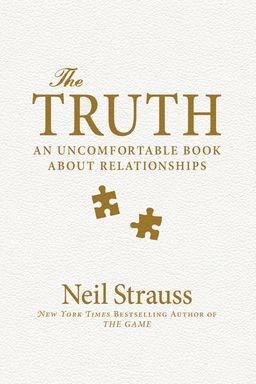
The Truth cover

The Truth

by Neil Strauss

Neil Strauss''s ''The Truth'' delves into the depths of human relationships, questioning the confines of monogamy and exploring polyamory''s potential to foster deeper connections. Through personal insights and societal observations, the book empowers readers to redefine love, prioritize self-awareness, and pursue meaningful, trust-filled partnerships.

Polyamory as a Path to Spiritual and Emotional Freedom

Have you ever wondered if loving just one person forever is truly natural—or whether there might be another way that allows for deeper emotional and spiritual growth? The book Experience Polyamory as a Spiritual Journey or Adventurous Lifestyle explores precisely that possibility. It suggests that polyamory—loving multiple people simultaneously—isn't merely about sex or nonconformity, but about expanding your capacity for love, compassion, and self-understanding.

The author builds on the ideas initially popularized by New Age thinker Morning Glory Zell-Ravenheart, who coined the term 'polyamory' to mean “many loves.” Far from promoting promiscuity, Zell-Ravenheart viewed it as a sacred and mindful way of living that honors the divine nature of love itself. This book continues that tradition, reimagining polyamory as a gateway to emotional authenticity, trust, and spiritual healing.

Polyamory Beyond Sexuality: A Spiritual Shift

According to the author, modern society has shaped our ideas of love around exclusivity and ownership. Monogamy, as it’s practiced today, often reinforces possessiveness, shame, and fear of loss. Polyamory, by contrast, is presented as a spiritual antidote—a conscious choice to embrace love as infinite rather than scarce. Instead of seeing sex as dirty or secretive, polyamory encourages complete openness, turning intimacy into a sacred exchange rather than a guilty act.

Polyamory, when practiced spiritually, transforms shame into compassion and competition into community. It invites partners to grow beyond jealousy and fear.

From Swinging to “The Lifestyle”

Not everyone enters polyamory through spiritual exploration. Many begin through swinging—a form of consensual sexual exchange. However, swinging has developed a reputation for superficial indulgence rather than spiritual growth. To distinguish it from shallow experience, polyamorous practitioners often refer to their way of living as “The Lifestyle.” This name signals that polyamory is a whole-life orientation, grounded in boundaries, trust, and intentional exploration.

Creating healthy boundaries is crucial, the author emphasizes. Polyamory isn’t a license for chaos. Instead, rules and mutual agreements help define emotional safety so that partners can experience freedom without fear. This clarity—the knowledge that each person respects agreed-upon limits—creates an atmosphere of deep security rather than confusion.

The Emotional Work of Polyamory

Central to this book is the idea that polyamory can dismantle the destructive shadow of jealousy. Jealousy, it argues, draws its power from insecurity—the fear that love is finite and must be protected. By reframing relationships as acts of giving, not getting, polyamory encourages a mindset of abundance. When you think about what you can contribute to a group rather than what you can demand, you're expanding the circle of empathy.

This emphasis on emotional generosity also mirrors spiritual traditions worldwide. In Buddhism, for instance, attachment and fear are seen as sources of suffering; in polyamory, letting go of possessive instincts opens the door to selfless love. The author even calls sexually open relationships a kind of “practice”—a way to confront jealousy and transform it into joy.

Why This Matters for Personal Growth

Polyamory’s radical insight is that love is not a limited resource. In understanding and accepting this, you begin to heal deeper wounds—those that stem from shame, fear, and unresolved trauma. Many relationship challenges, the author argues, arise not from romantic incompatibility but from childhood patterns of neglect, abandonment, or overparenting. Polyamory serves as a mirror reflecting these patterns, giving you the chance to practice honesty, presence, and communication in multiple relational contexts.

By integrating spirituality, emotional awareness, and honest communication, the book positions polyamory as both a lifestyle and a path of healing. It's not only about exploring sexuality but about cultivating a richer, more authentic experience of love—one grounded in trust, self-knowledge, and the courage to grow. Ultimately, the author invites you to ask yourself: are you living within the small confines of fear-based love, or are you ready to explore love as an endless, transformative journey?


Navigating Fixed and Open Polyamorous Relationships

Once you understand that polyamory is about more than sexual freedom, the next challenge is understanding how to form relationships that work. The author explains that poly relationships come in two main forms—those with fixed partners and those that are open. Each demands emotional maturity, communication, and a rethinking of what intimacy really means.

Fixed Partner Polyamory

In a fixed polyamorous setup, each person maintains multiple but consistent relationships. Think of this as “expanded monogamy”—you may have three partners, but those relationships remain stable. The practical benefit is simplicity: fewer variables mean fewer chances for misunderstandings or neglect. Time division, emotional labor, and boundary management become more predictable.

The author introduces the concept of a fulcrum—a central member who connects to everyone else and helps maintain harmony. Because the fulcrum interacts closely with all members, they often act as a “benevolent dictator,” guiding group decisions. While this might sound hierarchical, it functions more like leadership in service of stability. Balance and trust are key.

Open Relationships

On the opposite end of the spectrum are open relationships, which allow each partner complete freedom to connect with others sexually and emotionally. This form of polyamory demands exceptional trust and emotional resilience. You can’t control who your partner sleeps with or who they love. Instead, you must learn to differentiate between love and lust, intimacy and desire.

The author notes that both biology and culture make open relationships challenging. Men, especially, may struggle because evolutionary psychology links sexual competition to physical reactions—such as increased ejaculation intensity when a rival has recently been involved with the same partner. Understanding these primal instincts helps couples navigate jealousy compassionately rather than repressing it.

Letting Go of Fear and Jealousy

In either form of polyamory, overcoming jealousy is essential. The author suggests reframing relationships around contribution rather than possession. When you see love as something you offer freely rather than something you guard, jealousy loses its power. But a caution arises—if this emotional detachment leads you to avoid deeper intimacy, you risk emptiness rather than liberation. Polyamory works only when love and sexual freedom coexist with honesty and emotional connection.

True openness isn’t just sexual freedom—it’s emotional transparency. Without compassion and connection, openness becomes isolation.


Recognizing Sex Addiction and Its Emotional Roots

One of the book’s most instructive sections distinguishes healthy sexual exploration from sex addiction. It’s easy to confuse the two, yet the difference lies in motivation. Sex addiction isn’t about having many partners—it's about being unable to control the desire for sexual intensity even when it causes harm.

The author describes sex addiction as a cycle: preoccupation (obsession with sexual opportunity), ritualization (acting out the compulsion), and shame (feeling guilty afterward). The shame triggers the cycle again. This pattern mirrors other addictions, but instead of harming the body like drugs or alcohol, sex addiction damages trust, emotional bonds, and relationships.

The Ambiguities of Diagnosis

Defining addiction in sexual terms is notoriously difficult. Some therapists link frequent masturbation or the use of fantasies to addiction, others don't. The author shares personal experiences of being labeled a sex addict after an affair—yet he questions whether craving sexual novelty always equals pathology. This debate reflects broader discussions in psychology around whether sexual variation should be pathologized or respected as natural exploration.

Intimacy Avoidance vs. Exploration

Many therapists equate sex addiction with avoidance of intimacy. In their view, people seek fleeting sexual highs to escape vulnerability. The author both acknowledges and challenges this theory. He asks whether swingers and polyamorous individuals—who often maintain strong emotional ties while exploring sexuality—fit that model. His conclusion is nuanced: sex addiction only becomes destructive when it replaces emotional connection and self-awareness. But sex itself, even outside monogamy, can still be a medium for honest expression.


Family Origins of Love Avoidance and Addiction

To understand why intimacy can be so difficult, you have to look backward. The author traces both sex addiction and love avoidance to childhood experiences—specifically, the emotional tone of your family. Trauma, he says, is the invisible engine driving many adults’ relational challenges.

Neglect and the Love Addict

Children who experience emotional neglect often grow into anxious adults who crave constant affection. These are the “love addicts” who need continuous reassurance and fear abandonment. Their childhood taught them that love is conditional, so they cling desperately to partners. The author labels this as dependence, not addiction—it’s painful but rooted in a sincere desire for closeness.

Overbearing Parents and the Love Avoidant

In contrast, children raised by controlling or emotionally demanding parents often become love avoidant. They learn that closeness is dangerous and suffocating. As adults, they resist vulnerability and seek intensity—sometimes through sex—as a substitute for emotional intimacy. This, says the author, is the psychological foundation of many cases of sex addiction. Studies show that about 80% of sex addicts grew up in emotionally disturbed families, reflecting this deep-seated avoidance.

Healing the Family System

Therapy works not by blaming parents but by revealing systemic patterns. Emotional dysfunction isn’t the fault of one person—it arises from entire family systems. The key is reconnecting with your “true self”—the part of you that existed before trauma and family expectations took hold. Through awareness and self-compassion, you can break inherited patterns and build healthy independence.


Overcoming Love Avoidance and Reclaiming Intimacy

Most people fall somewhere between two extremes: the love addict, who can’t be alone, and the love avoidant, who fears closeness. When these two types meet, relationships can become cycles of pursuit and withdrawal. The author describes how love avoidant individuals often seek 'intensity'—affairs, fantasy, or sexual adventure—to avoid true intimacy.

Healing Avoidance

If you grew up overburdened by parental expectations, you may feel guilty for your own needs and responsible for others’ feelings. The author suggests that healing comes through self-awareness. By learning what genuinely makes you happy and accepting your emotions without guilt, you stop running from intimacy. Self-honesty becomes the bridge to deeper connection.

Physical Healing: The Brain Behind Addiction

Interestingly, the author highlights biological contributors to sex addiction, especially a weak prefrontal cortex—the brain region responsible for control and judgment. Strengthening this area through nutrition, herbs, and mood-regulating diets can aid recovery. This integrative approach blends psychology with physiology, recognizing that self-control isn’t only emotional—it’s biological.

Finally, the author normalizes sexual fantasy. Studies show that nearly all adults imagine partners other than their own. This, he says, is not pathology—it’s human. The task is to integrate fantasy responsibly, grounding desire in trust and honesty. With mutual openness, even unconventional relationships become spaces for healing rather than harm.


Rebuilding the Self: The Emptying and Filling Technique

The book concludes by emphasizing that every healing journey begins within. You cannot fix broken relationships without first repairing the relationship you have with yourself. The author introduces a two-step method—the process of emptying out and filling up—for rebuilding emotional balance and self-trust.

Step 1: Emptying Out

Emptying out means taking a deliberate pause from romance and sex. This isn’t about punishment; it’s about rediscovery. Many people jump from one relationship to another, trying to fix internal problems through external love. But as the author insists, “it’s not your relationships that are broken—it’s you.” During the emptying phase, you allow space to examine your patterns, identify wounds, and regain emotional autonomy.

Step 2: Filling Up

Once you’ve cleared emotional clutter, you begin the filling-up stage. Here, you remake yourself from a place of honesty and responsibility. You start to cultivate patience, gratitude, and mindfulness. You focus less on fixing others and more on becoming emotionally whole. The author stresses that living in the moment—rather than fearing future loss or dwelling on past pain—is central to this phase.

Healing requires presence. The path to love—polyamorous or otherwise—begins by living fully in the now and honoring your own emotions without shame.

The author closes by reminding readers that temporary pleasure can mask deeper shame. Healing means refusing the easy escape and choosing self-awareness instead. With time and self-compassion, the self-relationship you rebuild becomes the foundation for all future intimacy.

Dig Deeper

Get personalized prompts to apply these lessons to your life and deepen your understanding.

Go Deeper

Get the Full Experience

Download Insight Books for AI-powered reflections, quizzes, and more.