
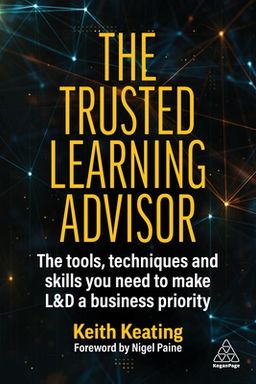
The Trusted Learning Advisor cover

The Trusted Learning Advisor

by Keith Keating

The Trusted Learning Advisor empowers L&D professionals to transcend traditional roles, offering tools and strategies to become proactive, trusted advisors. By enhancing trust and strategic communication, this guide helps you secure a vital role in organizational success.

Becoming the Trusted Advisor

What makes someone so trustworthy that others not only seek their professional expertise but also their judgment in personal dilemmas? In The Trusted Advisor, consultants David H. Maister, Charles H. Green, and Robert M. Galford argue that while professional success begins with technical competence, it reaches its peak when clients deeply trust you as a human being. The authors contend that no amount of expertise substitutes for a genuine trust-based relationship—one where clients feel safe, understood, and confident that their advisor always puts their interests first.

At its core, the book argues that to succeed as a professional—whether you’re a lawyer, consultant, accountant, or executive—you must master the ability to build and maintain trust. But trust, the authors emphasize, is not granted by skill alone; it must be deliberately and consistently earned through behavior, empathy, and integrity. Most professionals, they explain, obsess over perfecting their technical knowledge and efficiency while neglecting the emotional and relational dimensions that clients value most. As a result, they miss the chance to become something much greater than a service provider: a trusted advisor.

Why Trust Matters More Than Expertise

Maister, Green, and Galford open with a simple but transformative premise: clients don’t just buy technical solutions—they buy reassurance, confidence, and care. In an age where professional talent is abundant and information is accessible, what sets great advisors apart is their ability to form trust relationships. Such relationships lead clients to open up about their needs, fears, and ambitions—information that often determines the success of an engagement. Without trust, even the best advice goes unused; with it, clients lean in, listen, and act.

The authors point out that trust used to be assumed by default—reputations and credentials were enough. Today, clients are skeptical and self-protective. They micromanage billing, demand detailed proposals, and approach engagements transactionally. So, if you aspire to the old ideal of the dignified professional serving clients as partners rather than vendors, you must rebuild that trust deliberately and visibly, every time.

The Journey from Expert to Advisor

A key framework introduced early in the book is the progression from vendor to trusted advisor. Every professional starts as a vendor—hired to do a job based on technical skill. Over time, your role can evolve to problem-solver, strategic resource, and ultimately confidant. At the pinnacle lies the trusted advisor relationship, where clients turn to you not just for expertise but for perspective on decisions that may blend business, organizational, and personal stakes.

This evolution requires balancing four types of trustworthiness: credibility (your knowledge and experience), reliability (your consistency and dependability), intimacy (your ability to create safety and openness), and low self-orientation (your focus on the client’s best interest rather than your ego). This formula—later crystallized as the “Trust Equation”—underpins every piece of advice in the book.

The Human Side of Professionalism

Maister and his coauthors challenge the conventional belief that professionalism is about detachment and expertise alone. True professionalism, they argue, is deeply personal: it’s about caring wisely. Great advisors show curiosity, humility, empathy, and courage. They accept that every client problem is part technical, part emotional, and part political—and they operate comfortably across those boundaries.

The authors illustrate this through compelling stories: David Maister’s dentist who earned his lifelong trust through small gestures of care, or a lawyer who saved a client from a disastrous family lawsuit by acknowledging the emotional stakes rather than pushing for litigation. These anecdotes reinforce a simple truth: genuine concern outlasts clever solutions.

The Trust Process

The path to trust unfolds through five stages: engaging (sparking a meaningful conversation), listening (showing genuine understanding), framing (clarifying complex issues), envisioning (creating a shared picture of success), and committing (acting together with mutual accountability). Each stage demands a balance of rational clarity and emotional intelligence. For example, “framing” a problem means not just defining the issue, but also gently surfacing the unspoken fear or organizational politics wrapped around it.

By mastering these five steps, professionals move from being perceived as “smart and capable” to “someone who truly gets me.” The relationship deepens as clients begin to confide sensitive matters and rely on you as a partner in their most important decisions. This sense of mutual trust—earned through transparency, consistency, and care—is the hallmark of the trusted advisor.

Why It Matters Now

In an era obsessed with short-term results, The Trusted Advisor is a quiet manifesto for long-term influence. It reminds professionals that integrity and empathy are not “soft” virtues but strategic advantages. Relationships built on trust generate repeat business, referrals, and the joy of meaningful work. In short, becoming a trusted advisor is not just good ethics—it’s good economics.

Big idea: The greatest competitive edge isn’t expertise—it’s trust. Professionals win not by being the smartest in the room, but by being the one clients trust the most.


The Trust Equation: Four Pillars of Credibility

Maister, Green, and Galford’s “Trust Equation” is one of the book’s most quoted ideas—and for good reason. It gives a simple but profound way to understand why some people are trustworthy and others are merely competent. The formula looks like this:

Trustworthiness = (Credibility + Reliability + Intimacy) / Self-Orientation

Credibility: More Than Technical Skill

Credibility is the sum of your expertise plus your presence. It’s not just about what you know—it’s how you communicate that you know it. Doctors hang diplomas on the wall to create reassurance. Advisors, similarly, demonstrate credibility not only by accuracy but by showing honesty and completeness. It’s better to say “I don’t know, but I’ll find out” than to bluff. Overpromising to appear competent damages trust exponentially.

Reliability: Keeping Small Promises

Reliability is the bridge between words and actions. Clients trust people who consistently do what they say—especially in small details. Returning calls quickly, meeting deadlines, and showing up on time matter more than grand gestures. Like FedEx, whose consistency—not its innovation—earned customer loyalty, you build trust through steady, predictable follow-through. Each kept promise is a small deposit in the “trust bank.”

Intimacy: The Courage to Be Human

Intimacy means emotional closeness—the client’s sense that it’s safe to be open with you. In business, many professionals shy away from it, fearing it’s “too personal.” Yet the authors show that empathy and candor are the most powerful forms of differentiation. It’s the lawyer who says, “You must be torn about this case,” or the accountant who calls to see if you’re holding up after a tough meeting. Intimacy requires courage, discretion, and sincere respect for boundaries.

Self-Orientation: The Trust Killer

At the denominator of the trust equation lies the single biggest barrier to trust: self-orientation. When you worry about appearing smart, closing the deal, or defending your ego, clients notice. The focus shifts from them to you, and trust evaporates. To lower self-orientation, you must learn to serve first, to cultivate curiosity rather than control, and to operate from what Dale Carnegie called a “genuine interest in the other person.”

The beauty of the Trust Equation is its flexibility. Improve any of the first three qualities—or reduce self-orientation—and you become instantly more trustworthy. Maister’s advice is deceptively simple: tell the truth, fulfill small promises, take personal risks, and keep the spotlight on the client. That combination builds reputations that last for decades.


From Knowing to Caring: Shifting the Professional Mindset

Technical mastery might get you hired, but emotional mastery keeps you indispensable. The authors argue that most professionals plateau because they believe expertise alone defines their value. The real leap comes from transforming how you think—from focusing on information to focusing on people.

The Power of Curiosity

One of the most overlooked traits of great advisors is curiosity. True curiosity—the urge to understand a client’s motives, fears, and hopes—drives better questions and deeper insights. When you ask, “Why does this matter to you?” instead of “What’s the problem?” you shift from fixing to empathizing. Trusted advisors become co-thinkers, not consultants-for-hire.

Ego Strength and Humility

Ego strength is not arrogance—it’s emotional maturity. Advisors need enough confidence to challenge powerful clients and enough humility to admit when they’re wrong. Joe Sherman’s story of trusting his advisor during an ethical crisis shows this blend in action: the advisor stayed calm, took no bait, and focused on resolution rather than ego defense. That composure—“strong ego, low self-orientation”—creates immense trust.

Inclusive Professionalism

The authors challenge the elitism of traditional professionalism—the “we experts, you clients” divide—and replace it with inclusive professionalism: seeing the client as an equal collaborator. This perspective dissolves hierarchy and turns projects into partnerships. True pros align their success with the client’s, a shift that makes collaboration easier and more rewarding.

This mindset mirrors Stephen Covey’s “abundance mentality” (from The 7 Habits of Highly Effective People): believing there’s enough credit and opportunity for everyone. In trust-based work, letting go of control paradoxically increases your influence.


Listening and Framing: The Art of Understanding

Trusted advisors listen not to answer but to understand. The Trusted Advisor devotes significant attention to listening—because poor listening is the most common way professionals lose credibility. Jack Welch once praised his lawyer Steven Volk as “the best advisor because he listens better than anyone else.” Listening is the soil in which trust grows.

Active and Reflective Listening

The book distinguishes passive listening (nodding and saying “uh-huh”) from active listening (reflecting, questioning, and showing empathy). Reflective listening confirms both content and emotion: “It sounds like you’re frustrated by the repeated delays.” Supportive listening adds empathy: “That must be difficult after all your effort.” Skilled listeners track tone, words, and unspoken emotions simultaneously.

Framing: Making Sense of Chaos

Once you’ve listened, the next step is framing—helping the client distill a complex mess of data, politics, and feelings into a clear, shared understanding. There are two types: rational framing (simplifying the technical aspects) and emotional framing (surfacing hidden fears or conflicts). For example, consultant David Maister once helped a divided management team by naming the real issue: fear of confronting a top rainmaker. Bringing that “unspeakable” truth to light broke the gridlock.

“Naming and claiming” is the authors’ term for this courage—to respectfully raise what everyone senses but no one says. The key is to take responsibility for raising it gently: “I might be wrong, but I sense some hesitation about this direction.” This kind of candor, packaged with humility, separates trusted advisors from tactless critics.

By mastering the duet of listening and framing, you prove that you not only hear but understand. That proof is the cornerstone of credibility and emotional connection.


Building and Sustaining Relationship Trust

Relationships, like trust, thrive on small deposits of attention. Maister and his coauthors reveal that building deep client relationships mirrors romance: empathy, respect, and small, unexpected gestures matter most. You earn connection not with grand proposals but with everyday behaviors that communicate care and reliability.

Relationship Principles

The authors outline eleven timeless rules: go first, illustrate don’t tell, listen for difference, earn the right to advise, ask for help, use specific compliments, and show appreciation. A consultant who reads a client’s speech before presenting ideas demonstrates preparation and respect; a lawyer who checks in “just to see how things are going” shows human concern. These aren’t gimmicks—they’re signals of selflessness.

Demonstrating Care Without Overstepping

Caring in business often means taking personal risks. You might ask a tough question (“Are you comfortable with this decision emotionally?”) or stay late to solve a problem the client didn’t assign. These actions say, “I’m invested in you, not just the project.” As Regina Pisa’s story shows—she became a terminally ill client’s family confidant—relationships built with sincerity can transcend commerce entirely.

Sustaining Trust Beyond the Sale

The authors warn against “drive-by professionalism”—disappearing after an engagement ends. Clients despise advisors who only call when they want more business. Staying in touch between projects, sending insights unprompted, or connecting team members builds continuity and demonstrates a long-term commitment. Trust, after all, is cumulative—it grows through time and consistency.


Engaging and Earning Trust from the Start

First impressions matter. “Engagement,” the authors explain, is the first stage of trust building—where the client decides that both the issue and the person are worth talking to. That decision demands that you demonstrate value even before money changes hands.

Maister encourages professionals to “go first” by offering ideas upfront—what he calls working on spec. One consulting firm famously analyzed an industry before contacting its target client and said, “We believe we have some unique insights—may we share them?” That act of generosity built instant trust. The principle: show don’t sell.

Re-Engaging Existing Clients

Existing clients crave freshness too. To reengage them, bring something new: competitive insights, strategic provocations, or reflections on past conversations. “I’ve thought about what you said last month,” signals attentiveness and care. The authors compare it to romance—keep it interesting, or it fades. Trust grows when clients see you continually thinking about their success between formal meetings.

This stage requires courage and preparation. Doing your research communicates respect. When you approach clients with insights about their world rather than questions about your services, you flip the power dynamic—you become a peer, not a seller.


Handling the Hard Parts: Risk, Ego, and Courage

If these ideas sound deceptively simple, why is building trust so rare? The authors dedicate an entire chapter to the obstacles: fear of vulnerability, obsession with technical mastery, and organizational cultures that reward self-promotion. In short, many professionals are terrified of emotional risk.

The Myths That Block Trust

Maister lists fourteen common excuses—from “It’s too personal and risky” to “My client only wants facts.” Each stems from self-orientation: focusing more on how we appear than on what the client needs. Professionals overvalue being right and undervalue being helpful. Ironically, perfectionism becomes a mask for fear. The authors advise practicing humility through small acts—admitting ignorance, asking “dumb” questions, or acknowledging discomfort. Courage, not brilliance, breeds trust.

Managing Your Own Emotions

Trusted advisors master emotional control. When anxiety flares—say, you don’t understand an acronym in a meeting—the right move is to admit it immediately. By doing so, you defuse insecurity before it shapes behavior. The cost of silence is far greater than the risk of temporary embarrassment. Emotional honesty, the authors argue, is a professional responsibility.

As one executive tells Maister, “Taking responsibility beats assigning blame.” It’s an attitude shift from self-protection to service. Once your self-worth is no longer threatened by imperfection, you can focus entirely on the client. That, perhaps, is the ultimate definition of trustworthiness.


Turning Service into a Trust-Based Business Strategy

Trust isn’t just good manners—it’s profitable strategy. The authors show that high-trust relationships lead to more repeat business, better referrals, and fewer client defections. Their “trust economics” follow a simple pattern: investing time to build confidence costs less than constantly chasing new clients. The ratio is striking—winning new business can be four to seven times more expensive than expanding existing ones.

Maister urges firms to replace “sales plans” with “relationship plans.” Real business development means helping clients think differently, not pitching them more services. In cross-selling, for example, clients rarely trust a referral until they’ve seen collaborative behavior firsthand. The solution: integrate sales and service by serving while selling. Offer ideas, analysis, or prototypes before asking for contracts. Show value; don’t describe it.

Institutionalizing Trust

Though trust happens between people, firms can design cultures that support it. Relationship managers should serve as client advocates—not quota-driven salespeople—and should connect multiple members across both organizations. The best firms ensure their junior staff learn the client’s business intimately, empowering them to notice emerging issues early. In this ecosystem, every interaction, however small, contributes to the trust “capital” shared between firm and client.

As the authors conclude, “Life is too short to work with idiots”—on either side. Trusted relationships amplify both success and satisfaction. When you genuinely care about helping others succeed, your reputation, influence, and profits naturally follow.

Dig Deeper

Get personalized prompts to apply these lessons to your life and deepen your understanding.

Go Deeper

Get the Full Experience

Download Insight Books for AI-powered reflections, quizzes, and more.