
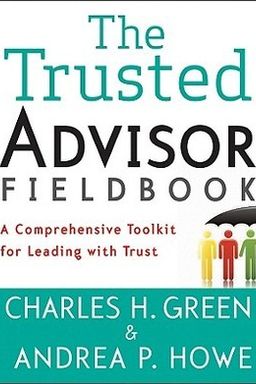
The Trusted Advisor Fieldbook cover

The Trusted Advisor Fieldbook

by Charles H Green & Andrea P Howe

The Trusted Advisor Fieldbook is your essential guide to developing trust and credibility in professional relationships. With actionable insights and real-world examples, this book equips you to master empathetic communication and become an indispensable advisor, navigating complex partnerships with ease.

Trust as the Operating System of Relationships

What if trust isn’t a soft virtue but the operating system that drives every relationship—professional or personal? In The Trusted Advisor Fieldbook, Charles H. Green and Andrea P. Howe argue that trust is both measurable and actionable. It can be cultivated intentionally through attitudes, habits, and conversation models that anyone can learn. The book reframes trust not as a fixed trait but as a series of daily choices: how you listen, how you handle risk, and how you put others first even under pressure.

The Two Sides of Trust

Trust lives in a relationship’s space between two people. It requires both trusting (your willingness to take a risk) and being trustworthy (how others perceive your reliability, credibility, and care). You can’t outsource it to systems or brands—it’s interpersonal. When Charles Green left cash in a Danish taxi, he deliberately assumed honesty; the driver later returned the money. That story illustrates trust’s reciprocity: when you act trustingly, others often rise to meet your expectation.

The Paradox of Risk

There is no trust without risk. Waiting for guarantees means you never start trusting. Paradoxically, the safest behaviors often emerge from vulnerability—admitting ignorance, sharing emotions, or acknowledging errors. Chip Grizzard’s quick decision to refund a client after a mail-drop mistake transformed potential loss into lifetime loyalty because he trusted that transparency would build credibility.

Models That Make Trust Measurable

The authors organize the trust journey through three simple models that structure action. First, the Trust Equation: Trustworthiness = (Credibility + Reliability + Intimacy) / Self-Orientation. Raise the numerator by showing expertise, consistency, and empathy; lower the denominator by reducing ego or fear. Second, the Trust Creation Process (ELFEC): Engage, Listen, Frame, Envision, Commit—five conversational stages that turn interactions into partnership. Third, the Trust Principles: serve others’ interests first, collaborate, think long-term, and act transparently. Together these tools demystify how trust forms, showing it’s not magic but disciplined behavior.

Attitudes Before Techniques

Behaviors follow beliefs. Before learning new skills, you must cultivate five mind-sets: follow principles rather than rigid processes; see yourself as deeply connected to others; reduce self-focus (“it’s not about you”); value curiosity over having all the answers; and view time as your ally rather than your master. These attitudes shift your orientation from short-term control to long-term relationship-building. As one story illustrates, architect Pat Pannone lost a quick commission by staying curious and prioritizing the client’s needs—but gained trust and long-term partnership that far outweighed the lost fee.

Listening as the Currency of Trust

Empathetic listening is the single most powerful trust-accelerator. Beyond active listening, it attends to emotional “music” behind words—tone, silence, and context. When you make others feel deeply understood, they automatically extend reciprocal trust. Unit7’s advertising team demonstrated this by having their staff live as type 2 diabetics to understand clients’ worlds; the resulting campaign resonated profoundly with patients. That is listening as empathy in action.

The Human Dividend of Trust

Trust pays off emotionally and economically. It speeds collaboration, lowers transaction costs, and creates durable relationships. The authors insist it’s not soft—it’s strategic. Whether you are leading a corporation, negotiating in a market crisis like Ruben Vardanian in 1990s Russia, or coaching a peer, trust converts intent into sustainable influence. In essence, The Trusted Advisor Fieldbook teaches you that trust may begin as an emotion, but it matures into a disciplined, measurable practice—the art and science of putting others first so that results and relationships thrive together.


The Mindsets That Sustain Trust

Before you build trust through action, you must think like a trusted advisor. The authors outline five core attitudes that form the mental soil from which trustworthy behaviors grow. Without these mindsets, any tactic risks sounding manipulative or hollow.

Principles Over Processes

Processes ensure repeatability, but principles ensure wisdom. Hazel Thompson’s Australian story of an uncontacted partner reveals the flaw of process-only thinking: routine check-ins missed their emotional purpose. A simple principle—“stay connected for the other’s sake”—would have built loyalty where mechanical procedure failed.

You Are More Connected Than You Think

Operate with an abundance mindset. When you realize your professional ecosystem includes competitors, former colleagues, and even clients’ partners, scarcity-based defensiveness dissolves. Collaboration replaces turf protection.

It’s Not About You

Self-orientation—the Big S in the Trust Equation—is the silent killer of trust. Like Lucy grabbing the football in a Charlie Brown cartoon, ego-driven motives undermine consistency. Practice shifting focus outward: make the client or colleague the center of your curiosity and care. (Harvard’s Robert Kegan calls this the movement from “subject” to “object”—seeing your ego rather than being trapped by it.)

Curiosity Trumps Knowing

Trust grows faster when you ask questions than when you demonstrate expertise. Architect Pat Pannone, who insisted on exploring an attic before selling renovations, gained lifelong trust by caring more about genuine understanding than immediate billing. Curiosity signals humility and imagination—two traits every trusted partner shares.

Time Works for You

Treat time as an ally, not a weapon. Trusted advisors don’t manipulate deadlines; they pace them collaboratively. When you share ownership of timing—rather than imposing urgency for your own gain—you replace pressure with partnership. In practice, stop “managing the clock” and start “partnering through the calendar.”


Building Trust One Conversation at a Time

Trust doesn’t emerge in grand gestures; it’s built through conversations. The book’s second major contribution is its set of models—the Trust Equation, the ELFEC process, and the Trust Principles—that let you design and diagnose those moments.

The Trust Equation

Trustworthiness equals (Credibility + Reliability + Intimacy) divided by Self-Orientation. That formula converts intuition into metrics. Raise credibility by knowing your stuff and telling the truth (“I don’t know” can boost it). Build reliability through consistent small wins—emails returned promptly, promises kept. Deepen intimacy by making others feel emotionally safe. Finally, shrink self-orientation by easing fear and focusing on the client’s outcomes rather than your needs. (As the authors quip, “fear makes your S look big.”)

The Trust Creation Process (ELFEC)

The five steps—Engage, Listen, Frame, Envision, Commit—form a repeatable rhythm. Listening is the hinge: skip it and the rest collapses. You might engage by offering value, listen to uncover root issues, frame the problem jointly, envision a new reality, and commit to action. Used properly, ELFEC turns a one-off transaction into a long-term alliance.

Trust Principles

These principles—focus on the other, collaborate, think long-term, and be transparent—guide ethical consistency. Ruben Vardanian at Troika Dialog applied them in Russia’s unstable 1990s financial environment, proving that in even chaotic markets, principled trust can become a competitive advantage. Together the models make trust teachable, trackable, and practical every day.


Empathy and Listening as Strategic Skills

Empathy is not a soft extra—it’s the strategy that opens every door. The book elevates listening from a courtesy to a professional discipline. When done empathetically, it creates the emotional safety that makes collaboration, influence, and innovation possible.

From Active to Empathetic Listening

Active listening paraphrases words; empathetic listening mirrors feelings. It says, “I understand both what you mean and how you feel.” Thomas Friedman’s notion—it’s not what you hear by listening, but what you say by listening—captures that dynamic. It’s communication through presence rather than persuasion.

The Barriers to True Attention

Four obstacles commonly block real attention: talking instead of listening, constant digital distraction, fear of intimacy, and your internal chatter. Noticing these, even silently, helps restore presence. (Think mindfulness meets business communication.)

Three-Level Listening

Listen for rational (facts), contextual (background), and emotional (feelings) data. Respond at the same level you receive. When someone shares vulnerability and you reply only with data, you shut down intimacy. Unit7’s diabetes campaign is a vivid demonstration: by living their clients’ experience, they didn’t just collect data—they embodied empathy.

Everyday Empathy Practices

Try low-stakes empathy daily. Reflect phrases like “That makes sense,” “It sounds like…,” or “If I were in your shoes…” Practice three-level listening even at a coffee shop. The goal isn’t perfection; it’s to make authentic connection habitual. Over time you’ll find clients and colleagues literally lean in—because they feel heard.


Improvisation, Risk, and Self-Awareness

No plan survives contact with real life. Moments of truth—when things go wrong or suddenly change—reveal your true trustworthiness. The authors connect three forces: improvisation, risk-taking, and self-knowledge. Master these, and crisis turns into opportunity.

Improv Thinking

Improvisers use the principle “Yes, and…”—accept what is offered and build on it. In business, that means embracing clients’ emotions or mistakes instead of deflecting them. “Thinking out loud” transparently shows your reasoning process, helping others follow and collaborate in real time. It’s the opposite of corporate armor.

Risk as the Catalyst of Trust

Trust flourishes only when someone goes first. Taking a personal or emotional risk communicates faith in the other person. Chip Grizzard’s rapid decision to refund a client after a costly mailing error exemplifies it: short-term vulnerability created long-term trust. The book lists six micro-risks to practice—acknowledge discomfort, share feelings, deliver bad news promptly, take responsibility, reduce ambiguity, and share something personal.

Know Yourself to Manage Self-Orientation

Self-awareness undercuts panic-driven reactions. Daniel Goleman’s amygdala hijack explains why fear inflates the Big S—your self-orientation—in stressful moments. Combat it with rehearsal (“preloading” your responses), grounding, and honest introspection. Lynn P.’s Test Readiness Review story—choosing truth under pressure—proves that self-knowledge combined with courage turns moral risk into credibility. In short: improv equips you for the unknown, risk invites connection, and knowing yourself keeps you authentic through both.


Collaborative Partnership and Business Practice

Trust isn’t built in isolation—it depends on how you work with others. The Fieldbook shows how collaboration, partnership, and trust-centered business practices transform ordinary interactions into enduring alliances.

Partnering as a Verb

Real partners toggle fluidly between leading and following. They frame shared success as 100–100, not 50–50. The Apollo 13 team, whose improvisational cooperation saved lives, models this mindset: personal pride yielded to shared mission. You can practice it by converting “my” problems into “our” problems for a week—watch how the energy in conversations shifts.

Trust-Based Selling and Marketing

Selling ethically means serving the buyer’s agenda first. Marketing that gives useful ideas away—without strings—creates immense goodwill. Richard Branson’s Virgin brand and Unit7’s empathetic campaigns embody clarity and transparency that differentiate on relationship, not price. In pitches, less is more: Craig Leach’s choice to ditch slides for a room conversation won trust quickly because it invited authenticity over performance.

From Closing to Collaborating

Traditional “Always Be Closing” logic erodes relationships. In complex, trust-based selling, the better mantra is “Always Be Collaborating.” Help clients make decisions in their time, with their comfort. Sally Foley Lewis demonstrated this by turning down ill-suited work—her honesty generated better business later. In business as in life, truth and generosity compound faster than persuasion tactics.


Navigating Complexity — Leadership, Politics, and Repair

When stakes rise—executive meetings, organizational politics, or stalled relationships—the trust professional must lead calmly and courageously. These chapters teach you how to navigate high-altitude interactions and revive or repair trust when it falters.

Selling to the C-Suite

Executives can spot ego a mile away. You win their trust through mindset, not slide decks. Prepare your inner game—check motives, manage emotions, clarify your role. Respect the time, listen more than you speak, and think out loud so your reasoning is visible. Simple human noticing—like Gary Celli discovering a shared alma mater in a messy CIO office—can transform a cold meeting into years of loyalty.

Handling Stalled or Difficult Relationships

When someone goes silent, resist storytelling. Instead, name the stall gently (“There are many reasons we haven’t connected; that’s okay; just wanted to check in”) or up the ante with new insight. If nothing works, exit gracefully. Likewise, with “difficult people,” remember that “there are no difficult people, only difficult relationships.” Reframe the issue to include yourself, listen with empathy, and confront constructively when needed. Anthony Iannarino’s tough choice to walk from an unfair accusation—preserving integrity over the sale—shows how principled risk rebuilds trust.

Navigating Politics

Politics is just competing interests. Approach it neutrally: see the organization, not individuals, as your client. Surface underlying business issues rather than personalities and act as guide, not combatant. Leaders like Charles Green argue that avoidance betrays the organization’s future—constructive engagement builds it. Handle politics with transparency and you turn conflict into collaboration.


Creating Cultures of Trust

The final ideas extend individual trustworthiness into systems and culture. Trusted organizations institutionalize behaviors—negotiation, virtual collaboration, training—that make trust scalable and measurable.

Trust-Based Negotiation

Instead of gaming leverage, trusted negotiators orient to fairness over time. They disclose stakes honestly and focus on creating mutual value. Andy Lechter’s calm, fact-based lease negotiation illustrates that empathy and transparency can produce stronger deals than hardball tactics.

Trust at a Distance

Virtual work weakens natural intimacy, so compensate through deliberate reliability and connection. Juliana Slye’s method—asking remote colleagues about challenges casually—restored empathy and presence. Rich media, structured check-ins, and rituals sustain familiarity across screens.

Culture, Economics, and Training

Trust has tangible ROI: faster decisions, higher retention, more creativity. Case studies from Microsoft and Pediatric Services of America show performance gains when leaders model trust. To scale it, train experientially: cause “aha” moments through real practice, peer coaching, and reflection. Combine virtues (credibility, reliability, intimacy, other-focus) with values (collaboration, long-term view, transparency). When both align, trust stops being an initiative and becomes the culture’s default behavior.

Dig Deeper

Get personalized prompts to apply these lessons to your life and deepen your understanding.

Go Deeper

Get the Full Experience

Download Insight Books for AI-powered reflections, quizzes, and more.