
Idea 1
The Transformative Power of Trust
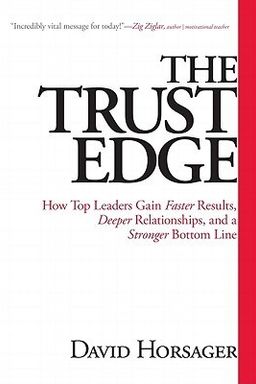
How much does trust really shape your life, career, and relationships? David Horsager’s The Trust Edge argues that trust isn’t a soft, emotional concept—it’s a measurable competency that determines every outcome in leadership, business, and community. Horsager contends that building and maintaining trust isn’t optional; it’s the critical edge that separates thriving organizations and individuals from those that stagnate. According to his extensive research with leaders, companies, and institutions, trust is the single most powerful currency in our interconnected age—more valuable than innovation, strategy, or capital.
When trust is high, productivity soars, costs drop, and relationships deepen. Teams perform better, creativity expands, and loyalty endures through adversity. When trust is low, Horsager warns, everything takes longer, costs more, and erodes morale. In one stark statistic from Columbia Business School’s John Whitney, mistrust literally doubles the cost of doing business. Horsager calls the ability to inspire and sustain trust the Trust Edge—a competitive advantage that enables leaders to move faster, scale culture, and achieve lasting influence.
Why Trust Has Become a Global Crisis
Horsager begins by painting a picture of a “trust crisis” that extends far beyond boardrooms. In a world plagued by financial fraud, political scandals, and corporate meltdowns, trust has become the world’s most precious resource. We live in what he calls a “flattened world,” connected by technology yet fractured by suspicion. From product recalls to economic downturns, the consequences of mistrust are visible everywhere—from the collapse of venerable institutions like Lehman Brothers to the declining confidence in governments, media, and even brands.
His core argument is simple: trust is not intangible. It can be learned, measured, and intentionally built through specific habits and behaviors. That insight leads Horsager to his signature framework—the Eight Pillars of Trust—which identify the characteristics that make individuals, organizations, and nations trusted. His case is supported by extensive data: companies with high trust levels outperform competitors by 186%, and cultures grounded in trust yield creativity, innovation, and economic resilience.
The Eight Pillars of Trust: A Framework for Action
From years of studying high-performing leaders and organizations—ranging from Southwest Airlines to Warren Buffett—Horsager identified eight pillars that build the Trust Edge: Clarity, Compassion, Character, Competency, Commitment, Connection, Contribution, and Consistency. Each pillar is both a personal and organizational principle. Together, they form the blueprint for building enduring credibility.
He explains how trust functions like a forest: slow to grow, but easily destroyed. It takes years to establish a reputation and moments to lose one. By cultivating these eight pillars consistently, you create deep roots that can withstand storms—whether those storms come in the form of market shifts, customer loss, or public criticism. In contrast, neglecting them leads to erosion of influence and integrity.
Why This Matters in a “Flat” World
The book goes beyond personal leadership to examine trust’s societal and global implications. Horsager leverages insights from economists, CEOs, and psychologists to show how trust impacts every scale of human exchange—from marriages and mentoring to geopolitics and online commerce. In today’s digital and global environment, speed and transparency make trust both harder to earn and more vital to sustain. People and organizations now must cultivate “deep trust” across cultural, technological, and generational divides.
Throughout The Trust Edge, Horsager shares vivid examples: small businesses outperforming giants by being accountable; Southwest Airlines retaining loyalty even after a mistake; Whole Foods’ John Mackey proving that character-driven leadership can grow both profits and trust. These stories remind you that trust isn’t built through slogans or clever branding, but through integrity and consistency in small actions repeated over time.
Why You Should Care
Horsager’s message is both practical and inspirational. Whether you’re a CEO, teacher, parent, or student, the way others perceive your trustworthiness defines the impact you can have. Trust magnifies your influence while mistrust shrinks it. Horsager closes with a challenge: if you want genuine, lasting success—in relationships, leadership, or business—commit to becoming trustworthy yourself rather than merely demanding trust from others. Focus on the small, consistent actions that build your own credibility, and the results will follow automatically.
“You will never get one big chance to be trusted in your life; you will get thousands of small ones.” Horsager’s words capture the heart of the book: trust is earned not in grand gestures, but in daily moments of clarity, compassion, and consistency.