
Idea 1
The Triumph of Seeds: How Tiny Packages Shaped Life and Humanity
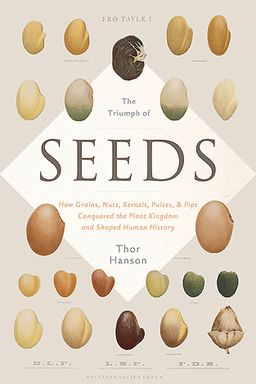
Have you ever held a seed in your hand and felt the mystery of potential life hidden within it? In The Triumph of Seeds, biologist Thor Hanson uncovers the astonishing world inside those tiny packages and argues that seeds are much more than plant embryos—they are the engines of evolution, civilization, and daily life. Hanson contends that seeds, through their remarkable ability to nourish, defend, endure, travel, and unite, have conquered the planet and transformed the fate of humanity.
This engaging natural history explores how seeds evolved to store energy, protect their offspring, and disperse across the globe. Hanson combines storytelling, science, and humor to reveal that seeds are the foundation of agriculture, medicine, industry, and even human identity. From an Almendro tree in the Costa Rican rainforest to the humble wheat of Idaho’s Palouse Prairie, he shows how seeds define ecosystems and economies alike.
Seeds as Instruments of Civilization
Hanson insists that we live in a “world of seeds.” Our breakfast oats, the cotton in our shirts, and the coffee fueling our mornings all emerge from seed biology. The shift from hunting and gathering toward agriculture was humanity’s most significant transition—and seeds were the centerpiece. They made it possible for humans to domesticate plants, settle in communities, and create technological societies. Cereal grains such as wheat and rice became the “staff of life,” fueling empires and shaping trade routes. By understanding seeds, Hanson helps readers see agriculture not as invention but as partnership—a long coevolution between humans and plants.
The Fierce Energy Within
At the book’s heart is Hanson’s fascination with the intensity hidden within seeds. Quoting George Bernard Shaw’s description of the “fierce energy concentrated in an acorn,” he asks how so much potential can lie dormant until conditions are right. The answer is evolutionary ingenuity. Seeds are both survival capsules and time machines—they store food and DNA, wait patiently for favorable conditions, and then unleash life. From his frustrating attempts to crack an Almendro seed with a hammer to the microscopic structure of a coffee bean, Hanson makes readers feel that every seed embodies history, adaptation, and future possibility.
Why Seeds Matter to You
Hanson’s argument matters because seeds connect all living things. Whether you plant tomatoes on a balcony or rely on grains for your daily meal, your life depends on them. Yet they’re disappearing as biodiversity shrinks and industrial farming narrows genetic pools. Hanson’s discoveries—from seed banks in the Arctic to the story of Methuselah, a 2,000-year-old date seed that sprouted—show that preserving seeds means preserving resilience and survival. They are nature’s insurance policy against time, change, and extinction.
A Journey Through Science and Story
In this sweeping narrative, you’ll encounter snake-poked rainforests, prehistoric coal mines, revolutionary coffeehouses, and Cold War assassinations—all united by seeds. Hanson makes botany both personal and philosophical; his curiosity leads readers to ask deeper questions about life and endurance. What does it mean for something to be alive but waiting? How do seeds mirror our own instincts for survival and discovery?
By the time you finish this book—and this summary—you’ll see that seeds aren’t merely passive packets in the soil. They are strategists, survivors, and storytellers of evolution. Understanding them means understanding how nature builds permanence out of fragility and how human civilization sprouted from plant ancestry. Hanson’s central message is simple yet profound: those small grains underfoot hold the blueprint of life itself.