
Idea 1
Putting Henry Kissinger on Trial: A Case for Global Justice
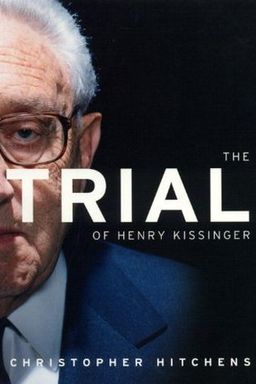
What happens when the moral authority of a nation is undermined by the crimes of its most celebrated leaders? In The Trial of Henry Kissinger, Christopher Hitchens poses that unsettling question, arguing that the former U.S. Secretary of State and National Security Advisor should be prosecuted for war crimes, crimes against humanity, and violations of international law. This isn’t a political hit piece or a polemic on ideology—it’s a forensic case built like a prosecutor’s brief, inviting readers to imagine Kissinger not as a respected statesman but as a defendant in the dock at The Hague.
Hitchens’s core argument is both moral and legal: if the principles of Nuremberg are to apply to all, then Henry Kissinger must be held accountable for orchestrating policies that resulted in mass murder—in Indochina, Bangladesh, Chile, East Timor, Cyprus, and beyond. The book’s shocking premise is based not on rhetoric but on declassified memos, diplomatic transcripts, and eyewitness accounts that paint a chilling picture of how decisions taken in Washington unleashed chaos and death across continents. The crimes are not alleged—they are documented; the question is whether the law applies to those who once wrote it.
The Moral Weight of a Legal Argument
Hitchens opens with a simple but devastating question: why should Kissinger, whose policies mirror the actions for which figures like Augusto Pinochet, Slobodan Milošević, or General Yamashita were prosecuted, enjoy global celebrity instead of censure? He contextualizes this through the 1999 arrest of Pinochet in London—a moment that shattered the traditional immunity claimed by world leaders. If Chile’s dictator could face trial, why not the man in Washington who helped bring him to power? This question frames the book’s moral thread. Hitchens insists that true justice demands consistency: the law must bind both the tyrant and the policymaker, the junta general and the Harvard-trained strategist.
He outlines six major charges that could form a prosecutable indictment: mass killing of civilians in Indochina, collusion in genocide in Bangladesh, conspiracy to murder political figures in Chile and Cyprus, enabling genocide in East Timor, and conspiring to kidnap and murder a journalist in Washington, D.C. Each chapter serves as evidence, dissecting one case at a time with meticulous use of official cables, memos, and testimony. It’s less a biography than a legal argument disguised as investigative journalism.
Mosaic of Crimes—and Complicity
Throughout the book, Hitchens draws connections between Kissinger’s violent realpolitik and the broader culture of U.S. impunity. The incidents in Vietnam and Cambodia reveal the cold mechanics of power: secret bombings authorized without congressional approval, the destruction of neutral territories, and deliberate deception of the public. In Bangladesh, Kissinger dismisses genocide as an internal matter while protecting an ally, General Yahya Khan, who exterminated hundreds of thousands. In Chile, he orchestrates the overthrow of a democratically elected government, making possible the shadow war of Operation Condor. In Cyprus, his office ignores explicit intelligence about an impending coup, and in East Timor, he greenlights an invasion that kills a third of the population. The pattern is unmistakable—each episode shows a leader who understood precisely what he was doing and saw legality as an obstacle, not a boundary.
Why This Matters Today
For Hitchens, holding Kissinger accountable isn’t mere revenge—it’s about the integrity of international justice itself. If Western institutions prosecute only the defeated or the powerless, they confirm the cynical belief that morality in global politics is selective. The book becomes a reflection on the credibility of the American experiment, forcing readers to ask: can a nation that crafted the Nuremberg principles ignore them when they implicate its own icons?
Hitchens ends with a note both hopeful and grim. The post–Cold War world has opened cracks in the edifice of sovereign immunity: from the Pinochet ruling to the formation of the International Criminal Court. But he warns that the true test will come only when such laws apply upward—toward the powerful. Kissinger’s impunity, he suggests, is not just a moral failure but a stain on the very idea of justice. In exposing it, Hitchens not only dissects one man’s crimes but demands that you question whether any state, however powerful, can ever be above the law.