
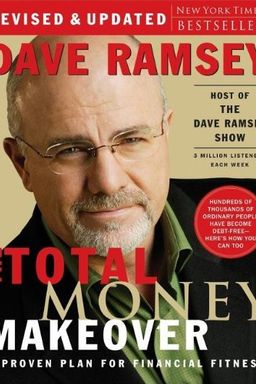
The Total Money Makeover cover

The Total Money Makeover

by Dave Ramsey

The Total Money Makeover is a transformative guide to achieving financial security and independence. Through a proven seven-step plan, readers learn to eliminate debt, build savings, and invest wisely, ensuring a prosperous and stress-free future. Perfect for anyone seeking financial stability, this book empowers you to take control of your money and your life.

Transforming Your Finances with the 'Total Money Makeover'

What would it feel like to have no debt — no student loans, no car payments, and even no mortgage? For most people, that idea sounds like a fantasy. But Dave Ramsey’s The Total Money Makeover Workbook argues that this dream is completely achievable — if you are willing to change not just your habits, but your mindset. Ramsey contends that lasting financial freedom doesn’t come from complex investment tricks or quick-fix programs; it comes from learning to control your behavior with money using a clear, disciplined, step-by-step plan.

Ramsey’s philosophy is both simple and forceful: personal finance is 80% behavior and only 20% head knowledge. You don’t need to be a math genius to become rich — you need to stop borrowing, live below your means, save consistently, and invest wisely. In other words, if you will live like no one else now—that is, sacrifice, delay gratification, and focus—then later you can live like no one else, enjoying security and peace instead of debt and stress.

Why a Makeover is Necessary

Ramsey starts with a hard truth: most Americans are broke. The average family lives paycheck to paycheck, carries credit card balances, and has virtually no savings. Many think they’re in decent financial shape because their lives look good on the outside — a nice house, cars, and vacations — but Ramsey compares that illusion to being physically overweight yet thinking you’re fit because you wear flattering clothes. The first step, he says, is to face financial denial. This means looking honestly at your numbers, tracking your spending, and admitting that what you’ve been doing isn’t working.

He illustrates this point with stories of couples like Sara and John, who thought they were doing fine until one lost a job and they nearly faced foreclosure. Only when they got real about how fragile their finances were did they decide to live on one income, pay off debts aggressively, and finally stop living at the breaking point. Within two years, they had transformed their situation.

The Baby Steps Approach

At the heart of the Total Money Makeover is a sequence Ramsey calls the Baby Steps — seven clear milestones designed to be tackled one at a time. These steps create a sense of progress and momentum. Like a fitness program, they help you build financial muscle gradually, starting with the basics and moving toward true wealth-building:

  • Save $1,000 for a starter emergency fund.
  • Use the Debt Snowball method to pay off all non-mortgage debts from smallest to largest.
  • Build a fully-funded emergency fund of 3–6 months of expenses.
  • Invest 15% of your household income for retirement.
  • Save for your children’s college fund (if applicable).
  • Pay off your home early.
  • Build wealth and give generously.

Ramsey insists that you must follow the steps in order—no improvising, no skipping ahead. Trying to do several at once is like trying to lose 50 pounds by sprinting on the first day of a diet. Success comes from focus.

Discipline and Behavior Change

What makes Ramsey different from most financial gurus is his emphasis on behavior over math. He knows that financial problems are rarely about a lack of information—they’re about habits. If you keep doing the same things and expect a different result, you’re practicing what he calls “financial insanity.” He urges readers to stop borrowing completely, to literally cut up their credit cards, and to use cash and budgeting tools like his “envelope system” to regain a tangible sense of their money.

Ramsey’s tone is part drill sergeant, part coach. He’s unflinching about myths—like the idea that you need debt to build a credit score or that borrowing for cars and college is normal—but he pairs that no-nonsense realism with motivating stories and biblical wisdom (“The borrower is slave to the lender”). His advice appeals not only to the wallet but also to the sense of personal integrity and freedom that comes from taking control.

The End Goal: Financial Peace and Generosity

Ultimately, The Total Money Makeover Workbook isn’t about hoarding wealth. It’s about transforming your relationship with money so you can live without anxiety and be generous. Ramsey envisions a life where you have so much stability and independence that you can use your wealth for joy, freedom, and giving. His final message is deeply moral: true wealth isn’t measured in possessions but in choices, relationships, and the ability to give freely.

Through relatable examples, step-by-step exercises, and simple math, Ramsey builds a powerful case that anyone — regardless of income — can achieve financial fitness. It’s a proven plan for ordinary people who are tired of being broke and ready to live like no one else.


Facing Denial and Accepting Responsibility

The first hurdle on the journey to financial fitness, says Ramsey, is denial. Most people think they’re better off than they are. They might have nice cars or new furniture, but as long as they owe money for them, they’re living a lie. He invites readers to look in the mirror—financially and emotionally—and admit that something is wrong. Until you accept responsibility, no change can happen.

Denial vs. Awareness

Ramsey uses health analogies often: if you’re overweight, you see the problem immediately. Financial unhealth, however, is easier to hide. A family might appear comfortable while secretly juggling overdue bills. The solution? Get brutally honest. Write down your debts, check your bank balances, and stop pretending it will all “work out.” Like Sara and John in Ramsey’s story, who discovered too late that they couldn’t live on one income, facing reality is painful but freeing.

The Blame Game

Ramsey pushes against the tendency to blame others—employers, spouses, the government, or even luck. Taking ownership is non-negotiable. As he puts it, “Your money problems are your fault.” That acknowledgment doesn’t mean shame; it means power. You can’t change what you won’t own. In his seminars, he often jokes, “The person in your mirror is your financial planner.” Only when you own the problem can you embrace the solution.

Other financial coaches, like Suze Orman or Vicki Robin (Your Money or Your Life), also emphasize personal accountability, but Ramsey delivers it with a tough-love, Christian undertone. His message: stop blaming, start planning, and replace avoidance with clear-eyed determination.


Destroying the Myths About Debt and Money

Most people, Ramsey says, are enslaved because they believe lies about money. Debt, he argues, is not a tool—it’s a trap. Entire industries, from credit cards to payday lenders, profit from convincing you that borrowing is normal and necessary. Ramsey demolishes these myths one by one and replaces them with timeless principles: work hard, pay cash, avoid debt, and live within your means.

The Debt Myths

Ramsey identifies myths such as “You need to borrow to build credit” and “You can’t buy a car without payments.” He proves these false with math and logic. For instance, if you invest what you’d pay on a car loan at 12% interest, those payments compound into millions by retirement. His rule: never borrow for anything that loses value. He even rejects student loans as necessary evil. Knowledge is powerful, but debt-based education isn’t.

He also warns against “get rich quick” schemes, real estate gambles, and believing that credit cards signify privilege. Each is a marketing illusion. Real prosperity, Ramsey insists, comes through patient, disciplined savings and investment—not through shortcuts or leverage.

Truth Over Trend

Quoting Proverbs 22:7—“The borrower is slave to the lender”—Ramsey restores an old-school ethic. In his view, financial freedom is moral freedom: when you owe nothing, no one controls you. He calls this living “counter-culturally.” Everyone else drives leased cars and buys gadgets they can’t afford. You can choose differently. It’s not easy, but it’s the only path that works.

This myth-busting section lays the psychological foundation for the rest of the plan. Before you learn to budget or invest, you must unlearn the lies that got you broke in the first place.


The Power of Baby Steps and Budgeting

Once denial is gone and myths are shattered, it’s time to rebuild with structure. Ramsey’s “Baby Steps” give an achievable sequence that anyone can follow. The early steps—creating a $1,000 emergency fund and crafting a written monthly budget—set the stage for everything else.

Baby Step One: Save $1,000 Fast

This initial $1,000 emergency fund may sound small, but it’s designed to stop panic borrowing. Eight out of ten Americans suffer a financial emergency every ten years, Ramsey notes. Without a cushion, one car repair or medical bill can push you back into debt. Keeping this money separate, liquid, and inaccessible keeps “Murphy” (as in Murphy’s Law) out of your life. Some families even frame their cash emergency fund behind glass, labeled “Break in case of emergency.”

Learning to Budget

Ramsey’s budgeting system is intensely practical. Every dollar gets a job before the month begins. He introduces tools like the “Zero-Based Budget” and the “Envelope System,” where cash is allocated to spending categories like groceries and entertainment. Once an envelope is empty, that category is closed. This tactile approach helps people regain control and awareness—a deliberate contrast to swiping cards mindlessly.

Behavioral Focus

Unlike many planners who preach tracking apps or complex spreadsheets, Ramsey appeals to habit psychology (similar to James Clear’s ideas in Atomic Habits). He emphasizes repetition, accountability between spouses, and emotional “buy-in.” A written budget becomes the household boss, not personal whims. This shift from impulse to intention marks the true beginning of the makeover.


The Debt Snowball: Momentum That Pays Off

Ramsey’s most famous strategy—the Debt Snowball—turns debt elimination into a motivating game. Critics say you should pay off the highest interest debts first, but Ramsey insists paying the smallest balance first works better because it builds emotional momentum. “You need quick wins to stay inspired,” he says.

How It Works

You list all your debts from smallest to largest. Pay minimums on all but the smallest, and throw every spare dollar at that one until it’s gone. Then move to the next. As each debt disappears, you feel a sense of victory — like losing the first few pounds in a diet — which motivates you to keep going. By the third or fourth debt, your freed-up payments “snowball” into large monthly amounts that crush bigger debts faster.

Ramsey’s client stories make it compelling. The “Fridge Lady,” for instance, enlarged her debt list and taped it to her refrigerator, crossing off each loan with red ink. It became a visual pep talk for her family. They celebrated each crossed-out balance like a trophy. Within a few years, they were debt-free.

Gazelle Intensity

Ramsey compares the mindset required to a gazelle fleeing a cheetah—run for your life! Sell unused stuff, work overtime, take extra shifts, and cut luxuries. He even encourages “plastic surgery”: cutting up credit cards. This level of intensity, he admits, sounds extreme, but it’s temporary. Once the snowball finishes rolling, your income becomes a wealth-building machine.


Building an Emergency Fund and Security

Once debt is gone, you’re ready for Baby Step Three: building a full emergency fund of three to six months of expenses. This fund creates true peace of mind. You’re no longer living paycheck to paycheck.

Planning for Real Emergencies

An emergency isn’t a vacation or a new sofa—it’s job loss, medical bills, or a leaking roof. Ramsey urges readers to keep this money liquid, perhaps in a money-market account, not in investments. Couples should agree on the exact amount, he says, and the more cautious partner wins. The psychological comfort of a large emergency fund often outweighs the small interest it earns. He shares his personal story of keeping an “emergency fund for my emergency fund” to honor his wife’s need for security after past financial trauma.

Peace in the Storm

This stage represents a turning point: instead of living reactively, you’re preparing proactively. You’ve kicked “Murphy” (Murphy’s Law) out of your house. For the first time, money becomes a source of calm instead of anxiety. Other financial advisors, like George Clason in The Richest Man in Babylon, emphasize the same principle — security comes before wealth.


Investing, College, and Paying Off the Mortgage

After you’ve secured your foundation, Ramsey’s next steps focus on future wealth and family responsibility: investing for retirement, saving for college, and paying off your house early. These form the middle to upper rungs of the financial fitness ladder.

Baby Step Four: Retirement Investing

Ramsey’s rule is simple: invest 15% of your gross income into retirement. Use mutual funds divided evenly into four categories: growth, growth & income, international, and aggressive growth. Start early, take advantage of any 401(k) match, and never depend on Social Security. He offers a vivid example: a couple earning $40,000 who invest $500 per month from age twenty-seven to sixty-seven could retire with nearly $6 million if their investments average 12% returns. That’s the power of compound interest combined with time.

Baby Step Five: College Funding

For parents, Ramsey recommends ESAs (Education Savings Accounts) or 529 plans to save for education without student loans. He warns against borrowing for college and reminds parents that “your child’s degree won’t feed you in retirement.” Like all steps, he urges doing this only after you’re stable and debt-free.

Baby Step Six: Pay Off Your Mortgage

Ramsey combines math with motivation here. By sending every extra dollar toward the principal, you can often pay off a 30-year mortgage in seven to ten years. He highlights everyday couples who do just that, often on middle-class incomes. The result? Complete freedom—the ability to live on less, give more, and never fear foreclosure again.


Living Like No One Else: Wealth and Generosity

In the final chapters, Ramsey redefines what it means to be rich. True wealth isn’t owning a luxury car—it’s having the freedom to use your wealth purposefully. Once you’ve paid off everything, built investments, and reached what he calls the Pinnacle Point—when your money makes more than you do—you face new challenges: managing success responsibly and avoiding “affluenza.”

Guarding Against Materialism

Ramsey warns that wealth magnifies character. If you’re greedy, money will make you more greedy; if you’re generous, it will expand your generosity. He cautions against letting wealth become an idol or measuring stick of worth. He encourages readers to use money as a tool for good—building family character, funding causes, and blessing others.

The Joy of Giving

After all the hard work, Ramsey declares the greatest financial joy is giving. Whether to friends, churches, or charities, giving brings true happiness. He shares the story of millionaires he has met who find their deepest satisfaction not in consumption but contribution. In his words, “Only the strong can help the weak.”

Living the Legacy

To “live like no one else” is to have control, peace, and purpose. You can now balance fun, investing, and giving. Ramsey ends by urging readers to be wise stewards of blessings — to build character, not just cash — and to teach these principles to their children. The Total Money Makeover is not just financial advice; it’s a philosophy of living intentionally, free from fear, and rich in purpose.

Dig Deeper

Get personalized prompts to apply these lessons to your life and deepen your understanding.

Go Deeper

Get the Full Experience

Download Insight Books for AI-powered reflections, quizzes, and more.