
Idea 1
How Small Changes Create Big Shifts
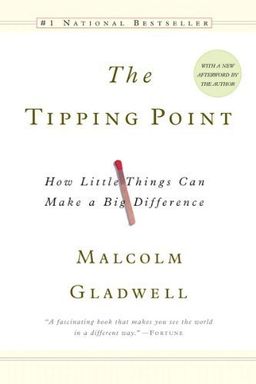
Have you ever noticed how a small trend seems to explode overnight? One day, no one has heard of a certain shoe, slogan, or idea—and the next, everyone is talking about it. In The Tipping Point, Malcolm Gladwell argues that social change behaves like an epidemic. Just as viruses spread through contact until they reach a critical mass, ideas, products, and behaviors spread in precisely the same way. The key to understanding such sudden transformations lies in what Gladwell calls the “Tipping Point”—the moment when an idea, behavior, or trend crosses a threshold and begins to spread like wildfire.
Gladwell’s core argument is both intuitive and startling: seemingly minor actions, subtle environmental cues, and a few influential people can cause remarkable social transformations. He explores this argument through case studies ranging from the miraculous comeback of Hush Puppies shoes, to the dramatic drop in New York City’s crime rate, to the powerful influence of television shows like Sesame Street and Blue’s Clues. The book reveals that change rarely happens slowly and evenly—it often erupts suddenly after being quietly primed by networks of connection, message 'stickiness,' and contextual shifts.
The Epidemic Model of Social Change
Gladwell applies the epidemiological model—typically used to describe the spread of disease—to human behavior. Just as a germ passes from person to person, he suggests that trends and behaviors depend on how they are transmitted among people. In this sense, word of mouth acts as a social contagion, with certain types of individuals and conditions determining whether a “virus” of ideas will thrive or die out. Epidemics spread not simply because of what’s being transmitted, but because of who transmits it and where it occurs. Once these factors align, they reach a Tipping Point, and dramatic change follows.
Three Rules of Social Epidemics
Gladwell distills his theory into three key principles. The first, the Law of the Few, states that a small number of exceptional people drive widespread change. Connectors, Mavens, and Salesmen—three personality types he describes in detail—are responsible for spreading ideas and products through their unique influence.
The second principle, the Stickiness Factor, refers to the content of a message. Some messages stay with us—an advertising jingle, a memorable slogan, or a story that lingers in the mind. Making an idea “sticky” means finding a way to make it unforgettable and actionable. Gladwell tracks how Sesame Street and Blue’s Clues harnessed stickiness to teach millions of children by tweaking small but vital features like repetition, pacing, and the right mix of characters.
The third rule, the Power of Context, emphasizes the role of environment. Human behavior is profoundly shaped by immediate circumstances, small cues, and group dynamics. In New York City’s case, cleaning graffiti off subway cars helped trigger a major reduction in crime—a perfect illustration of how small environmental shifts can yield massive social effects.
Why Small Things Matter
Gladwell turns our assumptions about proportionality upside-down. We expect large outcomes to come from large causes, yet he demonstrates how the smallest triggers—paints scrubbed from a wall, a word in a slogan, or one persuasive person—can change everything. A fashion trend might hinge on a handful of downtown kids; a crime wave can reverse because of a tweak in public policy. His point is simple but profound: a series of seemingly trivial adjustments can tip an entire system from inertia to transformation. This concept echoes chaos theory’s “butterfly effect,” where a small flutter can alter global weather patterns (and, as Gladwell implies, human behavior operates under strikingly similar principles).
Why It Matters
The implications of Gladwell’s argument reach far beyond marketing or crime. It’s about understanding how you—as an individual, a leader, or a citizen—can make meaningful change. The Tipping Point framework empowers you to see leverage in the world’s subtle details: a well-timed conversation, a carefully crafted message, or an overlooked environmental factor. Whether you want to raise awareness for a cause, improve workplace culture, or cultivate new habits, Gladwell insists that change does not require monumental force—it requires precision, intuition, and timing.
In the chapters that follow, Gladwell explores these three principles through stories both famous and forgotten. From Paul Revere’s midnight ride to the psychology of persuasion and group dynamics, The Tipping Point reveals the anatomy of transformation. It’s a handbook for anyone who believes that little things can make a big difference—because, as Gladwell proves, that’s often the only way change ever happens.