
Idea 1
The Power of Time Perspective
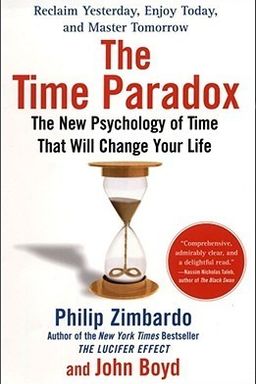
Every decision you make—what to eat, who to love, when to rest—flows through your personal sense of time. In The Time Paradox, Philip Zimbardo and John Boyd argue that your hidden time perspective silently governs happiness, health, success, and morality. They propose that understanding and balancing your orientation toward the past, present, and future can transform how you live. The book builds on decades of psychological research, including the Zimbardo Time Perspective Inventory (ZTPI), a groundbreaking tool that maps how people mentally partition time.
Zimbardo and Boyd’s central claim is disarmingly simple: your mental time zone predicts your life outcomes. A future-focused planner behaves differently from a present-hedonist chasing sensory thrills; a past-positive elder sees meaning through memory, while a past-negative dweller is haunted by regret. Understanding these perspectives allows you to use them deliberately, like choosing lenses for different light conditions.
The six time zones of human life
The authors identify six dominant perspectives, each with rewards and risks. Past-positive people savor nostalgia and heritage, gaining emotional resilience but sometimes resisting change. Past-negative individuals ruminate, magnifying pain and resentment, which drives anxiety. Present-hedonists revel in pleasure and novelty yet risk addiction and recklessness. Present-fatalists feel life is controlled by fate, breeding helplessness. Future-oriented people plan, save, and persevere, often achieving more but neglecting relationships and joy. Finally, transcendental-future thinkers tie meaning to legacy or the afterlife, which can inspire service—or in unhealthy forms, fanatic sacrifice.
Each perspective comes with characteristic behaviors: futurists floss and schedule checkups, while present-hedonists dominate creative fields and nightlife. The point isn’t to pick one but to recognize your blend and where imbalance harms you. A flexible, “balanced time perspective” allows you to shift lenses to fit the moment: plan for retirement, enjoy dessert, cherish yesterday.
How society commodified time
Zimbardo and Boyd trace humanity’s transition from event-based time to clock time. Hunter-gatherer "Tag" lived by nature’s rhythm; ancient artisan "Abdul" used calendar cycles; industrial worker "Edward" sold hours of labor. This shift—accelerated by Frederick Taylor’s time-and-motion studies—turned existence into economic units. We don’t sell shoes anymore, they note wryly; we sell hours. The result is productivity obsession, chronic time pressure, and cultural pace differences (Robert Levine found faster cities are less helpful). By treating minutes as money, we created modern stress.
Experiments reveal how time frames dictate morality and compassion. In the Good Samaritan study, seminarians in a rush ignored an injured stranger 90% of the time; in slower settings, help rates soared. When you feel time-poor, you conserve schedule compliance over kindness. “Time scarcity,” the authors write, “makes good people act badly.”
The subjective nature of time
Einstein proved time bends with motion; psychologists show it bends with emotion. Stress makes minutes drag; joy makes hours vanish. Frame and perception shape behavior. Loftus’ memory studies demonstrate how wording rewrites time: people “remember” broken glass or exaggerated speed based on a single verb. The mind reconstructs, not replays, experience. Thus, how you remember the past often says more about your present frame than about history itself.
By reframing your past through gratitude exercises or rewriting inner narratives (“Who Was I?” and “Positive Past Reconstruction”), you can heal rather than relive pain. Holocaust survivor Edie Eger exemplifies this reframing; she turned trauma into meaning and empathy.
From psychology to practice
The authors weave experiments by Zajonc (50-millisecond priming), Bargh (scrambled sentence behavior), and Mischel (marshmallow delay) into a single message: many choices arise automatically from temporal framing. Casinos, for example, remove clocks so you lose future awareness; mindful planning restores control. Similarly, environments that reward immediacy—social media, advertising—pull you toward present hedonism. The antidote is deliberate design: add cues that trigger future thought, automate savings, plan pleasures responsibly, and insert pauses before decisions.
Zimbardo and Boyd further extend their temporal framework to love, business, and mental health. Relationships flourish when partners synchronize time styles—balancing his present-hedonism with her future-focus. Corporations thrive when leaders sustain long-term vision while energizing the moment (Bill Clinton’s charisma plus foresight exemplifies this). Depression, PTSD, and even schizophrenia emerge partly from temporal distortions—fixation on past pain, loss of sequencing, or hopelessness about the future. Restoring time balance can alleviate symptoms as effectively as medication or therapy.
The ultimate paradox
Time is both your prison and your toolkit. You cannot control its passage, but you can control how you live within it. By blending positive past gratitude, present enjoyment, and future intention, you reclaim agency from the clock. The “time paradox” is that by mastering your mental time, you gain freedom inside its limits. That, Zimbardo and Boyd conclude, is how you turn fleeting moments into a meaningful life.