
Idea 1
Defending the Rule of Law in a Time of Threat
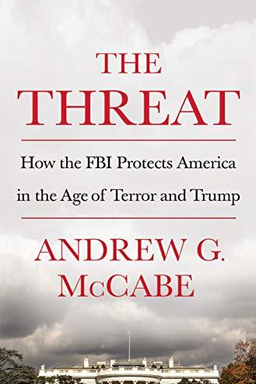
What happens when the guardians of justice become the target of the very power they are meant to keep in check? In The Threat, former FBI Deputy Director Andrew G. McCabe offers a gripping inside view of the U.S. government’s struggle to uphold law and order in an age where truth, institutional integrity, and democracy itself face unprecedented assaults. Through the lens of his twenty-one-year career in the FBI—from working Russian organized crime in New York to leading national security investigations and navigating the Trump administration's political storms—McCabe argues that the greatest danger facing America is not foreign adversaries but the erosion of faith in the rule of law from within.
McCabe’s thesis is simple but urgent: the FBI’s mission to “protect the American people and uphold the Constitution” can only exist through independence from political influence. When truth and law become partisan bargaining chips, democracy fractures. He recounts, with clarity and deep conviction, how this principle was tested during the Clinton email investigation, the Boston Marathon bombing, the Benghazi hearings, and the Trump presidency’s attempts to undermine federal law enforcement. The book becomes both a memoir of crises and a manual for civic accountability.
A Life Inside the FBI
McCabe anchors his story in the meticulous culture of the FBI—an institution of rules, procedures, and discipline designed to ensure fairness. From early training at Quantico, where recruits learn to report facts through 302 interview forms, to the near-paramilitary ethos of its operations, the FBI embodies a system of “institutional integrity.” McCabe describes that integrity as sacred, not bureaucratic: a safeguard that allows agents to serve justice, not politics. This grounding shapes every crisis he later faces, from interrogating terrorists to balancing national security with civil liberty.
The Threat Within and Without
The title “The Threat” operates on multiple levels. Externally, McCabe charts two decades of evolving dangers: Russian mobsters, al-Qaeda and ISIS extremists, cybercrime, and state-sponsored espionage. But the most insidious threat, he argues, is internal—the corrosive effect of misinformation, demagoguery, and the politicization of law enforcement. When citizens no longer share a common standard of truth, the machinery of democracy breaks down. This theme becomes painfully vivid in his portraits of Washington dysfunction, from the cynical Benghazi hearings to congressional grandstanding over Clinton’s emails, both of which presaged today’s culture of disinformation.
An Insider’s View of Crisis
McCabe walks readers through moments when the FBI’s credibility and decision-making shaped history. He recounts the Boston Marathon bombing response as an example of the Bureau’s operational precision, the Clinton investigation as an ethical minefield under partisan fire, and the Russian election interference probe as a moral test of independence. His first-hand description of James Comey’s firing, his own tense meetings with President Trump, and his eventual dismissal form the emotional heart of the book. Each episode underscores the fragility of institutional trust in a media-saturated, polarized society.
Why It Matters Now
Beyond personal narrative, McCabe’s book is a warning. Drawing parallels between the collapse of civic trust in autocratic states (like Russia, where “no distinction between crime and government exists”) and trends in American politics, he contends that truth itself—the bedrock of justice—is under attack. The threat to democracy, then, is not abstract. It lies in our collective indifference to evidence, expertise, and the rule of law. By inviting readers into the FBI’s inner workings, McCabe shows that defending democracy requires more than belief in justice—it demands constant vigilance, ethical courage, and an unwavering commitment to facts. If we lose that, he implies, the “threat” may already have won.