
Idea 1
Riding the Third Wave: Building a Future Where Technology Serves Everyone
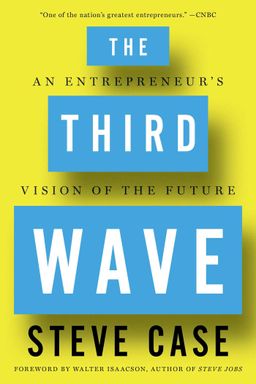
What happens when the Internet stops being something you log onto—and becomes the invisible infrastructure that powers everything around you? In The Third Wave, Steve Case, co-founder of AOL and one of the pioneers of the early Internet, argues that we’ve entered a new era of technological revolution. This isn’t just about apps or social media; it’s about integrating digital connectivity into every aspect of human life—from healthcare and education to food, transportation, and civic systems.
Case contends that understanding and adapting to this transition is critical for entrepreneurs, corporate leaders, and governments alike. In the First Wave, companies like AOL, Apple, and Cisco built the Internet’s infrastructure. The Second Wave, dominated by firms such as Google, Facebook, and Amazon, created software, apps, and social platforms that capitalized on that infrastructure. Now, in the Third Wave, the Internet is moving beyond screens. It’s embedded into our physical world, where smart devices, data, and connectivity redefine how industries function.
Why This Transition Matters
Case opens with an invitation to see technology not as an isolated sector but as a pervasive force now entering every domain. Unlike the First and Second Waves, this new age will demand collaboration among startups, corporations, and governments, since traditional industries like healthcare, education, and agriculture are heavily regulated and interdependent. Case argues that success in this new landscape requires a blend of technological innovation, policy savvy, and persistence.
He also adds a personal dimension: his own journey from a Hawaiian teenager reading Alvin Toffler’s The Third Wave in the 1970s to leading AOL through the early battles of bringing America online. By framing his experiences within Toffler’s futurist predictions, Case connects technological evolution to a broader societal arc—one that’s as much about inclusion and purpose as it is about profit.
From AOL to Universal Connectivity
AOL’s story serves as a metaphor for each stage of the digital revolution. In the 1980s, Case fought to make modems standard in home computers—a process of building infrastructure and convincing skeptics. By the 1990s, AOL was the world’s digital meeting place, with millions greeting the famous voice, “You’ve got mail.” Yet the collapse of AOL’s merger with Time Warner demonstrates the perils of underestimating cultural and structural misalignment—lessons Case urges modern entrepreneurs to heed in the Third Wave.
As connectivity becomes seamless, today’s founders face new barriers: regulation, entrenched industry incumbents, and rising distrust of tech elites. In this environment, innovation alone isn’t enough. Entrepreneurs must build credibility, form partnerships, and navigate complex policy landscapes to succeed. The playbook of the Second Wave—where small teams coded apps in dorm rooms—won’t work when disruption requires coordination with hospitals, schools, or governments.
Technology with Purpose
Case’s vision stretches beyond profit. He sees the Third Wave as a chance to redefine capitalism through impact investing—a movement merging profit with purpose. This ethos drives his organization, Revolution, to back companies like Sweetgreen and Revolution Foods, which use technology to make healthier living accessible. Just as the First Wave democratized information and the Second Wave democratized communication, the Third Wave can democratize opportunity itself—if inclusion becomes a core design principle rather than an afterthought.
Case is deeply concerned with geography and inequality. Venture capital still overwhelmingly flows to three states—California, New York, and Massachusetts—leaving “flyover country” behind. The Rise of the Rest movement he leads seeks to decentralize innovation, spotlighting startups in cities like Detroit, Nashville, and New Orleans. These entrepreneurs, he argues, are poised to tackle the real-world challenges that define the Third Wave: sustainable farming, equitable education, and accessible healthcare.
A Call to Entrepreneurs, Corporates, and Governments
In the book’s later chapters, Case turns pragmatic, offering playbooks for entrepreneurs (“The Three P’s”: Partnership, Policy, and Perseverance), for corporations facing self-disruption, and for policymakers struggling to keep pace. He warns that ignoring collaboration could allow other nations to overtake the U.S., as China and Europe ramp up support for innovation ecosystems.
Ultimately, The Third Wave is both memoir and manifesto. It’s an optimistic but urgent reminder that the next great leap in technology must not only be about speed and scale but also about vision and values. Case’s central message is clear: those who ride the Third Wave—entrepreneurs who blend partnership, purpose, and persistence—can shape a connected future where innovation uplifts everyone, not just the few.