
Idea 1
Prophecy’s Tearful Path to Love
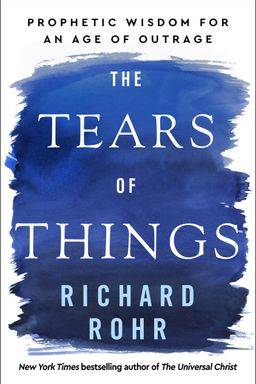
When the world feels too angry to bear, how do you keep your heart soft, truthful, and useful? In The Tears of Things, Franciscan teacher Richard Rohr argues that the biblical prophets chart a surprising way through our moment: not by more outrage or perfect religion, but by letting anger ripen into tears—tears that alchemize into compassion, solidarity, and courageous love. Rohr contends that prophecy is not fortune-telling; it’s full truth-telling. And its most reliable fruit isn’t more winners and losers, but a reordered consciousness that can love what is real, confront what is cruel, and cooperate with God’s universal mercy.
Rohr frames the prophetic journey as a pattern: we begin in order (our inherited codes), we move through holy disorder (when those codes break), and we are invited into reorder (a wiser, humbler love that includes what used to be excluded). The prophets of Israel—Amos, Isaiah, Jeremiah, Ezekiel, and others—travel this arc in their own lives and writings. They start with deserved anger at injustice, pass through lament, and end in praise and restorative hope. It’s the movement Virgil intuited as the lacrimae rerum (“the tears of things”) and that Jesus embodied as both sentry and healer (compare Abraham Joshua Heschel’s The Prophets and Walter Brueggemann’s Reality, Grief, Hope).
What the prophets actually do
The prophets are not religious scolds propping up purity codes. They are officially licensed critics of their own people’s blind spots, calling out idolatry (making non-ultimate things ultimate), the seductions of wealth and war, and the way power hides evil in respectable systems. Amos exposes a society that “tramples on the heads of the ordinary people” while singing loud worship songs (Amos 2:6–7; 5:21–24). Jeremiah deconstructs temple piety when it excuses exploitation. Ezekiel shocks a traumatized community into seeing that even their exile can become the seedbed of grace. Throughout, the aim is not humiliation but healing; not retribution but reorder. Rohr leans on René Girard’s insight that cultures maintain order by scapegoating a few (Violence and the Sacred). The prophets unmask this mechanism and redirect our gaze from “bad apples” to the rot in the barrel.
From wrath to tears to praise
Rohr shows that many prophetic books begin with blistering denunciations (Zephaniah’s dies irae), but the text itself carries the prophet beyond rage. Habakkuk rages for three chapters, then pivots to a stubborn “nevertheless” of joy (Hab. 3:17–19). Jeremiah’s anger melts into the promise of a new covenant written on the heart (Jer. 31). Ezekiel moves from bizarre, searing visions to the tender image of the Good Shepherd and the valley of dry bones being raised to life (Ezek. 34–37). Even Isaiah—actually three Isaiahs across different eras—progresses from “Holy, holy, holy” awe and judgment to the servant songs and a near-universal invitation: “I am here, I am here” to a people who weren’t even looking (Isa. 65:1). You watch prophets evolve—and you are invited to evolve with them.
Why this matters now
If you’re exhausted by culture-war religion, Rohr offers categories and companions for a different faithfulness. He distinguishes the priestly role (building and tending the container) from the prophetic role (testing the container for love, justice, and truth). Religion without prophets becomes a cult of innocence—obsessed with looking right instead of becoming real. Society without prophets defaults to revolutions of vengeance because it lacks any organic way to reform itself from within (think John Lewis’s “good trouble”). The prophetic task, Rohr argues, is to midwife holy disorder in ways that break idolatry, surface collective sin, and make space for reorder as restorative justice—what Pope Francis calls a shift from “mixing politics with religion” to seeing how God actually loves the world in public.
What you’ll learn in this summary
You’ll see the order–disorder–reorder pattern applied to your inner life and our social life. You’ll learn why the prophets target systems (Amos) more than scapegoats, and how God regularly works through a remnant—a “critical mass” of faithful minorities—to pull history forward (Isa. 37; Dorothy Day; MLK). You’ll follow Jeremiah and Ezekiel into the shock of a unilateral, grace-soaked covenant that ends the tit-for-tat economy. You’ll meet “unfinished prophets” (Elijah, Jonah, John the Baptist) whose zeal stops short of compassion—and discover why Job models the completed arc. You’ll recover tears as a form of wisdom (Lamentations, Francis of Assisi) and explore how Isaiah’s three voices became Jesus’s own mission statement in Nazareth. Finally, you’ll gather practical criteria for discerning genuine prophecy today—humility, fruits of the Spirit, and the courage to critique your own group first.
Prophetic heart
“Truth without love is not transformational truth. Truth from a cruel heart undoes its message.” Rohr’s refrain reframes the point: the prophet’s destination is not victory; it is vulnerability strong enough to love enemies and rebuild the city.
In short, The Tears of Things is an invitation to grow up spiritually with the prophets—so your anger can become lament, your lament can mature into compassion, and your compassion can become the kind of love that holds the world together while it changes.