
Idea 1
Greatness Isn’t Born – It’s Grown
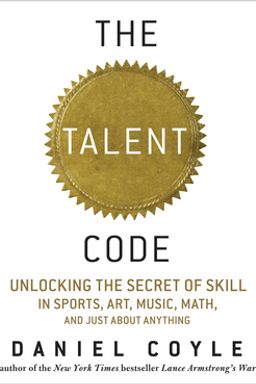
Have you ever wondered why some people seem effortlessly gifted—able to play an instrument flawlessly, dominate in sports, or innovate in art—while others struggle to catch up? In The Talent Code, Daniel Coyle invites you to challenge the age-old assumption that greatness is innate. He argues that talent is not born—it is grown. By mapping pioneering scientific research and real-world stories, Coyle reveals that skill—the building block of talent—emerges through a biological process anyone can activate.
At the heart of his argument lies one simple but revolutionary discovery: the role of myelin, a microscopic substance that acts as insulation around neural circuits. When you practice something the right way—slowly, deliberately, and at the edge of your ability—you build myelin around those circuits. This wrapping process strengthens and speeds up communication within the brain, transforming clumsy attempts into smooth mastery. In short, success isn’t about genes or luck. It’s about using the right signals to grow the right wiring.
Three Elements of the Talent Code
Coyle breaks this biological truth into a practical framework, what he calls the talent code, composed of three interlocking elements: Deep Practice, Ignition, and Master Coaching. Each one plays a vital role in growing talent:
- Deep Practice – Training in a targeted, error-focused way, operating at the very edge of your abilities, where mistakes become opportunities for growth.
- Ignition – The moment passion ignites motivation. It’s the spark that transforms effort into obsession, driving people to persist through frustration and failure.
- Master Coaching – Expert mentors and teachers who deliver precise feedback, build trust, and structure learning environments that accelerate progress.
Why This Matters
Coyle’s main claim flips conventional wisdom. Greatness does not depend on having “natural talent,” nor does it hinge on social privilege. It grows out of common ingredients available to everyone but activated only when the right kind of practice, motivation, and teaching intersect. This has profound implications for how you learn, lead, parent, and manage. Whether you’re training a sports team, raising kids, or learning to play guitar, knowing how myelin develops changes your approach—you no longer chase talent, you build it.
From Hotbeds to Neuroscience
Coyle’s journey takes him across the world, to “talent hotbeds” where extraordinary performance blooms in unlikely places—a run-down Moscow tennis club, a shabby music school in Dallas, a soccer field in Brazil. These hotbeds produce astonishing results not because of superior genes but because their environments share hidden patterns of deep learning. Scientists like Dr. Douglas Fields and Dr. George Bartzokis demonstrate how these settings foster rapid myelin growth, while researchers like Anders Ericsson confirm that 10,000 hours of deep, deliberate practice—not 10,000 hours of casual repetition—builds world-class expertise.
A New Way to Think About Talent
This message matters because it democratizes greatness. Everyone can grow talent, regardless of background, income, or genetics. Myelin responds to effort, not status. The Brazilian street player, the Korean golfer, the violinist from a modest home—each succeeds by pushing into difficulty, paying attention to errors, and practicing with purpose. Evolution itself favored this mechanism; humans are wired to adapt by rewiring. The problem isn’t lack of ability—it’s lack of understanding about how ability grows.
Key Idea
Talent isn’t a gift given to a few—it’s a system powered by all. The question isn’t “Were you born with it?” but “Are you building it?” Deep practice, ignition, and master coaching give anyone the tools to grow greatness from the inside out.
By the end of the book, you’ll see that The Talent Code isn’t just about performers, athletes, or prodigies—it’s about a universal principle of human potential. You can grow talent by growing myelin. You can ignite motivation by connecting identity to passion. And you can coach or be coached to transform weakness into skill. Greatness isn’t fate; it’s a biological process waiting for the right conditions to thrive.