
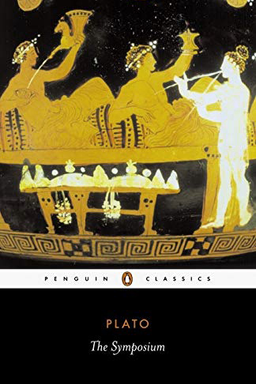
The Symposium cover

The Symposium

by Plato

Plato''s The Symposium invites readers to an Athenian feast, where philosophical dialogues explore love''s profound nature and purpose. Through speeches by ancient Greek intellectuals, discover love''s relationship with desire, wisdom, and beauty, offering timeless insights for modern audiences.

Love as the Ladder to Truth and Beauty

Have you ever wondered why love can feel both like an intoxicating passion and a painful longing for something just out of reach? Plato’s The Symposium invites you into a timeless dinner gathering where some of Athens’ most brilliant minds attempt to unravel that mystery. Through a series of speeches, we learn that love—Eros—is not merely an emotion or a physical attraction, but the driving force behind humanity’s search for truth, beauty, and immortality.

Plato uses the convivial setting of a banquet at Agathon’s house—a mix of philosophers, playwrights, and statesmen—to explore the nature and purpose of love through a cascade of speeches. Each guest offers a distinct perspective: Phaedrus sees love as the source of heroic virtue; Pausanias distinguishes noble love from base desire; Eryximachus expands the idea of love into cosmic harmony; Aristophanes delivers a mythological origin of desire; Agathon praises love’s youthful beauty; and finally Socrates, through Diotima’s teachings, reveals love as the pursuit of eternal beauty and wisdom. The meeting dissolves into revelry when Alcibiades bursts in drunk, praising Socrates himself as the embodiment of divine love.

Love’s Place Between Mortals and Gods

For Plato, love occupies an uncanny space—not divine perfection, yet not mere human weakness. Love is a daimon, a spirit between god and man, born from two contrasting parents: Poverty and Resource. This duality means that love forever seeks what it lacks. You can recognize this paradox in yourself: love always desires the good, the beautiful, the eternal—yet by desiring, it acknowledges absence. Diotima’s teaching to Socrates reframes love as an energy that propels humanity toward higher forms of beauty and meaning, transcending physical desire into philosophical awakening. Love is not static emotion; it’s dynamic striving—the tension that fuels creativity and moral growth.

The Banquet as a Metaphor for Ascent

The entire dialogue unfolds as an allegory for spiritual ascent. The wine flows, and so do ideas—each speech builds upon the last, deepening the understanding of love’s scope. You start with the body, as Phaedrus and Pausanias do, then move to intellect and harmony through Eryximachus and Aristophanes, and finally toward transcendence via Socrates and Diotima. This progression mirrors Plato’s famous metaphor of the “ladder of love”: beginning with attraction to physical beauty, ascending to appreciation of all beautiful souls, then beautiful laws and knowledge, and finally, to love of Beauty itself—pure, eternal, unchanging. You could say love is the philosopher’s wings—it lifts the soul toward the divine.

Why This Dialogue Still Matters

In our modern world, love often gets reduced to chemistry or romance. Plato’s Symposium reminds you that genuine love is transformative—it awakens the longing for goodness and wisdom. It’s the creative force behind art, science, and virtue, not just passion. When you chase beauty or truth in any form, you’re participating in the same Eros that drives Socrates and his companions. This insight gives meaning to the pain and ecstasy of love: the pang of desire is the price for glimpsing the divine.

By the final scene, as dawn breaks and Socrates continues his quiet conversation while others sleep, you realize that love’s true feast is not of wine but of ideas. Plato uses this moment to suggest that the philosopher—the one who loves wisdom—is love’s purest devotee. The ascent of love is the ascent of the soul itself.


Love as the Source of Virtue and Courage

The first major speech in Plato’s banquet belongs to Phaedrus, who sees love as the oldest and most honorable of the gods. He argues that love inspires virtue, courage, and acts of self-sacrifice greater than any social code can demand. If you’ve ever felt braver in the presence of someone you love, Plato would say that’s because love transforms fear into reverence—a reverence for honor in the eyes of your beloved.

Love and Heroic Idealism

Phaedrus presents love as a societal glue—a force that binds lovers into ideal citizens and soldiers. His vision imagines armies composed entirely of lovers and beloveds, bound not only by loyalty but also by shame and pride before one another. This notion may sound romanticized, but it’s grounded in the idea that love elevates people beyond self-interest. Phaedrus using stories like Alcestis who dies for Admetus, and Achilles who chooses death to avenge Patroclus, shows how love pushes mortals to transcend mortality.

In essence, love motivates moral excellence. In contemporary terms, think of the psychological power of attachment—love can create accountability stronger than law. It’s the difference between doing good because you must, and doing good because someone’s eyes are upon you whom you honor deeply.

Love as Divine Madness

Phaedrus also celebrates love’s divine madness—the moment when the rational mind gives way to passion yet achieves a kind of higher wisdom. This idea resurfaces later in Plato’s Phaedrus dialogue, where love’s madness is deemed a gift from the gods. Madness here isn’t confusion—it’s divine inspiration that leads people to heroic acts or philosophical insight. Under love’s spell, Achilles and Alcestis transcend human boundaries to touch the immortal.

Why Phaedrus Matters

Phaedrus sets the stage for all subsequent speakers by grounding love not in pleasure but in ethical and spiritual aspiration. He shows that love’s beauty lies in its ability to make you ashamed of cowardice and proud of virtue. It’s not sentimental—it’s moral fire. For Plato, the lover is not merely one who desires; he is one who becomes worthy of his desire.


Two Faces of Love: The Heavenly and the Common

Pausanias takes Phaedrus’ noble vision and adds nuance. He claims there are actually two kinds of love because there are two Aphrodites—the heavenly and the common. By distinguishing good from base desire, he introduces ethical complexity to the discussion. Not every passion deserves praise; love must be directed toward virtue, not mere pleasure.

Heavenly vs. Common Love

Heavenly love, Pausanias says, arises from pure affection for mind and character. It’s consistent, mature, and spiritual. Common love, by contrast, is indiscriminate—it loves bodies rather than souls and fades when beauty does. You can recognize this in your own experience: physical attraction ignites quickly but burns out if unaccompanied by deeper connection. Spiritual love, tethered to shared values and wisdom, lasts.

Pausanias connects this distinction to social norms, observing that Athens’ openness toward love reflects its complex ethics. His speech reminds you that love’s worth depends on the lover’s motive. To desire beauty rightly means to desire the cultivation of virtue through another person.

Love as Education

For Pausanias, true love educates—it’s reciprocal discipline of soul. He proposes a kind of moral apprenticeship where the older lover teaches intellectual and ethical excellence, while the younger partner reciprocates through gratitude and loyalty. In modern language, you could say love becomes a partnership in growth—mentor and student at once.

Virtue as the Measure of Desire

By dividing love into two moral species, Pausanias reframes desire as neither wholly good nor bad but good only when pursued wisely. His idea anticipates later philosophical thought, from Aristotle’s notion of friendship grounded in virtue to modern psychology’s distinction between attachment and genuine care. For you, it’s a reminder that how you love reveals what you value most.


Love as Universal Harmony

Eryximachus, the physician, stretches love beyond human relationships and into cosmic proportions. He argues that love governs all things—medicine, music, seasons, even the movements of the stars. If you’ve ever felt that harmony in nature mirrors harmony within, Eryximachus offers the philosophical foundation for that intuition.

Love in Nature and Science

Using his background in medicine, Eryximachus describes love as the force balancing health and disease. When opposing elements like hot and cold cooperate, the body thrives. When they war, illness ensues. Love, he says, governs this equilibrium. From physical health he extrapolates to cosmic balance—love ensures order among stars, seasons, and gods. In every harmony, be it musical or moral, love mediates opposing forces.

Music and Moderation

Eryximachus turns to music, claiming that rhythm and harmony themselves depend on love’s ordering principle. Like medicine curing imbalance, music converts dissonance into unity. Here, love evolves from emotion into metaphysical principle—a cosmic law analogous to the Tao in Chinese philosophy or Logos in Stoicism.

Human Conduct and Cosmic Order

For Eryximachus, love’s ethics align human harmony with cosmic law. Self-control and moderation are the human equivalents of balance in nature. This speech extends Plato’s idea that love educates not merely individuals but civilizations. When love follows reason, it becomes the art of sustaining order in the soul, the city, and the universe.


The Myth of Wholeness and Desire

Aristophanes replaces philosophy with myth, telling one of the most famous stories in Plato’s dialogues—the fable of the original humans who were whole beings, later split in half by Zeus. Each of us, he says, wanders through life searching for our missing part. The yearning we call love is the desire to heal this ancient wound and regain lost unity.

The Origin of Human Longing

According to Aristophanes, humans once had double bodies—male, female, and androgynous. Their strength and pride provoked the gods, and Zeus split them apart to weaken them. Ever since, each half yearns for reunion. This myth explains why love feels both joy and pain: it’s the echo of a cosmic separation. When you fall in love, what draws you isn’t just attraction—it’s metaphysical nostalgia.

Love as Healing

For Aristophanes, love is the search for wholeness. Happiness, he insists, is found in finding one’s own natural counterpart—whether male or female, physical or spiritual. This myth transcends gender, celebrating the inclusiveness of love long before modern societies debated it. Underneath the humor lies profound psychological truth: our drive to connect stems from an existential longing to become complete.

Wholeness and Reverence

Aristophanes warns that humans may be split again if they neglect reverence for the gods and for love itself. His myth teaches that spiritual humility preserves unity. In existential terms, love is not ownership but recognition—a reunion of souls separated by fate. For you, his message is timeless: to love well, you must remember you’re built for connection, not conquest.


Love’s Youthful Beauty and Divine Virtues

Agathon, the host and poet, gives the most lyrical and ornate speech. He describes love as the youngest, most beautiful, and most virtuous of gods—a source of peace, harmony, and inspiration. While Phaedrus, Pausanias, and Eryximachus looked outward toward ethics and cosmic order, Agathon turns inward toward the god’s aesthetic perfection.

Love’s Beauty

Agathon argues that love flees old age and dwells among youthful minds, proving its eternal vitality. Love inhabits the softest places—the heart and soul—and brings grace to everything it touches. He personifies love as the source of art and music, claiming that even Apollo and the Muses are inspired by his power. His poetic vision paints love as pure creativity.

Love’s Moral Perfection

Agathon declares love the embodiment of justice, moderation, courage, and wisdom. No pleasure outweighs love, so love governs them all. Even Ares, god of war, is conquered by love for Aphrodite. In this view, love’s beauty isn’t superficial—it’s moral order made visible, the fusion of strength and tenderness.

Socrates’ Gentle Correction

After Agathon’s enchanting praise, Socrates gently dismantles it through logic. He reminds Agathon that love cannot possess beauty if it desires beauty—it desires what it lacks. This marks the philosophical pivot of the dialogue: from poetry to truth-seeking. Agathon’s speech reveals the human tendency to idolize love’s sensations, while Socrates begins turning that adoration into inquiry. You might recognize this shift in yourself whenever deep passion gives way to self-understanding.


Socrates and Diotima: Love as the Ascent to Beauty Itself

Socrates concludes the banquet by invoking the teachings of Diotima, a woman of Mantinea, whose wisdom transforms every preceding notion. Love, she says, is not god but spirit—a bridge between mortal and divine, born of Poverty and Resource. Its nature is desire for what it lacks: beauty, goodness, immortality. Through her mystical lesson, love becomes philosophy itself—the soul’s journey from sensual attraction to pure contemplation.

The Ladder of Love

Diotima outlines a spiritual ascent often called the ‘ladder of love.’ You begin loving one beautiful body, then realize that beauty exists in all bodies, then in noble minds, moral practices, and learning itself. At last, you reach the vision of beauty unchanging—beauty ‘itself,’ which gives form to all other kinds. This path mirrors every pursuit of excellence, from student to sage.

Love as Creative Immortality

Diotima also redefines love’s purpose: immortality through creation. Bodies reproduce to continue life; minds reproduce ideas, virtue, and wisdom. True lovers give birth to moral and intellectual children. Plato here links love with the generation of art, philosophy, and law. Just as poets birth verses, philosophers birth virtue in others. Love is not self-indulgence—it’s self-manifestation through creativity.

The Vision of Absolute Beauty

The highest moment of Diotima’s teaching describes the vision of the eternal form of beauty. It’s pure, infinite, not found in faces or things, but in itself. Seeing this beauty, the lover becomes philosopher and attains divine insight. Plato presents this as the climax of human existence: to transcend the physical and know the eternal through love. When Socrates retells this, he’s no longer praising love as emotion but practicing love as enlightenment.

For you, the message is clear—real love doesn’t end with another person; it awakens the love of truth. Diotima turns desire into devotion, showing that to love well is to aspire toward the permanent beauty that all fleeting loves reveal.


Alcibiades and the Living Example of Love

Just when the philosophical climax is reached, Alcibiades bursts in, drunk and loud, dragging the conversation back to earth. His arrival is comic yet profoundly revealing. Unable to give a proper speech about love, he instead praises Socrates himself—describing him as the embodiment of the god Eros: both irresistible and untouchable. Through Alcibiades’ confession, Plato gives the dialogue its emotional finale.

Socrates as Living Symbol

Alcibiades compares Socrates to a Silenus statue—ugly outside, divine within. Behind his plain appearance lies the gold of virtue and wisdom. Socrates bewitches people not with flute or seduction, but with words. Alcibiades confesses how he tried to tempt Socrates romantically; Socrates disarmed him completely, valuing integrity over pleasure. His restraint represents the victory of the spiritual over the physical, proving that genuine eros seeks enlightenment, not possession.

Love and the Search for Freedom

Alcibiades’ struggle captures the dual nature of love: admiration mixed with frustration. He loves Socrates but resents the vulnerability this love reveals. The philosopher’s indifference exposes Alcibiades’ inner emptiness. Through this portrait, Plato shows that love can become obsession if divorced from wisdom—it enslaves rather than frees. Yet Socrates remains tranquil, awake even as others fall asleep, symbolizing the victory of consciousness over desire.

The Dialogue’s Closing Lesson

As dawn rises over Athens, Socrates continues his philosophical conversation while the rest lie drunk or dreaming. This final image encapsulates the entire Symposium: love begins in sensuality but ascends to thought; it ends not in exhaustion but illumination. Alcibiades’ heartfelt praise and Socrates’ calm reason reveal two sides of love’s truth—yearning and wisdom in eternal dance. For you, it suggests that the greatest lovers may be those who teach you to love what is beyond yourself.

Dig Deeper

Get personalized prompts to apply these lessons to your life and deepen your understanding.

Go Deeper

Get the Full Experience

Download Insight Books for AI-powered reflections, quizzes, and more.