
Idea 1
The Freedom of Letting Life Lead You
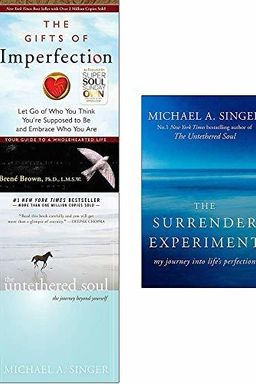
Have you ever wondered what would happen if you stopped trying to control every part of your life—and instead surrendered to whatever unfolded? In The Surrender Experiment, Michael A. Singer argues that life itself is a highly intelligent force that knows exactly what it’s doing, if only we stop fighting it. Singer contends that true peace and fulfillment come not from imposing your will upon the world, but from letting go of resistance and allowing life’s natural flow to guide you.
This idea—living in surrender rather than control—sits at the heart of Singer’s forty-year journey from solitary meditation in the woods to founding a multimillion-dollar software company and facing a federal trial. It’s the paradoxical insight that spirituality doesn’t mean withdrawing from the world, but aligning with the immense intelligence that governs it. As Singer proves through his story, surrender doesn’t make you passive; it makes you profoundly engaged with life’s unfolding perfection.
The Core Premise: Life Knows Better
Singer begins with a question that resonates deeply: Why do we insist that life should happen the way we want it to? He observes how most people live in constant friction with reality—arguing internally about traffic, weather, or relationships—because we assume our preferences are smarter than the universe. Yet the same forces that create galaxies and grow babies are the ones orchestrating our lives. That realization, he says, should humble us.
When Singer made this discovery sitting on his couch in 1970, he experienced an awakening that shattered his identity. He saw that the incessant mental chatter—the "voice in his head"—was not him. Something deeper was watching it. That gap between the observer and the inner noise marked the beginning of his spiritual experiment: what would happen if he permanently stopped listening to the mind’s demands and instead let life lead?
The Great Experiment Begins
Singer’s spiritual experiment unfolds in raw and riveting detail. He moves into the woods of Florida to meditate, giving up comfort and security to explore inner silence. When life presents strange opportunities—a college tutoring job, a chance meeting with a guru, or even an FBI raid decades later—he accepts them all as divine appointments. While his intellect screams “no,” his practice of surrender pushes him into the unknown. Each challenge becomes part of a transformative curriculum designed by life itself.
As the narrative progresses, we watch Singer’s life expand far beyond meditation: he builds homes, teaches at a college, organizes spiritual retreats, launches the Temple of the Universe community, and ultimately creates The Medical Manager, software that revolutionizes medical billing. None of this was planned. “I didn’t do it,” Singer repeatedly states; “life did.” This becomes his refrain and a radical redefinition of success—one rooted in humility and trust rather than ambition.
Surrender in Practice: Beyond the Spiritual Ideal
If surrender sounds abstract, Singer grounds it in tangible action. He shows that letting go doesn’t mean inaction—it means releasing inner resistance while doing your best with what life places before you. Whether building houses for officers, learning to fly cross-country for business clients, or facing a multimillion-dollar merger, Singer’s motto is consistent: “Serve the moment fully, and let life be in charge.” Over time, this practice strips away the scared, controlling self and reveals the stillness beneath it.
Singer’s journey also challenges a common misunderstanding of spirituality—the idea that peace comes from isolation. For him, real awakening happens within the chaos of worldly life. Living in surrender means meeting fear, success, and uncertainty with openness. “Life is doing the work to free us,” he writes; “our only job is to stop interfering.” In that sense, surrender transforms every career, relationship, and crisis into spiritual training.
Why It Matters: The Path to True Freedom
Singer’s argument isn’t just spiritual—it’s deeply practical. Anxiety, burnout, and perfectionism stem from trying to control life. As seen in mindfulness and Stoic philosophy (for example, Marcus Aurelius’s acceptance of what is), freedom arises when we relax our grip. Singer adds a crucial dimension: trust in life’s inherent intelligence. Instead of strategizing for peace, you align with reality and allow it to shape you.
In the end, The Surrender Experiment offers a living example of how surrender leads not to loss but to unimaginable expansion. Singer’s life—spanning meditation, business success, legal persecution, and inner awakening—demonstrates that trusting the unknown is the world’s most powerful experiment. The reader is left with a provocative question: what might unfold if you stopped resisting and simply said yes to life?