
Idea 1
Justice, Race, and Human Dignity
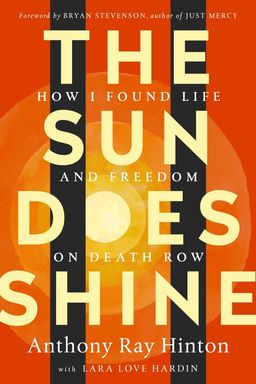
How can someone prove innocence in a system already convinced of guilt? In The Sun Does Shine, Anthony Ray Hinton offers a lived answer through thirty years on death row for crimes he did not commit. His story is not only about personal endurance—it’s an indictment of the machinery of justice when race, poverty, and procedural rigidity substitute for truth. You watch how prejudice, insufficient defense, and flawed evidence interlock to create a conviction and then how faith, friendship, and advocacy pry open the gates of error decades later.
The book’s arc moves from accusation to trial, from death row’s physical terror to moral resilience, and finally to exoneration. It teaches you that the fight for justice is not waged only in courtrooms, but through human relationships and conscience. Hinton’s Alabama is both a stage for systemic bias and a workshop for forgiveness. His account ties together racial history, forensic failure, and the stubborn grace of endurance.
Racial suspicion as original sin
You meet Hinton in Jefferson County, where detectives treat him as guilty before a word is spoken. Lieutenant Doug Acker tells him, “Number one, you’re black,” revealing the naked logic of the system. Prosecutor Bob McGregor and Judge Garrett perform the ritual of trial inside a theater of white faces. The verdict is sentence before inquiry. This racial framing is not only personal; it represents a historical lineage—Alabama’s courthouse as inheritor of older patterns of racial judgment.
Evidence versus narrative
When the State finds a dusty revolver in his mother’s house, it transforms age-old dust into proof. The press amplifies the myth; poverty silences rebuttal. Hinton’s polygraph shows truth, but the prosecutor withdraws it when results favor the defense. The ballistics match becomes the linchpin of guilt despite glaring scientific problems—Payne’s blindness, inadequate instruments, and lost chain of custody. Hinton’s experience demonstrates that “facts” are powerless when institutions prefer performance over verification.
Life under the sentence of death
At Holman Prison you feel mortality press its hand against every wall. Hinton sleeps in a five-by-seven cell next to the electric chair called Yellow Mama. Each execution leaves the smell of burned flesh; each drill of guards rehearses ritual killing. Time fractures—meals at dawn, exercise in cages, strip searches under fluorescence. Yet even here human creativity blooms: imaginary travel with the Queen of England, a book club debating Baldwin and Angelou, small rituals of kindness that resist dehumanization.
Faith, family, and moral choice
Hinton’s survival is grounded in two pillars—his mother, Buhlar Hinton, and his friend Lester Bailey. Buhlar’s Sunday hats and gospel-rooted ethics (“Treat everyone better than they treat you”) become his inner law. Lester’s unwavering Friday visits embody earthly fidelity. Together they preserve his self-worth when the state denies every other form of identity. Hinton’s forgiveness—toward the prosecutor, judge, and even the system—transforms rage into agency. In refusing hatred, he prevents the state from taking his soul after taking his freedom.
Law, money, and the slow arc of exoneration
You learn that capital punishment is also capital dependence: only those with resources can mount real defense. Perhacs’ $500 allowance buys inadequate science; procedural bars later block review. Santha Sonenberg and Bryan Stevenson arrive years later to break through this wall with professional rigor and persistence. They re-test the bullets, uncover withheld worksheets, and carry the case through state courts to the U.S. Supreme Court, which unanimously vacates the conviction. Thirty years of error collapse because science, money, and conscience finally align.
Core message
Hinton’s journey reveals that justice without empathy becomes bureaucracy; law without funding becomes ritual; punishment without truth becomes murder. He shows you that dignity is a decision and hope, like faith, is daily work against despair. The final release is not redemption by the state, but proof that humanity can outlast its worst institutions.
If you see his story clearly, it’s not isolated tragedy—it’s a systemic mirror. Hinton teaches that survival amid injustice depends on faith, imagination, and collective courage. The sun does shine not because the system is fixed, but because human conscience refuses to die in a cell.