
Idea 1
The Cost of Division and Promise of Solidarity
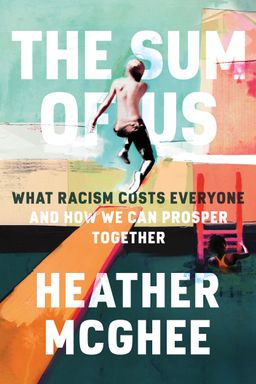
Why do so many Americans believe progress for some means loss for others? In The Sum of Us, Heather McGhee argues that economic and racial inequality share one root: the zero-sum story, a centuries-old belief that any gain for people of color comes at white people’s expense. She traces how elites sold this narrative from slavery to modern politics, shaping not only personal biases but national policy. The book’s central message is transformative: racism impoverishes the whole society, while multiracial solidarity enriches everyone.
A Story Built for Power
McGhee begins with history. Colonial America created hierarchies of human worth to justify theft and enslavement. White identity was defined as freedom in contrast to Black bondage, making liberty contingent on other people’s subjugation. Over generations, this evolved into a political strategy. Race became a tool: elites exploited white fear to block collective policy and protect concentrated wealth. From Lee Atwater’s coded appeals (“states’ rights,” “forced busing”) to modern dog whistles about “makers and takers,” leaders turned racial resentment into resistance against taxes, unions, and social spending.
How Racism Drained the Pool
McGhee’s metaphor of the drained public pool explains how racism dismantled public goods. During desegregation, white communities literally closed pools and parks rather than share them. Over time this became a national pattern: privatization, lower taxes, and reduced investment in schools, infrastructure, and health. White voters abandoned support for government programs when those programs were seen as helping people of color—even when the policies served them too. The zero-sum mindset shrank the whole commons, leaving weaker public systems for everyone.
Economic Crises and Their Racial Roots
When McGhee examines the Great Recession, she shows how racialized exploitation infected finance. Subprime lending began as redlining’s descendant—predatory products tested first on Black and Brown households. Wall Street later scaled these practices into global securitization. Regulators ignored warnings from affected communities, and the resulting crash annihilated trillions in wealth across racial lines. The so-called victims of irresponsible borrowing were actually victims of systemic profit-taking built on racial exclusion.
Public Policy and Racial Perception
Across healthcare, labor, education, and environmental policy, McGhee finds the same pattern: racial division undermines collective progress. The fight over Medicaid expansion, for instance, was less about economics than identity—southern states refused federal funds largely because opposition was framed as resistance to helping undeserving “others.” In labor politics, employers weaponized racial hierarchy to weaken unions and suppress wages. Climate action stalls for similar reasons: many white voters reject collective solutions as threats to freedom or status, even though inaction harms everyone.
Repairing the Moral and Civic Fabric
McGhee doesn’t stop at diagnosis. She introduces Wendell Berry’s idea of the “hidden wound,” showing how racism not only hurts its targets but damages white people’s moral and civic capacity. Whiteness as advantage costs empathy and belonging; denial perpetuates wound and distortion. Healing requires truth-telling and relationships that cross lines of race and class. Angela King’s transformation from neo-Nazi to activist embodies this process of moral repair through human connection.
The Solidarity Dividend
The book’s hopeful core is the Solidarity Dividend—the measurable benefits communities earn when they act together. McGhee shows it in Lewiston, Maine, where Somali immigrants restored economic life; in Richmond, California, where multiracial activists turned pollution fights into green jobs; and in campaigns like Fight for $15, which lifted wages nationally. Using john a. powell’s framework of Targeted Universalism, she argues that universal goals require race-conscious strategies to reach equity. When people recognize shared interest, public goods refill—and everyone prospers.
Transforming Narrative and Policy
Finally, McGhee connects personal awakening to systemic transformation through initiatives like Truth, Racial Healing, and Transformation (TRHT). These community processes rewrite local narratives about race, land, and labor so real policy repair can follow. The goal is not reconciliation but structural change—a new story of mutual benefit. The overarching lesson: dismantling racism is neither personal charity nor minority uplift; it is the project of national renewal.
In the end, The Sum of Us issues a simple, urgent invitation: recognize that your neighbor’s gain is not your loss. The zero-sum equation is false—and replacing it with solidarity is the way to rebuild democracy, economy, and spirit. This moral arithmetic changes everything.