
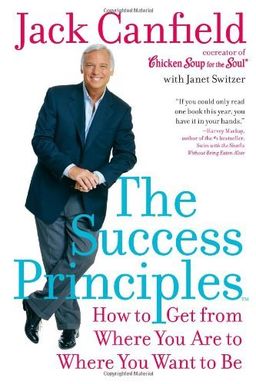
The Success Principles cover

The Success Principles

by Jack Canfield

The Success Principles by Jack Canfield provides a roadmap to achieving your dreams through practical advice and inspiring stories. Learn to take control, visualize success, build supportive networks, and persist through challenges to live a fulfilling life.

The Success Principles: Living by Design, Not by Default

Jack Canfield’s The Success Principles proposes that success is not luck—it is built on deliberate habits, beliefs, and decisions that anyone can learn. The book compiles more than sixty principles but revolves around a core message: you can create the life you want when you take 100% responsibility, clarify your purpose, act continually, and surround yourself with the right people. It’s a pragmatic philosophy that blends psychology, business strategy, and timeless self-development practices.

From Reaction to Creation

The foundational shift Canfield demands is ownership—moving from reacting to events to consciously creating outcomes. His equation, E + R = O (Event + Response = Outcome), defines how your response determines your results. You cannot control weather, markets, or other people’s choices, but you can control your own. When your responses change, your life trajectory changes. This recurring formula is echoed in stories throughout the book—from a Lexus dealer who adjusted sales strategy during wartime to W. Clement Stone’s challenge that first transformed Canfield’s career.

Clarify, Visualize, and Align

Purpose, vision, and values form the internal compass of success. You begin by asking what gives you meaning, then translate that into a vivid vision for seven core life areas: work, finances, health, relationships, recreation, personal growth, and community service. Visualization and affirmations help you imprint that vision into your subconscious—just as elite athletes mentally rehearse their victories. Canfield references figures from Bruce Lee to Jim Carrey, who wrote themselves detailed checks or letters of intent long before results arrived, proving how imagination precedes materialization.

Action and Resilience

Knowledge alone does nothing without action. Canfield urges you to “lean into it”—start before you’re ready, accept imperfection, and treat mistakes as data for improvement. Through stories such as Sylvester Stallone writing Rocky in three days and Debbie Macomber persisting past hundreds of rejections, he shows that willingness beats readiness. The mantra “ready, fire, aim” captures his philosophy of iterative learning and adaptive progress.

Mastery Through Asking and Persistence

Success requires bold asking and relentless persistence. Canfield turns fear of rejection into arithmetic: some will, some won’t, so what—someone’s waiting. Whether Colonel Sanders’ hundreds of failed pitches or Chicken Soup for the Soul’s early publisher refusals, persistence converts “no” into eventual “yes.” Asking directly, specifically, and repeatedly multiplies opportunity far faster than waiting silently.

Systems, Habits, and Social Leverage

Behavioral consistency turns ideals into results. Canfield teaches the “Rule of 5” (five actions daily toward your goal), the “no exceptions” rule for habits, and the principle that you become the average of the five people around you. Success accelerates when surrounded by others who believe, create, and challenge you—via mentors, coaches, and mastermind groups. (Napoleon Hill’s writings also support this synergy of collective mind.) Daily discipline, compounded through supportive networks, makes success sustainable.

Mindset Reprogramming and Emotional Cleanup

The book devotes extensive attention to internal barriers: limiting beliefs, unfinished business, and the inner critic. Canfield outlines structured methods—the Four‑Step Turnaround for beliefs, the Total Truth Process for forgiveness, and the critic‑to‑coach conversation that transforms self‑judgment into improvement. These inner cleanups restore mental energy otherwise trapped in guilt, fear, or resentment.

Purpose and Contribution

Financial mastery and contribution complete the success cycle. Canfield teaches classic wealth principles—pay yourself first, invest automatically, build multiple income streams, and tithe or give regularly. He reframes money as enabling freedom and philanthropy, citing examples from Sir John Templeton’s saving discipline to Bill Gates’s global giving. You earn to serve—not just to possess.

Living by Design

Ultimately, The Success Principles constructs a framework for living by design rather than by default. You take full responsibility, clarify your vision, act decisively, ask repeatedly, cultivate supportive networks, manage your energy and time, and clean up limiting patterns. Do these consistently and you achieve alignment between purpose and performance. As Canfield concludes, the question is simple but decisive: If not you, who? If not now, when?


Total Responsibility and Power of Choice

Canfield begins by dismantling excuses. The equation E + R = O—Event + Response = Outcome—shows that life’s results stem not from circumstances but from your chosen reactions. When traffic jams, economic downturns, or criticism occur, some people complain while others adapt constructively. Each outcome reveals how response trumps event.

Adopting Relentless Ownership

You commit to full responsibility for results—no blaming, no excuses. Canfield’s own mentor, W. Clement Stone, insisted he take complete responsibility for everything, a mindset shift that launched his success. Practical exercises include journaling daily events, your chosen responses, and their outcomes. When outcomes disappoint, modify responses until results improve.

Examples of Choice in Action

During the Northridge earthquake, two people stuck in traffic had identical events but opposite experiences—one fumed; one used time productively. A Lexus dealer increased sales during wartime simply by changing approach: bringing cars to customers rather than waiting. Such stories demonstrate applied responsibility.

Responsibility Formula

Event + Response = Outcome. What you do next determines what happens next.

Personal power begins at the moment you recognize that you—not conditions—create all outcomes by response. This mental pivot is the first prerequisite for everything else in the book.


Purpose, Vision, and Affirmed Direction

Before strategies, you need direction. Canfield teaches that a clear purpose acts as your north star. When you define why you exist, your decisions, goals, and relationships align effortlessly. Without purpose, effort scatters.

Crafting a Life Purpose

Through a simple exercise—listing your two key qualities, preferred expressions, and impact on others—you write one concise purpose statement. Julie Laipply’s discovery of youth leadership abroad illustrates how clarity transforms career. Your statement becomes both emotional anchor and daily decision filter.

Vision and Visualization

Visualization translates purpose into tangible form. You create vivid pictures of seven life domains, triggering your reticular activating system to seek matching opportunities. Athletes, performers, and entrepreneurs use rehearsal imagery; similarly, you can imagine success so vividly your brain perceives it as familiar and achievable.

Affirmations and Emotional Programming

Affirmations reinforce vision through repetition—statements like “I am joyfully celebrating the completion of my new book” imprint beliefs. Canfield lists nine guidelines emphasizing present tense, positive focus, and emotional charge. Examples include Bruce Lee’s future letter and Jim Carrey’s self‑written check, showing how internal scripts precede external manifestations.

When your purpose, vision, and affirmations align, you create a mental GPS that constantly steers toward success.


Act Boldly, Fail Forward, and Ask Relentlessly

Action converts goals into reality. Canfield’s principle “ready, fire, aim” captures agile execution: do, learn, adjust. Waiting for perfect conditions prevents motion. Acting before you have complete clarity creates learning through results.

Imperfect Action

Ruben Gonzalez became an Olympic luger despite late start; Sylvester Stallone wrote Rocky without a guaranteed contract. Both show that initiative creates momentum. Failures supply feedback, not shame. Steve Beers turned mailroom drudgery into producer success through continuous learning after errors.

Fear and Failure Reframed

Fear signals risk, not impossibility. You disarm it by acting despite discomfort. Debbie Macomber’s years of manuscript rejection exemplify “failing forward”: mistakes and refusals refine skill until breakthrough occurs.

The Art of Asking

Canfield says success follows those who ask repeatedly—clients, mentors, investors, or the universe itself. SWSWSWSW: some will, some won’t, so what, someone’s waiting. Colonel Sanders and John Creasey endured hundreds of rejections before yeses changed their lives. Asking focuses intention and expands possibility.

Action, persistence, and bold requests are the kinetic trilogy of success. When practiced, they make you unstoppable.


Habits, Focus, and Time Mastery

The architecture of success rests on daily behavior. Canfield cites research that up to 90% of actions are habitual; thus excellence depends on building success habits and eliminating weak ones. He urges adopting four new habits per year and enforcing the “no exceptions” rule so commitment becomes automatic.

Building Lasting Discipline

Repetition over 13 weeks builds permanent habits. Visual cues, accountability partners, and environment design reinforce consistency. Sid Simon’s commitment to eat ice cream only on full‑moon nights—refusing an imitation moon—is a humorous but profound example of integrity in micro‑habits.

Rule of 5 and Core Genius

Canfield’s Rule of 5 means performing five actions daily toward your major goal—calls, proposals, practice sessions—creating compounding progress. Equally vital is focusing on your core genius, the work you love and perform best. You delegate or automate everything else so time concentrates on high‑return activities.

Breakthrough Results Time System

Design your schedule around three day types: Best Results Days (doing core genius work), Preparation Days (training and system setup), and Rest and Recreation Days (full disconnection to renew creative energy). This rhythm expands productivity and prevents burnout—a concept comparable to Stephen Covey’s “sharpen the saw.”

The fusion of deliberate habits, focused time blocks, and delegation transforms effectiveness from busy motion into high‑leverage momentum.


Reprogram Your Inner World

Real success depends as much on inner clarity as external effort. Canfield spends multiple chapters teaching how to clean up your past, forgive, and transform your inner critic into an inner coach. Emotional and mental clutter drain attention units—finite energy you need for creation.

Completion and Forgiveness

The Cycle of Completion involves deciding, planning, finishing, and completing. Unpaid bills, unresolved conflicts, or broken agreements occupy mental bandwidth. Through the Total Truth Process—express anger, hurt, fear, and love—you reach closure and liberation. Examples like Kim Phuc and Simon Weston reveal forgiveness transforming trauma into peace.

Critic to Coach Transformation

Your inner voice can either attack or assist. Canfield shows how to interrupt judgment and request specific improvements (“Tell me three things to do better next time”). Recording suggestions immediately—within 40 seconds—locks learning into memory. Over time, the inner coach replaces the critic, creating an internal mentor.

Belief Turnarounds

Limiting beliefs like “I have to do everything myself” are identified, analyzed, and replaced with empowering affirmations (“It’s okay to ask for help. I am worthy of support”). The four‑step turnaround process—identify, assess, redesign, affirm—gradually reprograms subconscious patterns through daily repetition.

When your mind becomes supportive, past completes, and beliefs upgrade, performance flows unimpeded. Inner reprogramming is psychological cleanup for sustained outward achievement.


Surround Yourself With Winners

Canfield argues that environment and association define your standards. Jim Rohn’s idea that you are the average of your five closest people frames this concept. To grow, you must curate who influences you—personally and professionally.

Community of Growth

Drop the “Ain’t It Awful” clubs—groups united by complaints and cynicism. Instead, join circles that share constructive methods. Jack’s teachers’ lounge anecdote contrasts two tables: one negative, one proactive. The choice of table symbolizes life direction.

Mentors, Coaches, and Masterminds

Mentors provide model and shortcut; coaches give accountability and precision; mastermind groups multiply intelligence and opportunity. Napoleon Hill’s early studies and Canfield’s personal group (including John Assaraf) illustrate collective leverage. Meetings follow strict formats—sharing wins, brainstorms, and commitments reviewed next session.

Rule of 5 and Over‑delivering

Consistent small actions plus the habit of exceeding expectations amplify results. Dillanos Coffee’s story—driving beans during a strike—embodies over‑delivery. Pair your Rule of 5 disciplines with a service mindset to differentiate in any market.

The people you choose and the practices you share become your success infrastructure. They mirror, magnify, and multiply your potential.


Intuition, Money, and Multiplying Results

Beyond strategy lies intuition—the quiet compass guiding creative decisions. Canfield teaches meditation, journaling, and attention to bodily signals to access inner wisdom. When you inquire within, answers often arrive as subtle sensations or words, directing right action.

Listening Practice

Daily stillness sharpens insight. Stories like Jeff Arch’s 4 a.m. inspiration for Sleepless in Seattle and Madeline Balletta’s intuitive discovery of “royal jelly” show how meditation and openness unlock creative breakthroughs.

Money Mindset and Prosperity Discipline

Canfield combines spiritual and practical financial guidance. You replace limiting money beliefs, automate saving (“pay yourself first”), invest early to harness compound interest, and build multiple income streams through creativity. He emphasizes generosity—tithing and philanthropy—as activators of abundance, referencing Templeton’s extreme saving and Gates’s philanthropic scale.

Precessional Success

Action guided by purpose leads to collateral benefits—the “honeybee effect” described by Buckminster Fuller and adopted by Canfield. Pursue your mission, and unexpected blessings ripple outward.

Listening inward while acting outward completes the success loop: intuition sets direction; financial discipline sustains freedom; generosity expands impact.


Start Today: Living by Immediate Action

Canfield closes with direct challenge: the only perfect time is now. Waiting equals stagnation; starting builds momentum. Every principle—from responsibility to vision—demands physical engagement.

Small Steps and Rapid Feedback

Define one project and perform the smallest useful step within 48 hours. Gather feedback, refine, and repeat weekly. Ruben Gonzalez’s spontaneous school speech opened an unexpected motivational speaking career—proof that initiating acts triggers new paths.

Momentum and Precession

When you move, auxiliary success emerges beyond your aim. Chicken Soup for the Soul grew from one book into an ecosystem of inspiration and charity. Progress attracts serendipity.

Start imperfectly, adjust relentlessly, and persist until momentum becomes destiny. Canfield’s final challenge echoes across all pages: act now—the future waits for movement, not mastery.

Dig Deeper

Get personalized prompts to apply these lessons to your life and deepen your understanding.

Go Deeper

Get the Full Experience

Download Insight Books for AI-powered reflections, quizzes, and more.