
Idea 1
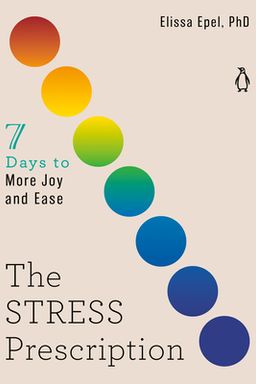
The Stress Prescription: Harness Stress, Find Ease, Live Well
How can you live with more calm and vitality when the world around you feels increasingly uncertain? In The Stress Prescription: Seven Days to More Joy and Ease, Dr. Elissa Epel—a renowned health psychologist and pioneer of stress and aging research—argues that stress is not the enemy we think it is. Instead, she contends that stress, when understood and managed correctly, can become one of our greatest allies for health, creativity, and resilience.
Epel’s core insight is that we can’t eliminate stress, but we can change our relationship with it. By transforming how we think about uncertainty and control, and by training both the mind and body to metabolize stress better, we can profoundly influence our emotional well-being—and even slow the cellular processes of aging. Her seven-day framework offers “go-bag tools” for modern life: simple, evidence-based practices drawn from decades of research and wisdom traditions that enhance flexibility, optimism, and biological resilience.
Stress Isn’t the Villain—It’s the Signal
Most of us dream of a stress-free life. But as Epel explains, “stress is woven into life itself.” Our stress response—this ancient survival mechanism—doesn’t just protect us from danger; it also allows us to grow, adapt, and thrive. When you experience short bursts of stress followed by recovery—a “peak-and-recovery” cycle—you build strength at both psychological and cellular levels.
However, modern life has disrupted that balance. Because we remain “switched on” almost constantly—bombarded by emails, alarms, social media, and worries about the future—our bodies interpret even minor triggers as ongoing threats. The result is chronic stress, which floods the body with cortisol and inflammation, damaging cells and shortening telomeres—the protective caps on chromosomes that serve as biological clocks of aging.
“We are built to handle stress,” Epel writes. “In fact, we need it. But only if we also know how to recover.”
Expect the Unexpected: The Power of Mental Flexibility
The book opens with Epel’s neighbor, Bryan, whose resilience was forged on a Soviet military base in the Arctic. When he realized that he couldn’t control his extreme environment but could control his mindset, his suffering diminished. This story sets up the book’s key pivot: resilience begins with expecting the unexpected. Life will always deviate from plan; stress arises when we fight that truth. But when we anticipate uncertainty and loosen our grip on rigid expectations, our nervous system relaxes, lowering our baseline arousal (“yellow mind”) and opening the door to calm curiosity.
Epel draws an analogy to meditation and the Buddhist teaching of impermanence—everything changes, so fighting change only multiplies suffering. Accepting flux and ambiguity, she says, is not resignation; it’s preparation. When the unexpected happens, our body stays calm, our mind stays clear, and we respond instead of react.
A Seven‑Day “Stress Prescription” for a Resilient Life
Epel’s “prescription” unfolds as a series of seven days, each with its own science-backed practice for recalibrating stress responses:
- Day 1: Expect the Unexpected – Train the body to release tension and accept uncertainty.
- Day 2: Control What You Can—Put Down the Rest – Differentiate your “sphere of influence” from what’s truly beyond your control.
- Day 3: Be the Lion – Shift from a threat response to a challenge response; use stress as energy for growth.
- Day 4: Train for Resilience – Strengthen cellular health through brief, positive stressors like exercise, cold water, or breathwork.
- Day 5: Let Nature Do the Work – Use nature’s restorative power to lower vigilance and spark awe.
- Day 6: Don’t Just Relax—Restore – Invoke deep rest through mindful breathing and “retreat moments.”
- Day 7: Start Full, End Full – Cultivate joy and gratitude at the start and end of each day.
Each day’s lesson comes with a short reflective or body-based exercise—what Epel calls a “go-bag skill”—that takes five to ten minutes. They’re not theoretical; they’re immediately usable. For example, the Day 1 practice “Catch and Release” helps you identify bodily tension caused by mental uncertainty and consciously release it. Day 3’s “Don’t Run, Roar” reframes stress as fuel. Even if you practice just one tool, she promises, your biology begins to shift.
Stress and Aging: The Cellular Connection
Epel’s scientific background gives the book unusual depth. Working with Nobel laureate Elizabeth Blackburn, she discovered the link between chronic stress, telomere shortening, and premature aging. But she emphasizes that biology is not destiny. Just as stress can damage, recovery and restoration can repair. Mindset changes and restorative states like deep rest, awe, and joy activate processes that lengthen telomeres, enhance mitochondria, and rebuild resilience from the inside out.
In this way, The Stress Prescription bridges psychology, neuroscience, and mindfulness. It argues that stress management isn’t about bubble baths or escaping pressure—it’s about retraining your stress response itself. You can turn harmful chronic stress into healthy short-term stress by: relaxing into the uncontrollable, engaging challenges intentionally, and giving your nervous system time to restore.
From Survival to Thrival: A New Public Health Vision
Epel ultimately reframes stress as a social and existential challenge. In a world of pandemics, climate anxiety, and information overload, individual stress resilience becomes a collective tool for healing. Self-care isn’t just personal—it’s planetary. By moving from chronic vigilance to flexibility and flow, you don’t just improve your own health; you contribute to a calmer, more compassionate society.
In essence, the Stress Prescription is both a scientific protocol and a spiritual reawakening. It invites you to expect chaos, rest deeply, move toward joy, and carry a light, metaphorical “go bag” full of timeless practices—from breathwork and reflection to purpose and awe. Stress, Epel teaches, isn’t the obstacle to your best life—it’s the raw material from which that life is formed.