
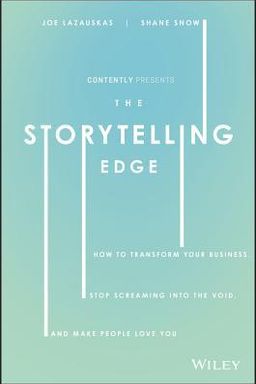
The Storytelling Edge cover

The Storytelling Edge

by Shane Snow and Joe Lazauskas

The Storytelling Edge reveals how mastering storytelling can transform communication, whether for individuals, businesses, or governments. Learn how to captivate audiences by crafting compelling narratives that engage, persuade, and build lasting connections in today''s information-rich world.

The Storytelling Edge: Why Great Stories Rule the Modern World

Why do we care about some brands and ignore others? Why do some leaders inspire loyalty while others fade into the noise? In The Storytelling Edge, Joe Lazauskas and Shane Snow argue that the answer lies in our oldest human skill: storytelling. They contend that stories don’t just entertain us—they shape how we think, remember, and connect. The book makes a powerful claim: in the modern attention economy, storytelling is the ultimate business superpower.

Drawing from psychology, neuroscience, and their experience building the content-tech company Contently, Lazauskas and Snow show that storytelling isn’t a marketing buzzword—it’s an essential human tool for persuasion, empathy, and trust. Whether you’re pitching a product, leading a team, or building a brand, you’re in the business of telling stories. The question is whether you’re doing it well enough to stand out.

Why Stories Matter More Than Ever

The book opens with Amanda Palmer’s famous Kickstarter story. Instead of making a hard sell, Palmer simply shared her journey—her struggle with her record label, her need for community, and her passion for connecting through art. Her honesty raised over $1.2 million. This, the authors argue, is business storytelling done right: a powerful narrative that invites people to care. In a digital world drowning in content, stories are the only currency that still moves hearts and wallets.

Businesses like GE, Marriott, and Dollar Shave Club succeed not because they shout louder, but because they tell stories that resonate. Whether it’s GE highlighting real engineers tackling climate change or Marriott producing cinematic brand films, great storytelling transforms companies into movements. As the Contently founders note, “Those who tell the stories rule the world.”

The Science Behind Story Power

Lazauskas and Snow dive into neuroscience to explain why stories stick. When we hear a story, our brain releases oxytocin—the “empathy chemical” that bonds us to characters. Unlike statistics or bullet points, stories activate multiple brain regions, increasing memory retention up to fivefold. This biological wiring explains why you can forget a data point but never forget “The Notebook” or a gripping TED Talk. From Ryan Gosling’s life story to a beggar’s handwritten sign—“Spring is coming, but I won’t see it”—the authors demonstrate that stories build relationships and inspire action.

Why Businesses Struggle with Storytelling

Despite its power, many organizations forget how to tell stories. Corporate communication has become dominated by jargon, KPI dashboards, and sterile PowerPoint decks. The irony, Lazauskas and Snow note, is that humans are hardwired for narrative, yet most brands speak the language of machines. The best marketers, on the other hand, use story to humanize data and make ideas memorable. The difference between a company people scroll past and one they champion comes down to story craft.

The Book’s Promise: A Blueprint for Story Mastery

Across eight chapters, the authors provide a roadmap for transforming storytelling from vague buzzword to business discipline. You’ll learn the four essential elements that make any story great—relatability, novelty, tension, and fluency—and how to apply them to everything from blog posts to brand launches. They teach practical methods like Benjamin Franklin’s writing drills, the “Sludge Report” for editing clarity, and the Hero’s Journey framework that underpins everything from Star Wars to effective sales decks. You also see how storytelling can reinvent entire companies—from GE’s creative rebirth to Marriott’s in-house brand newsroom.

Ultimately, The Storytelling Edge isn’t just about marketing—it's about leadership and human connection. The book argues that story is the foundation of trust, empathy, and purpose. If you can tell stories that make people care, everything else—sales, innovation, loyalty—follows. In a world of noise, the storyteller isn’t just the messenger; they’re the one shaping meaning itself.


The Power of Story and the Human Brain

Lazauskas and Snow begin by proving that stories literally rewire our brains. Building on studies from the University of Pennsylvania, they show that people give more to charity when they hear one person’s story instead of statistics about millions. Storytelling, it turns out, triggers empathy at the chemical level.

The Neuroscience of Narrative

When you engage with a story—whether watching James Bond hang from a cliff or reading about survivors at sea—your brain releases oxytocin. Your heart rate changes; your muscles tighten. You experience the story as if you’re in it. This immersion, called “the witchery of story,” activates five times more brain regions than reading plain facts. As neuroscientists say, “neurons that fire together, wire together,” making stories inherently more memorable.

Empathy as the Secret Ingredient

The authors connect this biology to business. Consumers don’t fall in love with companies—they fall in love with characters and causes. From Amanda Palmer’s crowdfunding plea to GE’s factory workers building jet engines, empathy transforms audiences into fans. It’s why people trust J.K. Rowling more than Queen Elizabeth in the authors’ thought experiment: we feel we “know her” through her characters. Authenticity—and congruence between story and action—is critical. Fake stories destroy trust as fast as real ones build it.

Stories That Unite Tribes

Stories don’t just shape memory and emotion; they shape groups. From family dinner tables to national myths, shared narratives bind tribes together. Whether it’s Americans believing in the underdog revolution, Jets fans staying loyal through losing seasons, or civil rights marchers moved by Rosa Parks’s story, storytelling drives collective identity. Businesses, too, can use this tribal instinct to build loyal communities around their brands—if they tell stories that align with real values.

(Comparable work in Jonathan Gottschall’s The Storytelling Animal and Yuval Noah Harari’s Sapiens echoes this argument: storytelling is the software of civilization.)


The Four Elements of Great Storytelling

What separates a story that captivates millions from one that falls flat? Lazauskas and Snow identify four essential ingredients: relatability, novelty, tension, and fluency. These principles turn abstract messages into memorable experiences.

1. Relatability: The Mirror Principle

We connect most with stories that reflect our lives or aspirations. Star Wars succeeds because, under the lasers and lightsabers, it’s a coming-of-age tale about ordinary people overcoming impossible odds. The brain resists the foreign but embraces the familiar. That’s why BuzzFeed’s hyper-specific posts (“25 Things You Understand If You Grew Up With Asian Parents”) resonate so deeply—they reflect identity back to the audience.

2. Novelty: Keeping the Brain Awake

Once you’ve hooked people through shared experience, you must surprise them. Our brains crave newness; unexpected twists keep us engaged. Lazauskas and Snow cite research on sequels showing that audiences prefer new worlds (like The Force Awakens) that remix the familiar with the novel. Too much repetition, and attention fades; too much novelty, and confusion sets in. The magic lies in balance.

3. Tension: The Curiosity Gap

Conflict fuels every great narrative. Without struggle, there’s no reason to keep reading. From the tragic love of Romeo and Juliet to Tom Cruise’s countdown scene in Mission: Impossible III, tension forces us to care about outcomes. Aristotle called this dynamic “the gap between what is and what could be.” For businesses, this means identifying a problem (the status quo) and showing how your idea bridges the gap to a better world.

4. Fluency: Making Stories Effortless

Finally, the most powerful stories are easy to absorb. Hemingway, Rowling, and Cormac McCarthy all wrote at middle-school reading levels, not because they lacked depth, but because simplicity makes stories flow. In business too, clarity beats cleverness. Fluency ensures the audience focuses on meaning, not mechanics. George Lucas mastered this through brisk edits and clean dialogue, pulling viewers through Star Wars without confusion. As the authors conclude, “Great writing speeds you along.”


Practicing and Refining Your Storytelling Skills

Being born human gives you the capacity for storytelling—but great storytellers, Lazauskas and Snow argue, practice like athletes. Chapter 3 explores timeless frameworks and exercises to sharpen your narrative instincts.

The Hero’s Journey: The Ultimate Blueprint

Joseph Campbell’s Hero’s Journey provides a universal structure found in myths from The Odyssey to Harry Potter. Every compelling brand story follows this arc: an ordinary protagonist faces a challenge, finds guidance, endures trials, and transforms. In business terms, your customer is the hero; your brand is the mentor. Whether in marketing or leadership, people connect when they see themselves reflected in an evolving journey.

Writing Like Benjamin Franklin

Franklin trained his storytelling muscles by reverse-engineering great writing. He summarized essays from The Spectator, then rewrote them from memory. When he compared his versions to the originals, he discovered his mistakes and improved his clarity. By rewriting and reordering ideas, Franklin learned method—the narrative logic behind persuasion. The authors recommend variations of this exercise to modern communicators: analyze your favorite articles line-by-line and reconstruct them to understand rhythm and tone.

Editing the “Sludge”

The Sludge Report, a method Lazauskas learned from journalism school, forces you to cut excess words by half. Trimming fluff like “a result of the fact that” or “a bit” doubles your story’s punch. This process builds fluency and strengthens persuasion. Orwell’s writing principle—“Never use a long word where a short word will do”—lives at the heart of modern storytelling. Concise, vivid language doesn’t just sound better; it lets your audience feel smarter.

In short, storytelling mastery comes from deliberate practice: study models, deconstruct excellence, and edit relentlessly. Over time, your words become muscle memory.


How Stories Transform Businesses

Storytelling doesn’t just make marketing better—it can redefine entire companies. Using case studies from brands like GE, Ford, and Dollar Shave Club, Lazauskas and Snow show how storytelling drives innovation, heals reputations, and transforms team culture.

Products with Purpose: GE and the Pirate MRI

GE’s Beth Comstock turned a century-old manufacturer into a storytelling powerhouse. Instead of sterile product pitches, GE Reports shared stories of real engineers and inventions shaping the future. One project reimagined MRI machines for children by turning them into pirate adventures—complete with themed rooms and storybooks. Terrified kids became brave explorers. One small narrative shift changed patient experience and brand perception. Storytelling, the authors note, can literally transform fear into excitement.

Redemption and Empathy in Brand Comebacks

Ford revived its reputation after years of decline by humanizing its workforce, telling the stories of its factory employees rebuilding the company’s image. Similarly, Shinola’s revival of Detroit resonated because it wasn’t about watches—it was about restoring dignity and local pride. These redemption arcs show how stories provide a moral framework for customer loyalty.

The Billion-Dollar Laugh: Dollar Shave Club

Michael Dubin’s viral launch video for Dollar Shave Club turned a $1 idea into a $1 billion business. With wit, absurd humor, and clear narrative (“Our blades are f***ing great”), Dubin framed an underdog story about fairness and rebellion against overpriced razors. Audiences didn’t just laugh—they joined a movement. As Lazauskas points out, breakthrough stories make customers feel like participants, not spectators.


The CCO Flywheel: Create, Connect, Optimize

Great storytelling doesn’t happen by accident. The authors reveal a repeatable process used by the most successful media organizations—the “flywheel” model: Create, Connect, and Optimize. This pattern, dating back to Renaissance gossip newsletters, governs how modern companies like BuzzFeed and Upworthy build massive audiences.

Create: Quality and Relevance

Every great publisher—from 16th-century Avvisi writers to modern Netflix producers—starts with stories people genuinely want. The lesson: quality beats quantity. Depth wins over noise. Companies should craft narratives that answer audience needs, not internal priorities.

Connect: Meeting Audiences Where They Are

Connection today means reaching the right people in the right channels—email, social, search, or in-person. The authors introduce the “Storytelling Bullseye” to plan distribution: engage people on social media, pull them toward newsletters, and finally to your owned website. Each level builds intimacy and trust.

Optimize: Learning from Data

Optimization turns storytelling from art into science. Using metrics like engagement time, average finish, and lead conversion, brands can identify what works and double down. The analogy: a never-ending horse race where you breed the winning horses (your best content) to run again. When data guides creativity, impact compounds—just as Coach Erik Spoelstra used analytics to lead the Miami Heat to championships.


Building a Brand Newsroom Culture

To compete with real media, companies must think like them. Lazauskas and Snow spotlight brands such as Reebok, Marriott, and SoFi that built newsroom-style teams to produce content with journalistic speed and creativity.

The Reebok Example: From Ads to Stories

Reebok’s “Binge Think” sessions mirror editorial brainstorms. Writers, videographers, and strategists throw ideas like “fitness goth” trends onto a whiteboard—then turn them into human-centered stories. This agile approach helps Reebok connect with micro-communities like CrossFit athletes and redefine its brand around authenticity and toughness.

Physical and Virtual Newsrooms

Not every company needs a glass-walled studio. Many use virtual newsrooms powered by freelance networks and content platforms (like Contently). SoFi, for example, built a remote editorial team to scale fast without hiring full-time staff. Technology now lets any brand act like a publisher without massive overhead.

The core idea is cultural: freedom to experiment, tolerance for failure, and editorial independence. When marketing teams adopt journalist mindsets—curious, data-informed, and brave—they earn trust and engagement no ad can buy.


The Future of Brand Storytelling

The final chapters warn against “zombie content”—the lifeless flood of articles and videos that clog the internet. In the authors’ analogy to Invasion of the Body Snatchers, brands risk becoming emotionless clones if they chase trends without soul. The cure? Three principles for the future: breakthrough quality, strategic rigor, and tech-enabled creativity.

1. Breakthrough Quality

Quantity once impressed—now it depresses. Just as early film audiences got bored watching Edison's five-minute movie of men shoveling garbage, audiences today demand substance. Breakthrough content must be 10 times better than the competition. Brands like Netflix, with House of Cards and Stranger Things, prove that investment in quality storytelling earns enduring attention.

2. Rigorously Strategic

Storytelling without strategy is noise. Many companies fell into the “trough of disillusionment” by publishing random blog posts without a plan. The future belongs to those who integrate content into every stage of marketing—from brand awareness to sales—and measure its impact. As the Gartner Hype Cycle suggests, maturity demands strategy, not hype.

3. Tech-Enabled and Data-Optimized

Netflix uses data to predict hits; brands can do the same. Using a “Content Decision Engine” like Contently’s platform, marketers can analyze audience interests, predict formats that perform, and refine tone using tools like IBM Watson tone analysis. Technology won’t replace storytellers—it will empower them to create more meaningful, measurable stories. The future storyteller, the authors conclude, is both artist and analyst.


Making Storytelling a Habit and a Culture

You can’t build narrative power overnight. Like fitness, storytelling becomes transformative only when it’s a daily habit. In the final chapter, Lazauskas and Snow show how leaders can embed storytelling into the DNA of their organizations.

Selling the Story Internally

Marriott’s journey from a simple CEO blog to a global content empire began because one executive believed in the power of story. Kathleen Matthews convinced Bill Marriott—a 76-year-old who didn’t use a computer—to dictate weekly posts. That humble beginning evolved into “M Live,” Marriott’s internal newsroom, and Emmy-winning short films that redefined hospitality storytelling. The key was executive sponsorship and visible results.

Building a Story Culture

A culture of storytelling thrives when teams are cross-functional and collaborative. Marriott’s M Live seats marketers, PR specialists, and creatives side by side, tracking real-time social trends and responding instantly. Each chair represents a shared mission rather than a department silo. Staff become not just marketers, but storymakers.

As Lazauskas and Snow conclude with Benjamin Franklin’s timeless advice, “Either write something worth reading or do something worth writing about.” Making storytelling a habit means doing both—creating stories that matter, and living in a way that’s worth telling.

Dig Deeper

Get personalized prompts to apply these lessons to your life and deepen your understanding.

Go Deeper

Get the Full Experience

Download Insight Books for AI-powered reflections, quizzes, and more.