
Idea 1
The Storytelling Animal: Why Humans Live by Narrative
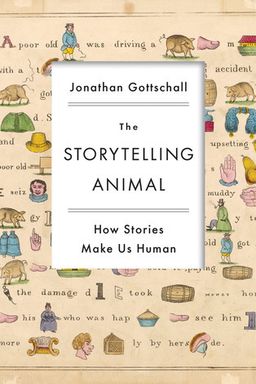
Why do you spend so much of your life lost in imaginary worlds, absorbed by novels, films, songs, or even the stories you tell yourself about your day? In The Storytelling Animal, Jonathan Gottschall argues that humans are not just makers of stories—we are made by stories. He contends that storytelling is not merely entertainment or cultural habit but a deep, biological need that defines us as a species.
Gottschall’s central idea is simple yet profound: we are Homo fictus—fiction man. Just as fish swim in water without realizing it surrounds them, humans swim in story without recognizing its constant pull. Whether through movies, gossip, dreams, or daydreams, our minds naturally shape experience into narrative form. The book explores why this instinct exists, how stories affect our emotions, ethics, and societies, and where story might be heading as technology reshapes human life.
The Witchery of Story
Gottschall begins by inviting you to watch the hypnotic power of a good tale. He uses Nathaniel Philbrick’s account of a shipwreck to demonstrate how effortlessly stories transport us. Even when we try to remain detached, our minds fill in vivid details not written on the page—the captain’s face, the color of the sea, the horror of human bones. We can’t help ourselves. The storyteller speaks, and we imagine. It’s a kind of willing possession by narrative.
This automatic response reveals a core truth: stories invade us. The storyteller doesn’t just entertain; he temporarily hijacks our brains. Neuroscience confirms this—when we experience fiction, our mirror neurons fire almost as if events are happening to us (as described later in the book). Stories are virtual realities that simulate emotion, danger, desire, and moral choice, training our minds to respond to real-world challenges.
Neverland and Homo Fictus
Gottschall introduces “Neverland” as the imaginative realm we inhabit. As children, we play in make-believe worlds of princesses, monsters, and magic; as adults, we trade toys for books, movies, dreams, and digital games—but we never truly leave Neverland. Our bodies live in the material world while our minds wander freely in fictional ones. The difference between children and adults is not in the disappearance of imagination but in the sophistication of its forms.
He insists that storytelling remains our main cultural glue. It shapes everything—from religion and politics to advertising and social media. Facts alone don’t move people; stories do. They offer emotional meaning, making abstract ideas vivid and personal. In courtrooms, politics, and classrooms alike, whoever tells the most compelling story often wins.
Why It Matters
Stories don’t just entertain—they influence. They teach us how to empathize, practice complex social behaviors, and internalize cultural values. “Story is the glue of human social life,” Gottschall writes. Through tales, we learn not only how to cooperate but also why it matters. Fiction rehearses moral dilemmas safely, letting us experience fear, justice, love, or betrayal without real-world risk. It’s not escapism—it’s evolutionary training.
And yet, our addiction to narrative raises a question: if we evolved to crave story, can this craving ever go too far? In later chapters, Gottschall warns that the same storytelling instinct that binds communities can also blind them—fueling propaganda, conspiracy theories, and self-deceptive personal myths. Understanding story’s power isn’t about demystifying it; it’s about mastering it.
A Roadmap Through the Book
Throughout The Storytelling Animal, Gottschall traces story’s role from childhood make-believe to adult morality, from tribal myths to online gaming worlds. He explores:
- The evolutionary puzzle of fiction: why we invest time in imaginary worlds with no obvious survival benefit.
- The brain’s storytelling software: how narrative gives order to chaos and confabulation fills gaps in understanding.
- The moral and social functions of story—its power to shape empathy and group cohesion.
- The transformative power—and danger—of fiction to change beliefs and behaviors.
- The future of storytelling, from digital immersion to virtual worlds where people may live out their narratives literally.
In short, Gottschall brings together biology, psychology, and art to show that storytelling is not a cultural luxury—it’s a biological necessity. We don’t tell stories to survive; we survive because we tell stories. They make life meaningful, bind societies, and even drive history itself. As Elie Wiesel’s epigraph reminds us, “God made Man because He loves stories”—Gottschall’s book suggests that humanity exists because of them.