
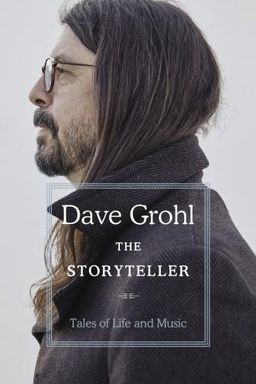
The Storyteller cover

The Storyteller

by Dave Grohl

The Storyteller captures the extraordinary life of Dave Grohl, from his punk beginnings to his rise as a rock icon with Nirvana and Foo Fighters. With candid stories of music, fame, and family, Grohl''s journey reveals the passion, resilience, and authenticity that shaped his legendary career.

Music, Memory, and the Making of a Life

What happens when you realize your life can be told not in dates, but in songs? In his memoir, Dave Grohl maps his story through music — from the punk shows of his youth to the stadium stages of Foo Fighters, from childhood drumming sessions to fatherhood’s quiet mornings. His central argument is that music is the architecture of memory and identity: it anchors who you are, where you’ve been, and who you love. Every riff, every tour, every heartbreak is a note in that ongoing song.

Sound as Autobiography

Grohl invites you to listen with him — literally. His life is indexed not by years but by what was playing: jazz at One Step Down in Washington D.C., punk at the Cubby Bear in Chicago, or AC/DC blasting from a car stereo in Virginia. These sonic references serve as personal coordinates. When you hear the same songs, you’re also invited to remember your own life — the people and seasons that cling to a melody. This idea mirrors how neuroscientists talk about auditory-cued autobiographical memory, except Grohl frames it as a spiritual practice: remembering through rhythm.

From DIY Dreams to Global Stages

The narrative grows from a suburban childhood of pillow drumming to the discovery of punk’s do-it-yourself ethos. Punk teaches him permission — that three chords and conviction can create community. From Verboten’s basement rehearsals to touring in a van with Scream, he learns that art often emerges from discomfort and resourcefulness. This underground foundation becomes critical when success arrives suddenly with Nirvana’s Nevermind. The ethical tension that follows — authenticity versus fame — becomes one of the book’s central conflicts. Grohl doesn’t solve it neatly, but he shows you how to navigate change without losing your core.

Trauma, Healing, and Creative Rebirth

The middle chapters describe losing Kurt Cobain and other friends, and how grief rearranges everything. The first months after Kurt’s death become a liminal time when silence feels unbearable. The shock of seeing a stranger in Ireland wearing a Nirvana T-shirt triggers a panic attack — the body remembering what the mind still resists. Yet the same event catalyzes change: Grohl flies home and, using a DIY ethic from his youth, records fifteen songs in six days that become the first Foo Fighters album. He channels pain into creation. Music becomes medicine and meaning.

Mentorship, Ritual, and Work

Grohl shows that art’s durability depends on craft and devotion. His single drumming lesson with jazz musician Lenny Robinson changes his whole technique — an apprenticeship that proves mentorship need not be long to be profound. Later, he adds ritual: lighting candles for John Bonham or practicing until his body memorizes patterns. You learn that technical refinement and spiritual focus aren’t opposites but allies.

Family, Fatherhood, and Continuity

The later sections show Grohl passing his love of rhythm to his daughters. Harper’s drumming lessons and Violet’s first performances echo his youth and his mother Virginia’s nurturing presence. He calls it musical DNA — not biological proof but the continuity of attention. Fatherhood shifts his priorities from perpetual motion to presence. Tours shorten, schedules change, and devotion finds a new stage: home.

Resilience, Health, and Legacy

Success brings new pressures. In 2009, juggling Foo Fighters, Them Crooked Vultures, renovations, and newborns leads to near collapse. A doctor’s warning forces a recalibration: fewer caffeine-fueled nights, more rest, and mindful pacing. This phase of the book feels like a manual on sustainable creativity. Grohl learns that presence — in music, onstage, or with family — requires boundaries. His stories culminate with a father-daughter dance and an Academy Awards performance where love and courage intersect.

“Turn it up — listen with me.”

This refrain frames the whole journey: a call to listen not just to music, but to the life that music scores — one of memory, struggle, joy, and shared time.

Taken together, Grohl’s memoir shows how a life lived through sound can teach you resilience, empathy, and identity. You don’t just collect things, he argues, you collect moments — and when you build those moments through music, you compose a self that endures.


Punk Ethos and the Power to Begin

Grohl’s discovery of punk changes everything. When he visits his cousin Tracey in Evanston and first hears Naked Raygun and the Dead Kennedys, he realizes that music doesn’t belong to experts — it belongs to participation. This DIY ethos becomes the heartbeat of his career, influencing how he records, tours, and collaborates.

Community and Courage

Punk teaches Grohl that creation is communal. A basement, a flyer, a cheap guitar — that’s enough to begin. You see how Verboten, his first band, gives him an early model for creative collectives: no hierarchies, just shared urgency. Later, this shapes Foo Fighters’ democratic dynamic. For readers, the lesson is practical — waiting for perfect conditions delays life.

Van Life and Survival School

Punk also hardens resilience. Touring with Scream out of a plywood-lined van teaches improvisation. Every night is an exercise in logistics and endurance — plywood bunks, stolen sleep, DIY repairs, and kindness from strangers. Those road stories become metaphors for any creative journey: you can’t control the terrain, but you can decide how you adapt.

The DIY rule

Start where you are, use what you have, and trust that purpose matters more than polish.

From punk basements to global tours, Grohl keeps returning to the same ethos: courage and community outweigh fear and perfectionism. Whatever your craft, begin small, and let the momentum teach you.


Mentorship, Ritual, and Mastery

Grohl’s apprenticeship under jazz drummer Lenny Robinson and his lifelong reverence for John Bonham illustrate how mentorship and ritual fuse technique with spirit. You don’t just learn by repetition; you learn by reverence — by honoring those who came before and daring to build from their influence.

Learning through Observation

Before lessons, Grohl teaches himself on pillows, imitating punk drummers. Yet one conversation with Robinson reorients everything. “You’re holding your sticks backward,” Lenny tells him, before demonstrating single‑stroke rolls. It’s humbling and liberating — a small correction that unlocks fluency. (Context: Like Malcolm Gladwell’s Outliers, this emphasizes that expertise emerges from feedback loops, not isolation.)

Ritual as Focus

Grohl’s teenage 'Bonham séance' — candles, posters, and prayerful intensity — might seem eccentric, but it translates into daily dedication. Ritual creates belief. When desire is embodied through physical gestures, practice becomes devotion. You can adopt this yourself: make small rituals that align mind and motion — a warm-up routine, a set moment to listen deeply, or a symbolic object that reminds you why you work.

Mentoring as Legacy

As Grohl matures, he becomes the mentor — inviting younger artists, collaborating with idols, mentoring his own daughters. He closes the loop his elders opened. Mentorship, in this sense, isn’t hierarchical — it’s circular. The act of listening forward keeps music alive.

Whether you’re a musician or not, this chapter’s essence applies widely: technique refines skill, ritual fuels spirit, and gratitude grounds both.


Grief, Healing, and Creative Renewal

Grohl’s life fractures after Kurt Cobain’s death. The narrative slows and darkens as he processes loss. Yet through it, you learn a pattern for rebuilding: face what hurts, make something anyway, and accept help.

When Silence Becomes Noise

The early aftermath of Kurt’s death feels like static — two phone calls giving opposite news, followed by paralysis. Grohl’s detail of physical numbness captures how grief collapses normal rhythm. Time loses measure until small actions — making coffee, taking a walk — become scaffolding.

Recording as Resurrection

The turning point arrives in a six‑day session at Robert Lang Studios, where Grohl records fifteen songs alone. He names the anonymous project Foo Fighters to shift attention from legacy to sound. Constraints — limited tracks, quick takes — free him from perfectionism. This chapter becomes an anatomy of creative therapy: limits focus energy, action disarms grief, and music provides structure for emotion.

Invitation Back to Life

Tom Petty’s call to play drums on Saturday Night Live becomes both a gift and a test. Grohl could have joined Petty’s band — safety, prestige, predictability — but declines to start Foo Fighters instead. The decision models a broader truth: rebuilding requires risk, not retreat.

Through grief, Grohl turns absence into agency. His process illustrates that mourning and making aren’t opposites — they are often the same act, reconfiguring loss into sound, rhythm, and renewed purpose.


Independence, Discipline, and Sustainable Success

As Foo Fighters evolve, Grohl reclaims control of his work by building his own space — Studio 606 — and setting limits that protect authenticity. If early punk taught independence, this phase teaches sustainable independence: creative freedom balanced by discipline, collaboration, and well-being.

Building the Space

After experiences with overproduced records and stressful studios, Grohl moves back to Virginia and records There Is Nothing Left to Lose in a modest basement. Foam on walls replaces fancy acoustics. The simplicity fosters intimacy and genuineness. The Grammy that follows proves his belief: constraints breed clarity, not compromise.

Choosing Hunger Over Comfort

Turning down Tom Petty’s offer wasn’t about arrogance — it was about hunger. Comfort can numb curiosity. Leadership often requires refusing stability in favor of ownership. You see this through lineup changes and creative tensions. The through-line: staying restless preserves direction.

Speed, Burnout, and Recovery

Years later, overdrive takes its toll. The “Fresh Pots” incident, caffeine overdose, and near heart scare highlight the physical cost of excess. Grohl’s recovery — cutting caffeine, slowing schedules — reframes success as endurance. Sustainable artistry demands pacing; burnout is not a badge.

Legacy Through Longevity

By tending to health and holding creative ground, Grohl ensures Foo Fighters’ longevity. The takeaway is broader: passion must mature into process. Independence without discipline burns out; discipline without passion dries up. Stability, paradoxically, is built from the dynamic balance of both.

Grohl’s middle and later years demonstrate how to sustain a creative identity beyond youth and crisis — by designing environments, habits, and collaborations that let the work, not exhaustion, drive you forward.


Family, Love, and the Practice of Presence

The memoir’s closing movement turns domestic, showing how family magnifies meaning. Fatherhood, marriage, and friendship transform Grohl’s conception of time and success. He learns that presence — not productivity — is the ultimate performance.

Fatherhood as Anchor

When Grohl whispers “Hey, Violet, it’s Dad” and sees his newborn calm instantly, the book’s tone softens. Having grown without his father nearby, he vows to reverse the pattern. His touring schedules shorten to preserve connection. Home becomes another kind of stage, one demanding attention, humor, and humility.

Acts of Love, Not Words

Two stories illustrate this ethic. The first: a chaotic international flight and hospital IV excursion just so he can attend a daddy‑daughter dance. The second: his Oscars performance of “Blackbird,” encouraged by Violet after she once sang it at school. Both contain the same message — love expressed through action, not abstraction.

Mentoring the Next Generation

Fatherhood overlaps with teaching. Harper learns drums, Violet sings onstage; even Paul McCartney joins for an impromptu piano lesson. These anecdotes close the circle begun with Grohl’s mother and mentors. Family becomes an ensemble. Legacy here isn’t fame; it’s continuity through care.

Presence is love’s rhythm

Grohl’s last lesson isn’t musical — it’s existential: you measure devotion not by applause, but by being there when it matters most.

Through family, Grohl integrates all earlier themes — rhythm, community, endurance, gratitude — into a single practice: showing up. His life, once frantic and public, finds its quiet compass in the heartbeat of home.

Dig Deeper

Get personalized prompts to apply these lessons to your life and deepen your understanding.

Go Deeper

Get the Full Experience

Download Insight Books for AI-powered reflections, quizzes, and more.