
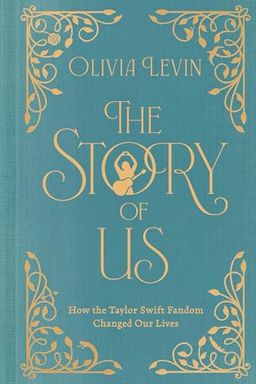
The Story Of Us cover

The Story Of Us

by Olivia Levin

A Taylor Swift superfan looks at the loyalty of Swifties as they followed the pop and country icon through different eras.

Hype, Heroes, and Scarcity: The Jordan Playbook

Have you ever wanted something so much that you’d wait in the cold, skip work, or rearrange your day just to get it? In The Story Of Us, Olivia Levin argues that the right blend of myth-making, engineered scarcity, and social amplification can turn ordinary retail into an eruptive social event. She contends that Michael Jordan’s rise from athlete to cultural icon—and Nike’s orchestration of limited, retro releases—created a proven script for transforming desire into stampedes, resale economies, and lifelong loyalty. But to harness that power responsibly, you must understand the consumer psychology, crowd dynamics, and operational safeguards behind the spectacle.

This book reads like a reality-based fiction and a live case study of the 2011 Air Jordan XI Concord drop. You’ll walk the lines outside malls, feel the tension that pepper spray tries to defuse, and see how a shoe becomes social currency. Along the way, Levin layers business fundamentals—demand, scarcity, pricing, segmentation—with stories of collectors, global brand battles (Nike vs. Adidas), and a candid look at the messy edges: fights, arrests, and the brand’s public stance on safety.

What the book argues

Levin’s core argument is simple and sharp: pair a hero’s narrative (Michael Jordan’s championships and work ethic) with limited, nostalgia-rich products (retro releases) and accelerate it via word of mouth and social media. Do that, and you don’t just sell shoes—you choreograph a cultural ritual. She frames the Concord XI launch as a masterclass: demand primed for weeks, inventory constrained, collectors mobilized, and social channels (Twitter, Facebook, Instagram, YouTube) buzzing. When the doors open, emotion overwhelms rational planning.

But Levin also insists that success brings ethical obligations. The same tactics that create lines and loyalty can tip into chaos without thoughtful controls. Nike’s public reminder—“Consumer safety and security is of paramount importance”—becomes a refrain in scenes where police, ambulances, and even K9 units contain crowds drawn together by a shared love of a silhouette MJ wore in 1996.

What you’ll learn

You’ll see how Jordan became a brand with its own roster (Russell Westbrook, Jimmy Butler, Chris Paul), its own playbook (retro cadence, cross-sport expansion, kids’ sizing), and its own ethos (clean-cut image, political neutrality in the famous quip “Republicans and Democrats wear shoes”). You’ll learn why scarcity cues luxury, how oversupply dulls desire, and how nostalgia turns old SKUs into hot, high-margin “new” products. You’ll also meet real people from a single line—Ana Marie Striker, Bruce, and Marshall Matters—and watch a scuffle escalate into an arrest, a vivid illustration of crowd psychology meeting commerce.

Levin translates these observations into marketing principles. She revisits classic levers like the law of supply and demand, then updates them with analytics, psychographics, and social proof. She shows why kids are “dream targets,” how early brand bonds compound (a page out of McDonald’s), and how competitors like Adidas (with Kanye’s Yeezy) counter-program with long-term contracts and their own drop culture.

Why this matters to you

If you sell anything—products, creative work, events—this case reveals how desire scales and why engineered waiting can be a feature, not a bug. It also warns you: unmanaged hype has costs. Levin doesn’t romanticize the frenzy. She names the risks (brawls, muggings, even fatalities in past reports) and argues for better release design: raffles, staggered openings, escorts to cars, and online safeguards. For builders, founders, and marketers, The Story Of Us is both spark and instruction manual.

How this connects to broader ideas

You’ll recognize echoes of Jonah Berger’s Contagious (social currency, triggers, emotion), Robert Cialdini’s Influence (scarcity, authority), and Malcolm Gladwell’s The Tipping Point (connectors and context). Levin’s twist is groundedness: she places you in the parking lot at Hilltop Mall in Richmond as a fictionalized vignette captures very real dynamics. The story is not just about Nike; it’s about how communities self-organize around symbols, how identity gets worn on feet, and how retailers must match cultural fluency with operational discipline.

Key Idea

Great products become movements when myth (a hero), design (a totem), and scarcity (a ritual) converge—and when brands honor the responsibility that comes with the crowd they summon.

Ultimately, Levin’s thesis is optimistic: you can design desire without losing your soul. Study the Jordan playbook, but do more than copy hype. Respect fans, plan for safety, and build a community that feels proud—not endangered—to show up for you. The Concord XI line is a mirror; it reflects both the potency of modern marketing and the choices we have about how to wield it.


From Court Legend to Business Brand

Levin shows Michael Jordan as more than a once‑in‑a‑generation athlete; she presents him as a case study in intentional brand-building. From the moment Nike made him the centerpiece of a new line, Jordan understood he wasn’t just selling dunks—he was selling a life script: work hard, stay polished, win often. That script became a durable brand platform that outlived his career on the court.

The image strategy

Jordan’s public persona mattered. Levin highlights his “above the fray” posture—well-dressed, measured, respectful—and the strategic neutrality of the line, “Republicans and Democrats wear shoes.” The message to you as a builder: decide what conversations you’ll enter and what you won’t. Jordan chose wide appeal over polarization, anchoring the brand in excellence and aspiration rather than ideology. (Contrast with brands that embrace activism; each path has trade-offs for reach versus resonance.)

From endorsement to enterprise

A crucial pivot was structural: The Jordan Brand became a distinct business unit within Nike, with its own P&L, roster, and roadmap. Levin catalogs a who’s‑who of signees—Russell Westbrook, Jimmy Butler, Chris Paul, Carmelo Anthony, and even Derek Jeter—showing how Jordan’s halo could stretch across sports. This is how you turn a personal brand into a portfolio: recruit credible ambassadors who inherit and extend your values.

The brand’s growth wasn’t only horizontal (more athletes) but vertical (more life stages). From infant sizes to college gear (North Carolina, Florida State, Penn State), the business meets you at every step, literally from “crib to court.” That saturation embeds ritual and nostalgia; the shoes your parents wanted become the shoes you buy for your kids.

The myth in motion

Advertising fused athletic poetry with humility. Levin spotlights the “If I could be like Mike” era of commercials—Jordan floating, dunking, smiling—a dream state grounded by a relatable tone. This duality (superhuman feats, human warmth) widens the funnel. As Seth Godin might say (Purple Cow), the product was remarkable and the story retellable. Fans didn’t just want shoes; they wanted proximity to a hero who felt both legendary and local.

A playbook for athletes and creators

Levin underlines Jordan’s advice—“Put in work,” “Stay committed,” “Prepare to fail”—as a cultural codex that informs the brand’s tone. She notes how later stars (LeBron James, Kobe Bryant, Kevin Durant, Stephen Curry) followed the Jordan template: own your narrative, leverage peak attention into long-term equity, and build for post‑career relevance. Jordan’s ownership stake in the Charlotte Hornets caps the arc from endorsement to enterprise.

For you, the lesson is to elevate from spokesperson to steward. Define a distinct promise, select ambassadors who extend credibility, and build structures (separate brand units, cross-category expansion) that make your reputation compounding rather than perishable. Done right, your highlight reel becomes an operating system.

(Context: This mirrors what Ben Horowitz calls “product-market founder fit”—your personal edge should permeate the product. Jordan’s competitiveness and polish are palpable in the brand’s cadence, design, and narrative.)


Scarcity, Retro, and the Luxury Cue

Levin dissects how scarcity turns sneakers into status signals. The Air Jordan XI Concord, originally a 1996 icon, returns in 2011 as a carefully rationed retro. The result isn’t just a restock; it’s a relaunch of meaning. When access is constrained, owning the shoe says as much about your savvy and persistence as it does about your taste.

Why retro works

Retro taps two powerful forces: nostalgia (you remember where you were when MJ wore them) and discovery (you weren’t there, but you can now claim a piece of that history). Levin shows collectors treating pairs as artifacts—kept in original boxes, sequestered in locked rooms, only worn on perfect-weather days. That ritualization is the essence of luxury consumption: scarcity, care, and story.

Price as a signal

Levin nods to basic economics (the law of demand) and adds the behavioral twist: price can be a feature. A $200+ price point sharpens perceived value, anchors resale upside, and sorts casual buyers from committed fans. She references pawn shops offering double, global demand from Japan to France, and muggings that grimly underline how value migrates from shelves to streets. Scarcity here isn’t a gimmick; it’s the architecture of the market.

The oversupply cautionary tale

When Nike oversupplied certain models, urgency evaporated. Levin describes a cooling effect—no need to rush, no line to earn—opening a lane for Adidas, which surged with Yeezy Boost 350s and long-term athlete contracts. Desire is perishable when novelty and scarcity fade. Your takeaway: calibrate supply to demand’s edge, not its average. Drop too many and you’re ordinary; drop too few and you’re irrelevant.

Luxury logic, street arena

This is luxury logic applied to asphalt. Robert Cialdini would call it scarcity and social proof reinforcing each other. Jean-Noël Kapferer’s luxury principles (distance, rarity, ritual) surface in sneaker culture via limited colorways, serialized drops, and insider communities. Levin emphasizes that “limited” isn’t merely inventory; it’s choreography: teasers, leaks, influencer pairs, countdowns, and synchronized releases.

Of course, scarcity has side effects: bots, counterfeits, and opportunistic violence. Levin doesn’t hand-wave them away. She frames scarcity as a scalpel, not a sledgehammer—use it to etch meaning, not to inflame mayhem. Your operational plan (raffles, identity checks, clear returns, anti-bot tech) determines whether scarcity feels like craft or chaos.

(Comparison: Supreme’s drop model mirrors this cadence—brief windows, surprise elements, and high resale—while brands like Apple balance scarcity at launch with reliable follow-on supply to avoid long-term frustration. The art is matching tempo to category.)


Word of Mouth in the Social Era

Levin argues that word of mouth (WOM) is the oxygen of hype. The Jordan XI Concord drop scaled not only because people cared, but because they could coordinate—on Facebook, Twitter, Instagram, YouTube, even WhatsApp. When desire is public and sharable, coordination costs plummet and lines lengthen.

How WOM actually spreads

Think Jonah Berger’s STEPPS: social currency (owning a coveted pair), triggers (game highlights, drop dates), emotion (nostalgia, pride), public (visible to peers), practical value (resale), and stories (your line saga). Levin’s vignettes are ready-made content: a slap in line, a martial-arts takedown, pepper spray, a K9 named Operation Second Chance. You can feel why people posted, texted, and streamed. The story tells itself—and sells the next drop.

The online-offline flywheel

Levin shows how online chatter fills offline lines, while offline spectacle feeds online loops. A single mall scuffle can fuel citywide curiosity; a police statement can become a meme. She notes how Amazon Prime shifted holiday timing earlier for many shoppers, making drops compete with (or exploit) new rhythms. In other words, calendar is now a channel.

The Groupon-era insight

Levin briefly nods to Groupon and deal virality, a reminder that discount virality and desirability virality are different sports. Discounts compress margins to expand reach; desirability compresses access to expand myth. The Jordan playbook is the latter. If you’re building a premium brand, chase talkability, not bargain-hunting.

Designing for shareability

Your move: pre-seed stories worth telling. Tease archival footage of MJ’s 1996 season, spotlight collector rooms with floor-to-ceiling boxes, and offer micro‑documentaries on the shoe’s design language. Then reduce friction: SMS waitlist updates, Instagram AR try-ons, geofenced raffles. Levin quips that modern tech lets you shop “even in the confession booth”—a playful way to say commerce is ambient. Use that power for coordination (slotting entry windows) as much as conversion.

(Context: Malcolm Gladwell’s The Tipping Point reminds us that connectors and mavens matter. In sneaker culture, that’s the local boutique clerk, the high school hooper with 50k followers, and the OG collector who knows every retro code. Empower them and your message outruns your media budget.)


Inside the Line: A Crowd Unspools

One of Levin’s most gripping sections unfolds at Hilltop Mall in Richmond, California. The line is long, the air is cold, and nerves are thin. We meet Ana Marie Striker and her tattooed boyfriend Bruce; we meet Marshall Matters, a Desert Storm veteran and karate sensei who queued to surprise his son Victorian, just back from Iraq. What begins as alleged harassing contact becomes a slap, then a chokehold, then a swift self-defense put-down. Sirens. Pepper spray. A police perimeter. A K9 unit named Operation Second Chance. A sneaker line turns into a civics lesson in crowd dynamics.

What the scene reveals

Levin isn’t sensationalizing; she’s diagnosing. Crowds amplify emotion. Law enforcement must manage unknowns (weapons, substances, group reinforcements). Retail managers balance throughput with safety, sales with liability. The brand’s fanbase contains multitudes: nurses gifting their dads (Ana’s story), veterans reconnecting with sons (Marshall), and opportunists calling in “reinforcements” to cut lines. It’s messy because it’s human.

Brand responsibility in the wild

Nike’s statement—“Consumer safety and security is of paramount importance”—lands differently when you can smell pepper spray in the paragraph before it. Levin argues that if you design for frenzy, you must also design for decompression. That means controlled queueing, trained security, de-escalation protocols, ambulances on standby during mega-drops, and rapid comms with local police. It can also mean not releasing on school days to limit truancy—a policy Levin notes the brand has considered in the past.

Operational fixes you can use

Levin’s implied checklist is practical: convert first-come lines into verified raffles; issue time-stamped entry windows; require ID match at pickup; escort high-value purchases to cars; deploy geofenced mobile check-in; and maintain hotlines for neighboring stores. For online, it’s anti-bot tech, randomized carts, and clear resale policies. The goal isn’t to kill hype; it’s to move energy from choke points to channels you can monitor.

The narrative dividend

Paradoxically, the chaos creates lore. The very story you want to prevent becomes the story people retell. Levin’s stance is clear: don’t depend on danger to sell. Earn your legend with craft—design, athletes, archives—not collateral damage. When you protect people, you protect your myth from curdling into menace.

(Note: Crowd psychologists like Gustave Le Bon and modern event safety research echo Levin’s point—predictable structure reduces volatility. In retail terms: your line plan is a product.)


Kids Today, Customers Tomorrow

Levin is frank about why the Jordan Brand invests in youth: loyalty formed early compounds for decades. She borrows from McDonald’s classic three-phase model—appeal to kids now (Happy Meals, playgrounds), involve families next (shared outings), and cement future markets (today’s kids become tomorrow’s parents). Jordan executes a similar arc with kid sizes, campus gear, and youth‑friendly narratives.

Status in the schoolyard

“When you are a kid, it’s not what you drive, it’s what you carry (wear),” Levin quotes. In the adolescent social economy, a pair of Jordans reduces friction: instant icebreakers, fewer negative labels, an in-group signal. She notes how kids as young as 9–12 adopt deodorants, fragrances, hair products—the beginning of identity crafting. Sneakers fit that arc perfectly: visible, talkable, comparable.

Analytics over assumptions

Levin emphasizes that modern drops are data-driven. Demographics locate demand; psychographics explain it; analytics time it. Retailers know who buys, when, and why. That informs calendar choices (e.g., avoiding school days), price sensitivity, and inventory per store. This is a reminder for you: opinions are loud, but purchase histories whisper truths.

Ethics and edges

Marketing to kids raises ethical stakes. Levin doesn’t sermonize but nudges: spotlight work ethic (MJ’s “Put in work”) over pure flex, create educational content about design and sport history, and build inclusive community events that aren’t purchase-gated. If you prioritize belonging over bragging, you protect young fans from identity tied solely to what they can afford.

Community as strategy

Clubs, meetups, and online groups turn buyers into belonging. Levin mentions collectors across Brazzaville, Congo, Tokyo, Paris, and American cities—the brand is a passport. Facilitate that. Host legit check sessions to combat counterfeits, archive nights to teach history, and youth clinics that connect play to product. In a world where social media can isolate as fast as it connects, well-run brand communities become a public good.

(Context: Byron Sharp (How Brands Grow) would remind you not to over-narrow—reach broadly and often. Levin’s youth lens complements this: win early, then keep earning attention across life stages.)


Designing Desire: A Builder’s Playbook

Levin closes with an implicit blueprint you can adapt to any premium product. Think of it as a seven-part system: myth, product, scarcity, community, channels, safeguards, and measurement. The Jordan case gives you examples for each—and cautionary tales when any leg is weak.

1) Craft a credible myth

Anchor your brand in a human narrative people admire and can emulate. MJ’s arc—talent, toil, triumph—made “Be like Mike” plausible and magnetic. Choose ambassadors who extend, not dilute, that myth. Codify values (Jordan’s advice: “Put in work,” “Stay committed,” “Prepare to fail”) and let them inform product cadence and tone.

2) Build product as a totem

Design details should carry story: patent leather nods to formal wear, colorways tied to titles, materials that justify price. Retro is a feature, not a fallback—if the archive is rich and the reissue is faithful. Offer ladders (GR pairs, limited drops, PE-inspired SKUs) to welcome newcomers and thrill purists.

3) Orchestrate scarcity, don’t simulate it

Release calendars, quantities, and geographies are instruments—tune them. Use raffles and time windows to reduce risk; publish clear rules; throttle bots. Avoid chronic oversupply (desire dulls) and chronic undersupply (fatigue, flight to competitors). Treat scarcity as meaning, not meanness.

4) Energize community rituals

Lines, launch parties, archive nights, and athlete Q&As give fans scenes to enter. Spotlight collector rooms and family stories (like Marshall Matters buying a pair for his returning son Victorian). When people can place themselves in your story, they’ll place your product in their lives.

5) Master channels and signals

Use social to coordinate, not just broadcast: SMS updates, AR try‑ons, geofenced sign-ins, creator unboxings. Retail partners need playbooks, not just pairs. Online checkout needs fairness (queueing, CAPTCHA, randomized releases). Calendar is a lever—drop when attention peaks, not merely when inventory’s ready.

6) Bake in safety and ethics

Adopt visible safeguards: security briefings, separate pickup from pay areas, escorts for high-value exits, and local police liaisons. Consider not dropping during school hours. State your safety stance early (as Nike did), then demonstrate it with logistics the crowd can feel.

7) Measure beyond sell-out

Track not only revenue and ASP but also NPS, incident rates, bot deflection, and equitable access. Calibrate future supply using demand indices, not guesses. Watch competitor signals (Adidas’s long contracts, new collabs) and protect your core while experimenting at the edges.

Levin’s final nudge: remember two economies exist side by side—the line willing to spend $200+ for a dream, and the households strained by foreclosures and job losses. Build with empathy. If your brand’s rituals lift people up, they’ll give you permission to build long after the rush subsides.

Dig Deeper

Get personalized prompts to apply these lessons to your life and deepen your understanding.

Go Deeper

Get the Full Experience

Download Insight Books for AI-powered reflections, quizzes, and more.