
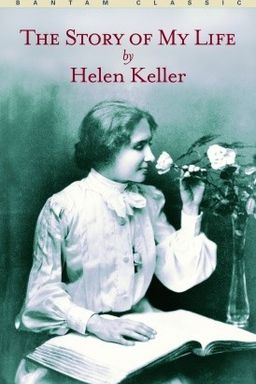
The Story of My Life cover

The Story of My Life

by Helen Keller

The Story of My Life by Helen Keller is a profound account of triumph over adversity. Born deaf and blind, Keller''s journey is a testament to resilience and the transformative power of education and mentorship. Discover how Keller''s unyielding spirit and Anne Sullivan''s guidance opened up a world of possibilities.

Learning to See Through the Hand

How do you teach language and worldhood to someone who cannot see or hear? In *The Story of My Life*, Helen Keller and her teacher Anne Sullivan reveal that education, for a deaf-blind child, is not only about transmitting knowledge but about awakening consciousness through touch, curiosity, and love. The book charts Helen’s journey from isolation into articulate life—a journey made possible by the union of patient method, embodied learning, and mutual trust. It’s both a personal narrative and a manifesto for experiential education.

The story begins in a garden in Tuscumbia, Alabama, where a child born into comfort is cut off by illness from light and sound. It then unfolds through a sequence of pedagogical revolutions: the arrival of Anne Sullivan; the miracle of the well-house; the disciplined expansion of tactile communication; and the eventual mastery of reading, writing, and even speech. Around these inner events swirl outer contexts—nature as classroom, books as travel, friendship as pedagogy, and higher education as experiment. The narrative’s deeper claim is that language, love, and intellectual companionship can reconstruct a human world from silence.

Anne Sullivan’s transforming method

Helen’s world pivots on March 3, 1887—the day Anne Mansfield Sullivan arrives from the Perkins Institution. Miss Sullivan’s method, drawn from her training under Dr. Samuel Gridley Howe and shaped by her care of the blind child Laura Bridgman, is radically simple: link words to lived experiences. She refuses drills disconnected from reality. Instead, she spells into Helen’s hand at the very moment of action—*water* while pumping a stream, *doll* while holding a doll—until language fuses with sensation. This is not rote instruction but the creation of meaning itself. (You might recall Montessori’s later principle: “The hand is the instrument of the mind.”)

Sullivan’s influence extends beyond vocabulary. She embeds moral growth in daily experience—teaching table manners, patience, and curiosity as parts of one curriculum. Her lessons emphasize full sentences, truth-telling in response to questions, and learning by play. The result is spontaneous inquiry rather than obedience to rules. Every walk, every object, becomes an opportunity for naming, describing, and connecting.

The water moment and the awakening of mind

The most famous scene—the “water” breakthrough—is more than a picturesque anecdote. When cool water trickles over Helen’s hand and the word *w–a–t–e–r* is spelled into her other, she suddenly perceives that the motions represent an external reality. In that instant, physical sensation becomes symbolic representation. From that revelation flows emotional and moral awakening: she cries, understands regret, and desires to learn. Sullivan notes that Helen gains dozens of new words within the day, the lexicon unfolding like a chain reaction. It is the birth of abstract thought through the body.

This turning point illustrates a universal learning pattern: experience plus symbol plus affection produces understanding. The child’s joy propels rapid acquisition. For teachers, it’s a lesson in timing—waiting until an experience can anchor a concept. As Helen later wrote, “Knowledge is love and light and vision.”

From gesture to literacy and speech

After the revelation comes the structure. Helen progresses from gestures to the manual alphabet, to braille and raised print, to articulated speech. Each step builds on the last. The manual alphabet—fingerspelling words into the palm—opens conversational life; braille opens solitary reading. With Miss Sarah Fuller she learns articulation by touch, placing her hands on the teacher’s face to feel mouth positions. Though her speech remains imperfect, it enables intimacy and public communication. This layered learning demonstrates that language can be constructed through multiple sensory channels, all mediated by human empathy and persistence.

Educational technology becomes critical: raised-print labels, tactile maps, wire geometrical diagrams, and later the Hammond typewriter—all translate sight and sound into touch. These devices permit her entry into mainstream schooling and college examinations. But the true technology is relational—the teacher’s hand in the pupil’s.

Nature, books, and the moral imagination

Before formal schooling, nature itself teaches Helen: the scent of roses, the feel of mimosa branches, the vibration of Niagara Falls. These encounters become metaphors for power, danger, and beauty long before she names them. When she finally reads—beginning with *Little Lord Fauntleroy*—books replace the garden as her primary landscape. Literature becomes her second sense: through Homer, Shakespeare, and Tennyson she learns empathy and moral reasoning. Books are both companions and mirrors of identity, offering her connection to humanity beyond her own limits.

Yet books also bring a crisis—the “Frost King” incident, when Helen unknowingly reproduces phrases from Margaret Canby’s earlier story. The misunderstanding exposes how deeply language can impress itself upon memory without conscious recall. This painful episode teaches humility about creativity and compassion toward young learners who borrow more than they realize.

Public life and higher education

Helen’s growth carries her from private tutelage to public life: visits with Alexander Graham Bell, Oliver Wendell Holmes, Mark Twain, and others; addresses at Chautauqua; and eventual admission to Radcliffe College. Each phase requires fresh adaptation: interpreters for lectures, standardized notation for braille exams, and social poise for public events. Her success depends not only on intellect but on networks of friends who convert compassion into material support. The teacher-pupil dyad expands into a civic circle of mentors, patrons, and allies, turning a private education into a public experiment in inclusion.

The college years document the friction between individual capacity and institutional rigidity. Without prepared braille materials or standard systems, every exam is an act of endurance. Yet Helen’s persistence forces institutions to adapt—a legacy continued by advocates of accessibility today.

Human senses, personality, and social vitality

What keeps Helen learning is vitality—an appetite for people, nature, and humor. She perceives friends by touch, music through vibration, and places through scent. These capacities, far from compensations, are new modes of perception that shape her philosophy of embodied knowing. Her laughter, empathy, and courage make her neither saint nor victim but a whole person in social motion. Through her, you see that education for sensory difference is not pity but partnership—a creative remixing of human capability.

Key insight

Helen Keller’s story is not a miracle of rescue but a study in method: the systematic conversion of touch into thought, experience into language, and relationship into knowledge. It shows that intellect thrives wherever curiosity meets structure and affection.


Anne Sullivan’s Living Language Method

At the heart of the book lies Anne Sullivan’s pedagogical vision—a method rooted in “living language.” It rejects rote grammar and embraces association, situational learning, and affective connection. Sullivan had trained at Perkins Institution, studying the earlier case of Laura Bridgman, yet she departs from formal charts and drills. Her creed: *‘I shall talk into her hand as we talk into the baby’s ear.’*

Principles of natural language teaching

You see three recurring principles. First, connect every word with a tangible experience. Naming the pump water or a favorite dog fuses meaning and memory. Second, teach whole sentences rather than fragments, so rhythm and grammar emerge naturally. Third, follow curiosity: whenever Helen shows interest—asking why eggs become chicks or why leaves change—Sullivan seizes the moment. This responsiveness, instead of lesson plans, drives progress. (Modern cognitive science calls this “contingent scaffolding.”)

Sullivan also insists on moral context. She breaks old habits of indulgence by establishing calm routine and manners, ensuring that learning occurs in mutual respect. The small domestic revolutions—folding napkins, sharing meals politely—prepare the ground for intellectual discipline. It’s teaching as relational design, not control.

Play and sentence-based discovery

Language unfolds in games, not lectures. Beads, dolls, hide-the-thimble—each becomes a miniature lab in perception and reasoning. When Helen arranges object-words like “doll is on bed,” she enacts syntax physically, discovering grammar through fingers. This tangible structuring demonstrates how abstract systems arise from manipulation and play. (Compare to Froebel’s kindergarten gifts: both train sense and logic through touch.)

Sullivan’s letters, especially from early 1887, document the cascade. Once the first associations settle, vocabulary multiplies geometrically. Within months Helen commands hundreds of words, adjectives, and prepositions. The teacher’s role becomes that of an interlocutor, refining usage and encouraging storytelling—a dialogue shaping intellect.

Timing and trust

Perhaps Sullivan’s true genius is her timing: she waits for readiness. She knows that a single well-chosen sensory-tied moment teaches more than a week of recitation. Her restraint—observing, waiting, and linking feeling to word—distinguishes her approach from Howe’s clinical precision. She teaches by companionship, not command; her pedagogy is conversation in motion.

Lesson for educators

Treat language as something lived, not memorized. When experience, curiosity, and affection coincide, words become vessels of understanding rather than labels.


Touch as a Path to Knowledge

Deprived of sight and sound, Helen Keller learns to think through the skin of her hands. Every tool in her education—raised letters, braille, tactile maps, and typewriters—translates thought into tangible form. The book’s technical chapters illustrate the philosophy of accessible design a century before the term existed.

Tactile literacy

Raised letters and embossed words are Helen’s first printed realities. She arranges slips labeled “doll,” “is,” “on,” “bed” to make sentences she can touch and verify. This fusion of sensory play and grammar converts syntax into embodied comprehension. Later, braille codifies her independence. Reading *Little Lord Fauntleroy* in raised print, she discovers internal narrative pleasure and the power of solitude—a milestone equal to her first spoken sentence.

Geometry, maps, and mathematics

Teachers adapt abstract subjects with inventiveness. Using cushions stuck with wires or clay models shaped as rivers and mountains, Helen interprets geography and geometry through touch. Mr. Keith, her tutor, “whittles problems small enough to get through my brain,” using tactile diagrams that translate proof into form. The process is slow but conceptually exact: she feels hypotheses and conclusions as shapes in space, an analog to visual diagrams.

Technology as independence

Writing begins with pencil and grooved board, then moves to braille writer and the Hammond typewriter. The Hammond’s interchangeable shuttles let her type Greek, French, and algebraic symbols—vital for Radcliffe exams. Each device is more than a tool; it’s a social bridge enabling professors and peers to read her work directly. Accessibility here means both mechanical interface and social inclusion.

Design insight

Educational materials must preserve structure while shifting modality. A tactile diagram is not a simplification but a faithful translation. Effective accessibility, as Helen’s example proves, empowers learners to reason with the same symbolic depth as their sighted peers.


Nature and Sensory Imagination

Before vocabulary and schoolbooks, Helen’s first tutor is nature. Her garden, animals, and local rivers become language before language—each leaf or bark pattern a mnemonic map. The memoir situates human learning in ecological and bodily context, echoing Rousseau’s insistence that the child first read the book of nature.

The garden as primer

At Ivy Green, the family home, Helen identifies plants by smell and texture: roses, honeysuckle, butterfly lilies. The well-house and summer arbor form her first known geography. Later, these same locales become symbolic landmarks—the well-house memorializing the water moment. Nature enters her cognition as a living dictionary, where physical proximity breeds linguistic association.

Grandeur and scale

Ocean and waterfall experiences expand her scale of imagination. Swept by waves at Brewster and thrilled by Niagara’s rumble, Helen senses power and vastness through vibration. What others see, she feels. These sensations later furnish metaphors for spiritual awe and scientific curiosity (“the tremor of the earth under the cataract” becomes both physics and poetry).

Moral education through play

Early games with her friend Martha Washington or mishaps—burning her apron, breaking her doll—teach cause and remorse. Once she gains words, memory replays these events as morality tales. Thus physical encounter becomes ethical reflection. For teachers, this shows that morality is best learned through felt consequence, not abstract rule.

Key idea

For Helen Keller, nature is not scenery but syntax—the framework through which she first interprets and later articulates the world.


Books and the Making of Mind

When Helen Keller learns to read, the printed page becomes her voice’s extension. Books are companions, teachers, and moral mirrors. Reading for pleasure and study turns tactile literacy into inner life.

From first delight to lifelong devotion

Her first full story, *Little Lord Fauntleroy*, read in a hammock one August afternoon, awakens fascination. Miss Sullivan explains vocabulary and context, but Helen internalizes tone and empathy. This early success proves that emotional resonance—more than graded difficulty—creates comprehension. Soon she devours Homer, Virgil, Shakespeare, Tennyson, La Fontaine, and German poets, often with passages spelled into her hand.

Language as moral and stylistic shaping

Exposure to great prose and verse gives Helen not just vocabulary but rhythm and ethical imagination. She models compassion on biblical and poetic examples—Ruth’s loyalty, the Puritans’ endurance—and refines her moral reasoning through narrative. (Compare this to moral instruction via story in classical education; the affective route proves more enduring than maxims.)

Her style—lyrical yet disciplined—emerges from continuous reading and retelling. Sullivan encourages high-level literature “for the pure delight of it,” trusting that meaning will crystallize over time. The book thus argues for early immersion, even when comprehension is partial.

Authorship and the Frost King trial

The “Frost King” episode, where Helen’s short story mirrors an older text read to her years before, dramatizes language’s indelible imprint. What adults called plagiarism is revealed as unconscious echo—a case of perfect retention without context. Miss Canby’s generous response and Sullivan’s defense convert scandal into pedagogical lesson: teach attribution alongside imitation, and treat innocence charitably.

Pedagogical takeaway

Feed learners rich language early, but also teach them to discern voice and source. Capacity for style grows from imitation; responsibility for originality must be guided.


Speech, Limitations, and Public Expression

Helen’s determination to speak aloud—initiated after hearing of Ragnhild Kaata—marks her quest for fellowship rather than fame. Miss Sarah Fuller of the Horace Mann School introduces articulation; Miss Sullivan sustains practice by touch. Speech offers emotional immediacy despite technical limits.

How she learned to speak

Fuller lets Helen place her fingers on lips and throat, feeling vibrations and lip positions. After eleven lessons Helen says, “It is warm,” and soon constructs full sentences. Her delight is palpable: speech makes her audible to loved ones. Yet continuous coaching and tactile monitoring remain necessary. Articulation becomes a motor discipline, not an auditory one.

Limits and persistence

Her voice, though pleasant, lacks modulation. Few strangers understand her without Sullivan’s interpretation. Still, Helen prizes speech’s spontaneity—it permits addresses at Chautauqua, meetings with dignitaries, and family conversation. Sullivan warns educators that forcing articulation without meaning risks wasted effort; for Helen, existing manual and braille fluency make speech enrichment rather than primary tool.

Public platform and social function

Speech carries symbolic power. Combined with typewritten correspondence and public appearances, it transforms Helen into ambassador for inclusive education. Her friendships with Bell, Holmes, Brooks, and Twain give visibility to the deaf-blind cause. These relationships demonstrate how mentorship and philanthropy amplify pedagogy into advocacy. Helen’s gratitude turns personal success into collective mission.

Social insight

Communication is multidimensional. Even when speech articulation falters, sincerity, touch, and intellect make conversation possible. Inclusion depends on shared patience, not perfect voice.


College, Friendship, and the Public Mind

Helen’s transition from private tutelage to institutional learning tests the adaptability of education systems. From the Cambridge School to Radcliffe College, she encounters structural barriers and responds with inventive collaboration.

Adapting instruction

At Cambridge, teachers lecture while Sullivan spells into Helen’s hand. Later, at the Wright–Humason School, Dr. Humason refines her speech and lip-reading. Mr. Keith’s private tutoring in mathematics epitomizes effective accommodation—patiently translating diagrams into tactile models and ensuring conceptual sequencing. This individualized pacing prefigures modern differentiated instruction.

Examinations and systemic hurdles

Radcliffe examinations expose the fragility of unstandardized systems: conflicting braille codes, scarce accessible materials, and indifferent proctors. Nonetheless, Helen completes exams using the Hammond typewriter and careful preparation—an accomplishment requiring logistical mastery as much as intellect. She proves that, given accommodation and perseverance, sensory differences need not limit scholarship.

Networks and gratitude

Behind every milestone stands a network—Bell, Anagnos, Spaulding, Holmes, Whittier, and others—offering funds, books, and social platforms. Helen’s reciprocity and public thanks turn benefaction into partnership. Education becomes a civic enterprise linking private will with public generosity. This cooperation, extending to lectures and advocacy, makes Helen both subject and symbol of social inclusion.

Institutional lesson

Inclusivity depends on systems as much as on sympathy. Standardized access tools, funding, and tutor training turn isolated success into replicable progress. Keller’s Radcliffe journey pioneered modern disability accommodation.

Dig Deeper

Get personalized prompts to apply these lessons to your life and deepen your understanding.

Go Deeper

Get the Full Experience

Download Insight Books for AI-powered reflections, quizzes, and more.