
Idea 1
The Economic Power of Trust
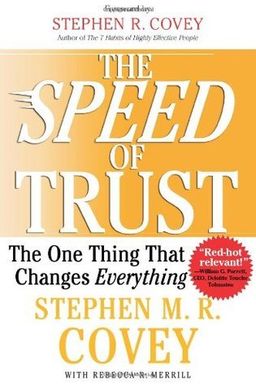
In The Speed of Trust, Stephen M. R. Covey reframes trust as an economic performance multiplier rather than an emotional or moral ideal. Trust, he argues, directly affects two measurable outcomes: speed and cost. When trust climbs, results accelerate and costs fall; when trust erodes, everything slows and costs rise. Trust, Covey insists, is not soft—it’s quantifiable, actionable, and essential to every interaction and organization.
Trust as a measurable asset
Covey offers a simple but powerful formula: (Strategy × Execution) × Trust = Results. Trust is the performance multiplier. Without it, even great strategies limp; with it, average plans can outperform expectations. He calls the friction from low trust a “trust tax”—extra layers, approvals, audits, and defensive communication—and the benefits of high trust “trust dividends”—faster collaboration, innovation, and freedom. Warren Buffett’s handshake deal with Wal-Mart, completed in days, demonstrates a high-trust dividend. By contrast, Sarbanes–Oxley compliance costs show the societal-level trust tax when confidence collapses.
The wider ripple: from self to society
Covey explains trust through his Five Waves model: it begins with Self Trust (credibility and integrity), expands to Relationship Trust (daily behaviors), builds into Organizational Trust (systems and alignment), influences Market Trust (brand reputation), and culminates in Societal Trust (public institutions and culture). Every wave depends on the preceding one. The model is “inside-out”: you cannot repair external trust without first being trustworthy yourself. When FranklinCovey faced a merger crisis, Covey rebuilt trust from Wave 1 and Wave 2—by being transparent and confronting real issues—and the effect rippled outward to revive organizational unity.
Credibility: the foundation
At the heart of trust lies credibility. Covey breaks credibility into four cores: Integrity, Intent, Capabilities, and Results. Integrity (congruence and character) determines whether your words align with your actions. Intent (your motive) defines whether others believe you seek mutual benefit. Capabilities (skills, knowledge, style) ensure you can do what you claim. Results (track record) give evidence that trust is warranted. When any core fails, trust collapses. Roddick’s honesty on the tennis court, Campbell Soup CEO Doug Conant’s declared intent to rebuild trust, and LeBron James’s relentless capability development all illustrate how these cores manifest in practice.
From insight to practice
Covey urges you to “See, Speak, Behave”: learn to see where trust taxes are draining performance, use a common language (trust accounts, trust taxes, dividends) to name and negotiate them, and adopt concrete behaviors that build trust daily. Those behaviors include Talk Straight, Demonstrate Respect, Create Transparency, Right Wrongs, and Show Loyalty. Each is designed to increase deposits in the trust account between people. Covey reminds you that trust, like money, compounds when faithfully invested.
A practical lens
Ultimately, Covey argues that trust operates across all levels of life—individual, professional, societal—and always affects performance. A person or organization with high trust moves faster, spends less, and builds enduring relationships. Trust can be restored even after failure; deliberate transparency, apology, and results often rebuild credibility stronger than before (as with Johnson & Johnson’s Tylenol recall or Cheryl Bachelder’s honest turnaround at Popeye’s). Covey’s message, echoing his father Stephen Covey’s Principle-Centered Leadership, is timeless: trust is not merely moral virtue—it’s a measurable advantage. When you lead with it, you lead effectively.
The book’s unifying insight is clear: Trust is both character and competence multiplied. To transform your speed and cost equation, start from within, deliver results, and extend trust intelligently outward. The result is not just better relationships—it’s higher performance and enduring success in every sphere you touch.