
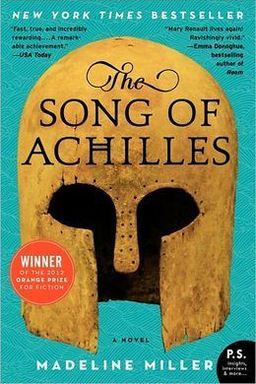
The Song of Achilles cover

The Song of Achilles

by Madeline Miller

The Song of Achilles by Madeline Miller brings a modern twist to Homer’s Iliad, exploring the profound love story of Achilles and Patroclus. This compelling retelling captures the emotional depth and timeless themes of devotion, destiny, and sacrifice amidst the legendary backdrop of the Trojan War.

Love, Fate, and the Moral Architecture of Heroism

What makes a hero’s life meaningful — glory, love, or moral choice? In The Song of Achilles, Madeline Miller reimagines Homer’s Iliad through the eyes of Patroclus, creating a deeply human meditation on devotion, destiny, and the cost of greatness. The novel’s core argument is that heroism is not an inherited gift or divine right but a moral art: it is learned, chosen, and often paid for with loss. By retelling an epic war story as an intimate bildungsroman, Miller invites you to see how empathy and courage coexist with tragedy.

A Human Lens on Myth

From the start, you experience the ancient world not through gods or kings but through a boy marked by guilt. Patroclus' exile and lifelong sense of unworthiness open the story with vulnerability rather than bravado. Exiled to Phthia for accidentally killing another child, he grows up with shame as his shadow. The novel reframes exile and trauma not as incidental background but as the soil in which compassion takes root. You begin to see that the tale’s grandeur depends on its smallest gestures: the boy who learns to heal the wounded will later become the emotional center of a world founded on violence.

Love as Moral Education

The heart of the book is a love story. When Patroclus meets Achilles — the golden child of Phthia — their friendship becomes a lifelong moral apprenticeship. Through shared routines, music, and mutual curiosity, they build a relationship that anchors the novel’s emotional trajectory. Under Chiron’s mentorship on Mount Pelion, their companionship matures through study, play, and discipline. Their bond evolves from adolescent wonder to an intimacy that defies convention and remains an act of choice, not rebellion. You see how their partnership humanizes grandeur itself: Achilles’ radiance and Patroclus’ tenderness fuse to redefine greatness as care rather than conquest.

Fate vs. Freedom

Yet even love operates within prophecy. Achilles grows up under Thetis’s shadow — his divine mother’s knowledge that he can live a long, obscure life or die young and immortalized. The novel’s moral tension lies in that choice. Achilles’ acceptance of glory, despite the cost, contrasts with Patroclus’ decision to follow him into mortality. Their shared consent to a doomed destiny becomes the narrative’s beating heart: you are asked to consider whether meaning comes from survival or from the intensity of shared purpose. (Note: this echoes Greek tragic structure — choice made against knowledge is the highest form of courage.)

The Divine and the Human

Through Thetis, the goddess-mother, the novel examines divine interference as moral violence. Her love for Achilles is controlling and destructive; her prophecies shackle him to story even as they protect him from harm. The gods here are not distant abstractions but domestic tyrants whose agendas wound mortals. Each divine encounter forces humans to negotiate between freedom and fate. You begin to feel that being beloved by a god is less a blessing than a curse — a condition that replaces choice with compulsion.

War as Moral Theatre

When war finally comes, it is not simply an external conflict but an arena where internal virtues are tested. Honor is currency; oaths are contracts that bind entire families to bloodshed. Miller reconstructs the politics of the Trojan expedition — from the Tyndareus Oath that binds kings to avenge Helen’s abduction to the manipulation of prophecy by Odysseus and Agamemnon. You watch how personal pride masquerades as divine duty. Achilles’ quarrel with Agamemnon over Briseis, the plague triggered by Chryseis’ capture, and Iphigenia’s sacrifice at Aulis all illuminate how ritualized honor corrodes moral imagination.

Loss, Legacy, and Transformation

The deaths of Patroclus and Achilles close the circle. Patroclus’ impersonation of Achilles — his fatal attempt to save the Greeks — collapses identity and devotion into one act of self-sacrifice. Achilles’ grief transforms him from radiant warrior to desecrating avenger, exposing the deforming power of love when joined with rage. By the novel’s quiet end, Patroclus’ voice lingers beyond death, narrating not triumph but recognition: the peace of being remembered beside the one he loved. The epic concludes as intimacy’s resurrection — a final defiance of oblivion. For you, the reader, this ending reframes myth itself as moral empathy.

Core insight

Miller’s novel transforms the oldest war story into a study of moral becoming. By watching Patroclus grow from exile to healer, and Achilles from prodigy to tragic hero, you see that greatness without compassion is hollow, and love — even doomed — is the deepest form of immortality.


Exile, Identity, and Moral Formation

Patroclus’ exile is not just the story’s beginning; it is its psychological blueprint. His accidental killing of another boy defines both his sense of guilt and his craving for belonging. In Phthia, stripped of status and wealth, he becomes a study in humility. You see him learning to survive invisibility — eating alone, avoiding confrontation, and finding quiet refuge in small acts like tending wounds or repairing tools. The child who internalizes shame later turns it into empathy, one of the novel’s most distinctive moral arcs.

From Punishment to Purpose

Exile is paradoxical: it imprisons him socially but liberates him morally. By losing the privilege of kingship, Patroclus gains the freedom to feel. Miller uses this inversion to redefine heroism: restraint and gentleness become their own kind of courage. The images that haunt him — the dead boy, the blood on stone — later inform his approach to healing. Where Achilles is driven by destiny, Patroclus is driven by conscience. His exile produces not bitterness but a heightened capacity for connection, which anchors the narrative against the surrounding culture of pride.

Chiron’s Mountain and the Art of Learning

On Mount Pelion, under Chiron’s mentorship, exile transforms into education. Chiron teaches practicality over prophecy — healing goats, setting bones, recognizing herbs — tying skill to responsibility. For both boys, this is a formative liberation from palace vanity. The lessons of Pelion blur physical and moral labor: every wound treated, every story retold, integrates knowledge with compassion. You watch Patroclus evolve from lonely exile into healer, learning that care for others is the purest form of strength. (In contrast to traditional mythic tutelage, this is not about martial dominance but about integrity.)

The Inner Life as Moral Compass

Patroclus’ guilt takes the shape of dreams — recurring visions of the dead boy whose voice recalls moral accountability. Rather than paralyze him, this inner haunting clarifies his sense of right and wrong. He is incapable of cruelty because he knows firsthand the weight of unintended harm. The narrative uses his interior voice as counterpoint to Achilles’ external brilliance: one hears the conscience that tempers glory. You understand ultimately that exile, when met with reflective awareness, can become apprenticeship in empathy.

Key idea

The moral architecture of the novel begins with exclusion: being cast out becomes the condition that allows real humanity to take root.


The Bond That Redefines Heroism

The connection between Achilles and Patroclus is both personal and philosophical. What begins as a friendship between an awkward exile and a radiant prodigy becomes a radical redefinition of heroism itself. Their relationship intertwines affection, moral tension, and shared growth — a love that challenges both divine decree and human hierarchy. Through every stage — childhood play, quiet education, sensual awakening, public companionship — Miller shows you that the true Trojan War is between love’s privacy and the world’s demand for spectacle.

From Curiosity to Commitment

Achilles first chooses Patroclus publicly as his companion (therapon), reversing the boy’s exile into recognition. Moments like the tossed fig, shared lyre lessons, or parallel training scenes become small domestic rituals that accumulate moral significance. They learn from each other what neither possesses alone: Achilles learns empathy; Patroclus learns confidence. This apprenticeship in love trains both for the tragic choices ahead. For readers, these scenes assert that genuine attention — noticing another without agenda — can be an act of salvation.

Asymmetry and Complementarity

The two embody contrasting temperaments: Achilles is luminous, aware of destiny; Patroclus is earthbound, cautious, self-doubting. Yet the novel insists that their difference is the condition for harmony. Patroclus softens the arrogance of greatness; Achilles magnifies the quiet virtues of care. You sense that each completes the other’s education. This interdependence challenges the Homeric hero ideal, turning partnership into a moral paradigm rather than a footnote to war.

Love Against the World

Their intimacy unfolds under social and divine threat — Thetis’ hostility, Odysseus’ manipulations, the gossip of Scyros. When Achilles disguises himself as the girl Pyrrha to evade war, gender itself becomes performance and protest. For Patroclus, loving Achilles means learning to protect rather than possess him. Their relationship exposes how gender, expectation, and reputation are public scripts that love must rewrite. What survives each disguise and exile is their unshaken attention to each other’s humanity.

Essential theme

In humanizing mythic love, Miller proposes that courage is not only dying for another but knowing and forgiving them completely.


Gods, Prophecy, and the Limits of Choice

In the world of The Song of Achilles, the divine is not metaphorical; it is political. Thetis, Apollo, and other gods shape mortal fates, but their interventions expose how fragile human agency remains under cosmic design. Through Thetis especially, Miller dramatizes love’s destructive side — the parent who would freeze her child’s humanity to preserve him. You witness a recurring pattern: every divine gift carries loss, every prophecy limits freedom. The question becomes not whether fate governs you but how you choose within those constraints.

The Mother and the Machine of Destiny

Thetis hides Achilles on Scyros as Pyrrha, trying to outmaneuver the prophecy of his death at Troy. Her strategies — gender disguise, isolation, manipulation — reveal obsession masquerading as love. She sees her son as project, not person. In doing so she becomes a mirror to every manipulative power: divine affection as control. (Note: this psychological realism distinguishes Miller’s revision from Homer’s remote depiction of gods.)

Prophecy as Ethical Pressure

Prophecy in this novel is less prediction than demand. Achilles knows the terms — die young and famous or live obscurely — but the knowledge does not absolve him. Choosing glory becomes a conscious moral act, a declaration that meaning outranks longevity. Patroclus’ corresponding decision — to follow him — converts prophecy into partnership. Together they create freedom inside inevitability, asserting that shared purpose can redeem even fated loss.

Divine Violence and Human Dignity

Every divine intrusion exacts human cost: Thetis’ manipulation, Apollo’s plague, Artemis’ demand for Iphigenia. Yet mortals resist by acting ethically within those pressures — returning Chryseis, mourning Iphigenia, or choosing to love despite doom. Miller’s moral vision rests here: divinity may define circumstances, but humanity is defined by response. Even when gods script your death, you still choose how to live the intervening lines.

Moral insight

Fate in this story is inescapable, but character — the capacity to love and act justly — remains the one form of immortal freedom.


Power, Oaths, and the Politics of Honour

The world of kings is an economy of promises. From Tyndareus’ oath binding suitors to defend Helen’s husband to Agamemnon’s manipulation of alliances, you see how ritual honor sustains — and then destroys — entire kingdoms. The novel constructs political history as moral theater: men swearing loyalty, demanding restitution, and trading people like prizes. Understanding these rituals helps you see why war erupts less from lust or destiny than from the arithmetic of reputation.

The Chain of Oaths

The promise sworn at Sparta — to defend Helen’s chosen husband — transforms private affection into public policy. When Paris abducts Helen, the oath functions as moral collateral compelling war. Odysseus and Agamemnon weaponize that collective vow to build an empire disguised as duty. For the men who hesitate, refusal means shame; shame invites social death. The novel shows how easily morality becomes machinery: each promise creates the next catastrophe.

Leadership and Moral Corruption

Agamemnon’s decisions — the sacrifice of Iphigenia, the seizure of Briseis, the baiting of Achilles — reveal how authority without conscience turns cruelty into policy. The killing of Iphigenia at Aulis marks a moral collapse that reverberates across the war: pragmatism replaces empathy as leadership’s core value. Odysseus becomes its intellectual accomplice, converting deceit into governance. Through these acts, the novel widens its focus from personal grief to systemic violence: how politics institutionalizes violation and calls it necessity.

The Honour Economy of War

Honour in Troy’s camp operates like currency. Spoils, speeches, public gifts — especially women like Briseis or Chryseis — are the tangible evidence of worth. When Agamemnon violates that order by taking Briseis from Achilles, he commits symbolic theft. Achilles’ withdrawal makes visible what moral accountants would call default: a broken system where prestige no longer aligns with justice. You learn that in this world, restoring order means restoring perception — the public belief in fairness more than fairness itself.

Political insight

When honor becomes a visible economy rather than inner principle, war becomes inevitable — a ledger corrected by blood.


Healing, Sacrifice, and Tragic Fulfillment

The second half of the novel transforms Patroclus from passive voice to active instrument. His healing hands, his mediation in the plague dispute, and ultimately his choice to wear Achilles’ armor mark his evolution from caretaker to catalyst. Every small mercy he showed earlier — tending wounds, defending Briseis, calming Achilles — culminates in the ultimate mercy of self-sacrifice. You witness how compassion becomes active courage.

The Healer’s Calling

In the physician’s tent, Patroclus applies Chiron’s lessons — the herbs for infection, the precise cut for arrow removal. Medicine becomes moral performance: to save others in a culture obsessed with death is quiet defiance. He earns respect while avoiding glory, embodying the book’s ethic that care is resistance against corruption. Where others prove worth through conquest, he proves it through restoration.

The Masquerade and the Death

When Achilles’ pride fractures the army, Patroclus acts out of desperate love. Wearing Achilles’ armor, he rallies the soldiers and momentarily redeems the war. But his success invites divine notice; Apollo intervenes, and Hector strikes him down. His final word — Achilles’ name — fuses identity and devotion beyond separation. In dying, he teaches Achilles what no prophecy could: that love fulfilled through sacrifice outlasts both body and fame.

Grief, Revenge, and Continuity

Achilles’ grief becomes the novel’s most violent transformation. His mourning blurs mercy and madness, dragging Hector’s corpse as offering to sorrow itself. Only through Patroclus’ posthumous presence — his voice narrating beyond death — does rage soften into recognition. The final act of reconciliation, when Thetis allows their names to share one tomb, completes the moral resolution: humanity transcends divine division. Immortality here is emotional, not mythic — memory sustained by love, not song alone.

Final truth

Patroclus heals Achilles in death as he did in life: by reminding him that love, not glory, is the only legacy immune to decay.

Dig Deeper

Get personalized prompts to apply these lessons to your life and deepen your understanding.

Go Deeper

Get the Full Experience

Download Insight Books for AI-powered reflections, quizzes, and more.