
Idea 1
Living in the Age of the Integrated Spectacle
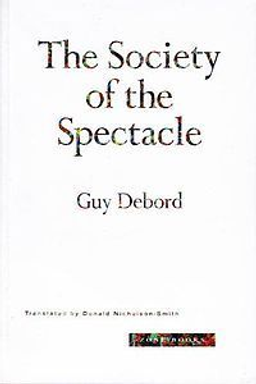
Have you ever wondered why our world feels increasingly artificial—where images, media, and appearances seem to have more power than truth itself? Guy Debord’s Comments on the Society of the Spectacle tackles precisely this condition. Written in 1988 as a follow-up to his groundbreaking 1967 work, The Society of the Spectacle, Debord extends and deepens his critique of modern capitalist life. He argues that we have now reached the stage of the integrated spectacle—a world where every aspect of reality has been absorbed by representation, manipulation, and control. The spectacle no longer just distracts us; it defines what is real.
Debord’s central claim is that we live under the autocratic rule of images and mediated appearances. What once appeared merely as consumer spectacle—advertising, television, mass entertainment—has now fused completely with the machinery of state and economy. Truth itself, he warns, has been replaced by a system that manufactures ignorance, orchestrates confusion, and thrives on secrecy. It’s not just that we are distracted; we are governed through distraction.
From the Diffuse to the Integrated Spectacle
Debord revisits the distinctions he made earlier between the concentrated spectacle of totalitarianism (think Nazi Germany or Stalinism) and the diffuse spectacle of capitalist democracies (exemplified by American consumer culture). By 1988, he argued, these two had merged into the integrated spectacle—a seamless system combining total control with the illusion of freedom. The integrated spectacle is everywhere: in politics, media, education, technology, and even genetics. Its goal is not just to dominate perception but to remake reality in its own image.
In this new world, truth and falsehood have lost their meaning. Governments, corporations, and media no longer merely hide information—they produce falsity as a way of organizing society. As Debord puts it, the spectacle controls both what is shown and the fact that nothing else can be seen. This integration is so complete that opposition itself becomes commodified: dissent, protest, and even rebellion are absorbed into the system as marketable gestures. The result is a condition he calls the “eternal present,” where history disappears, and all that remains is a constant, shimmering now of images and opinions.
The Five Pillars of Spectacular Power
Debord identifies five defining features of the integrated spectacle: incessant technological renewal, the fusion of state and economy, generalized secrecy, falsification without reply, and the construction of a perpetual present. The first accelerates dependence; the second ensures control; the third hides power; the fourth destroys truth; and the last erases history. Together, they describe a world where change itself is a tool of stasis, innovation is harnessed to servitude, and communication serves only to silence genuine dialogue.
You might recognize this world around you: political campaigns that resemble marketing launches, news cycles that never pause, and “debates” that replay the same false choices. The integrated spectacle rules not by violence alone, but by shaping what can be thought, said, and even imagined. The media’s endless loops of “information” are, in Debord’s eyes, the purest expressions of this control—a choreography of chatter concealing the absence of meaning.
The Loss of History and the Triumph of Secrecy
Perhaps the most chilling part of Debord’s analysis is his depiction of the deliberate erasure of history. In the integrated spectacle, recent events are forgotten almost as soon as they occur; the public memory is replaced by images curated by those in power. He uses the example of how the events of May 1968—a near revolution in France—were rewritten and trivialized by the media into mere folklore. Memory itself, he says, has become a threat. To govern effectively, the spectacle must ensure that society forgets what has just happened and never questions what comes next.
Secrecy, then, becomes not a deviation but a governing principle. Everywhere, the hidden hand of intelligence agencies, corporations, and states blurs the line between the political and the criminal. Assassinations, false terrorist events, and “covert operations” form part of the spectacle’s ordinary functioning. When the truth is uncertain and everything seems possible, power becomes unaccountable. The unsure citizen, trapped in fog, ceases to resist.
Why It Matters Today
Debord’s warnings resonate uncannily with our digital age. The “incessant renewal of technology” he described anticipates the Internet, smartphones, and social media—tools that claim to connect us but instead deepen our dependency and fragment our attention. The “fusion of state and economy” finds concrete form in surveillance capitalism and the revolving door between political and corporate power. And the “falsification without reply” has become the very structure of online discourse, where algorithms promote outrage while drowning meaning in endless noise.
For Debord, resistance begins with clarity—with seeing the spectacle for what it is: not a conspiracy but a logic, not an illusion but a method of power. To live authentically in such a world means reclaiming history, thought, and conversation—spaces where truth can once again be shared and remembered. This is not easy; the spectacle rewards silence and punishes reflection. Yet the first step, as Debord writes with weary lucidity, is simply to name what has been done to us: that the world has been turned into its own image, and we, the spectators, must learn to see through it.