
Idea 1
The Hidden Machinery of Human Life
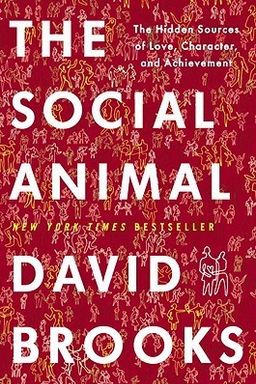
Why do you act the way you do—even when logic says otherwise? In his exploration of human behavior, David Brooks argues that most of your thinking, choosing, and loving happens far below consciousness. He invites you to abandon the old myth of the rational individual commander and to see yourself instead as a network of unconscious emotional processes organized through relationships, culture, and habit. Rationality matters, but it rides on invisible scaffolding—what he calls the scouts of the mind.
The unconscious engine
Brooks begins by describing how emotion and intuition are not obstacles but instruments of thought. Drawing on Timothy Wilson, John Bargh, and Antonio Damasio, he shows that what you experience as conscious decision-making is usually the tail end of vast unconscious computation. You are not the general commanding from above; you are the general who interprets reports from millions of emotional scouts gathering evidence below. This ecological view of mind transforms how you approach love, learning, leadership, and public policy.
Emotion and value assignment
Feelings are not noise—they are the body’s measuring system. Brooks uses Damasio’s patient Elliot to reveal that intelligence without emotion collapses into paralysis. Emotions generate somatic markers that bias you toward options that feel right. They provide a kind of Emotional Positioning System (EPS), creating automatic judgments about what to pursue or flee. This insight recasts moral reasoning, consumer behavior, and even romance as emotionally guided pattern recognition rather than detached rational choice.
Social wiring and attachment
From prenatal rhythms to the mirror neurons of empathy, Brooks reveals minds as social constructs. Early attachment loops—through gaze, rhythm, and touch—form the basis for emotional regulation and identity. Bowlby and Ainsworth’s attachment research shows how secure rhythms in infancy predict later resilience and competence. Relationships encode emotional templates that later govern trust, motive, and stability. You don’t build a mind alone; you co-regulate it through others.
Maps, stories, and imagination
The book then turns to development: children transform experience into neural maps and then imaginative stories. Synaptogenesis lays physical patterns; Fauconnier and Turner’s blending theory explains creativity as combining previously separate concepts. Play and narrative build prototype scenarios for future moral and social understanding. Brooks uses Harold’s fantasy world as evidence that imagination trains cognition and emotion together.
Culture and emergence
Individuals are nested in emergent systems—families, schools, and societies—that self-organize through norms. Brooks shows how poverty and success are products of complex feedback among culture, policy, and context. Attempts to fix problems by single-variable levers fail because they ignore this emergent web. The Academy, for example, works by reshaping environment and rituals so new habits cascade naturally. Culture, not coercion, reshapes destiny.
The moral of the argument
Across all these stories Brooks advances a unified message: reason alone builds brittle societies. Emotion, habit, culture, and unconscious attunement are the true foundations of flourishing. Education must teach moral and emotional skills; leadership must restore humility; policy must recognize the soft infrastructure beneath economics. When you see yourself as part of this living web, wisdom becomes less about control and more about nurture. Emotion, intuition, and relationship are not distractions from rational agency—they are its preconditions.
Core takeaway
Human life runs on hidden machinery—the unconscious mind, emotional guidance systems, and cultural patterning. Understanding those invisible processes is how you actually learn, lead, and love well.
Brooks’s synthesis places feeling at the heart of reason and network at the foundation of identity. Once you accept that mind and society are entangled systems rather than rational calculators, you gain both humility and hope for changing the world one cue, story, and relationship at a time.