
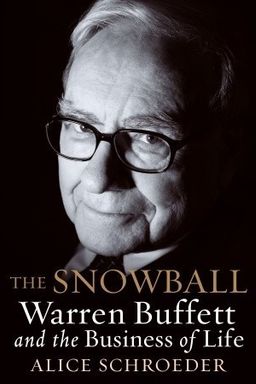
The Snowball cover

The Snowball

by Alice Schroeder

The Snowball provides a fascinating exploration of Warren Buffett''s life, revealing how his passion for numbers and strategic investments made him the world''s wealthiest man. Discover the personal and professional principles that guided Buffett to unparalleled success.

Building Character, Capital, and a Life of Integrity

How do you turn raw curiosity into enduring success? Through a lifetime of disciplined choices and moral consistency. In this book, Warren Buffett’s life unfolds not as a list of investments, but as a map of decision-making—an operating system built on integrity, patience, and rationality. You don’t just learn how to pick stocks; you learn how to live by an Inner Scorecard rather than chase applause from an Outer Scorecard.

Buffett’s journey begins with kid hustles and ends with billion‑dollar philanthropy, yet his logic never changes: treat businesses as systems of incentives and people as long‑term partners. Each stage of his life—partnerships, acquisitions, crises, and giving—reveals principles you can use for investing, leadership, and ethics.

Integrity as the Compounding Engine

Buffett’s Inner Scorecard defines success by private standards, not public applause. Would you rather be thought the best investor and be the worst, or be thought the worst and be the best? That question distills his moral compass. It allowed him to resist tech mania in 1999, back unpopular truths, and preserve long‑term compounding. For you, adopting this mindset means sacrificing temporary popularity to protect inner coherence—a crucial advantage in both markets and life.

From Graham’s Math to Munger’s Philosophy

Buffett started as Benjamin Graham’s quantitative disciple: buy cheap, demand a margin of safety, and treat Mr. Market’s moods as irrelevant. But after meeting Charlie Munger, he absorbs a qualitative lens—favoring durable businesses with pricing power, brand strength, and capable managers. You move from cigar butts that offer one puff of value to moats that protect exceptional franchises like See’s Candies, American Express, and GEICO. This evolution is the intellectual backbone of Buffett’s mature investing philosophy.

Experimentation, Partnerships, and Operational Discipline

Buffett learned through experimentation: small bets on chewing gum and pinball machines evolved into structured analysis using Moody’s Manuals. He launched his investment partnerships from a bedroom office—reinforcing that big results begin with meticulous operations and control. By managing fees, reinvesting profits, and consolidating partnerships, he built a compounding machine that multiplied both his capital and his reputation.

Control and the Human Factor

Buying control of companies like Dempster taught Buffett that numbers are easy but people are hard. Layoffs and restructuring triggered local backlash—showing you that social and political risk can outweigh financial logic. Later activism, from Sanborn Map to GEICO rescues, revealed that persuasion, coalition building, and ethical handling of people determine outcomes as much as spreadsheets do. When you take control, you inherit moral responsibility.

Float, Scale, and Corporate Design

Insurance float transformed Berkshire into an empire. Premiums held before claim payments became “free” investment capital—funding new acquisitions without external debt. Scaling up introduced governance challenges: complex structures (Blue Chip and Wesco) drew SEC scrutiny; later he learned transparency beats complexity. Float thus evolved from a clever tactic into a philosophy: use enduring business models to finance long horizons responsibly.

Public Life, Crises, and Reputation as Capital

Buffett’s Sun Valley speech and Salomon crisis show another kind of power: the ability to stand publicly for integrity. In 1991, facing regulators’ wrath, he risked his own reputation to rescue Salomon Brothers—illustrating that reputation can function as an emergency currency. When transparency replaces denial, trust rebounds; when secrecy persists, collapse follows.

Generosity, Mortality, and Legacy

Buffett’s final evolution turns fiscal rationality into moral reasoning. He views wealth as lottery winnings of birth, arguing that those who draw fortunate tickets owe society repayment. His decision to give away most of his fortune to the Gates Foundation redefines effective philanthropy: give while living, through capable partners, and focus on outcomes rather than monuments.

Core takeaway

Buffett’s life is a continuous argument for integrity-driven compounding: moral clarity builds trust, trust builds opportunity, and opportunity compounds into wealth and impact. Learn his methods, but more importantly, learn his temperament—the quiet patience and ethical steadiness that make the math work.


The Inner and Outer Scorecards

Buffett’s Inner Scorecard is more than philosophy—it’s a behavioral operating system. The idea: measure yourself by your own standards, not public praise. In a culture obsessed with optics, this principle anchors rational action when markets or social pressure tempt you otherwise.

Integrity and Independence

You can think of the Inner Scorecard as a silent test: What would you do if no one were watching? Buffett’s choices—eschewing tech bubbles, refusing to massage his biography for image, insisting on truth—demonstrate that moral independence protects cognitive independence. You think more clearly when reputation doesn’t dictate decisions.

When Ethics Meet Strategy

This lens affects capital allocation. Buffett avoids speculative enthusiasm even if peers thrive temporarily. He advises historians to record unflattering facts about him, preferring accuracy to ideology. For investors, this teaches psychological risk management—you must be willing to look foolish for years to be right ultimately.

Lesson

Integrity compounds quietly: every decision consistent with your private values creates reputational capital that rescues you in public crises.

(Parenthetical note: Buffett’s framework resembles Stoic ethics—virtue as its own reward—and contrasts with Keynesian short-termism. Both financial and personal growth hinge on internal reference points.)


From Graham's Math to Munger's Moats

Benjamin Graham taught Buffett the foundation of value investing—treat stocks as businesses, demand a margin of safety, and ignore market moods. But Charlie Munger taught him to value enduring franchises. Together, they built a hybrid system: rigorous quantitative discipline plus qualitative insight.

From Cigar Butts to Great Businesses

Graham’s cigar‑butt metaphor—one last puff of profit from a discarded business—suited early Buffett deals like Sanborn, Dempster, and Rockwood. Munger challenged that approach: buy companies with lasting moats that generate cash without constant reinvestment. See’s Candies and American Express exemplify that shift: paying up for quality yields compounding returns through brand and trust.

Margin of Safety and Emotional Independence

Both thinkers agree that forecasts fail; your defense is underpaying relative to true value. Graham’s Mr. Market parable teaches you to separate mood from worth. Buffett applies it by ignoring manias—from the 1970s Nifty Fifty craze to 1999 dot‑com euphoria.

Moats and Float

GEICO and National Indemnity introduce another refinement: structural advantages that yield cheap capital. Float—premiums held for future claims—acts like a low‑cost loan, fueling acquisitions. Combined with enduring moats, this transforms Berkshire from investor to conglomerate.

Essence

Value evolves: numbers protect you from loss; understanding protects you from stagnation. The best investors unite arithmetic with insight.


Control, Activism, and the Social Dimension of Capital

When Buffett moves from minority stakes to control positions, money meets politics. Sanborn Map and Dempster Mill show how activism and operational reform unlock value, but also how communities react when outsiders disrupt livelihoods.

Activism as Value Creation

At Sanborn, he built coalitions, threatened special meetings, and engineered tax‑efficient restructuring. Rather than selling undervalued shares, he reorganized the enterprise to realize hidden value—an advanced stage of Graham’s methods. He matched advocacy with accounting mastery and ethical argument.

The Human Cost of Efficiency

Dempster’s turnaround was financially brilliant and socially painful. Inventory cuts and layoffs ignited civic backlash; citizens raised funds to reclaim local ownership. You learn that financial control without social awareness breeds reputation risk—a theme that resurfaces in later crises.

Collector Psychology and Scarcities

Buffett’s collector instinct—hoarding undervalued or scarce items like National American stock—reveals both power and peril. Scarcity creates leverage if you foresee demand; it destroys value if you misjudge it (as in the Blue Eagle stamp fiasco). The key: distinguish intrinsic scarcity from artificial hoarding.

Moral Inversion

Each control experiment proves the same truth: capitalism rewards rationality but tests your humanity. You can win the spreadsheet and lose the town; wisdom is balancing both.


Reputation, Crisis, and Leadership Under Fire

The Salomon Brothers scandal is Buffett’s crucible of crisis governance. When a rogue trader falsified Treasury bids, regulators nearly banned the firm. Buffett stepped in not as financier but as moral surgeon—rebuilding trust through candor and decisive action.

Leadership by Reputation

He leveraged his credibility to negotiate survival. Saying he would work for one dollar signaled sincerity; publicly confessing the firm’s failures signaled transparency. That honesty turned regulators from enemies to allies, proving that reputation can substitute for liquidity when trust collapses.

Ethical Engineering and Cooperation

Buffett’s counsel Ron Olson proposed waiving attorney‑client privilege—a radical act showing total cooperation with prosecutors. The tactic saved Salomon from criminal indictment but sacrificed individual protections. The moral calculus: protect thousands of jobs by punishing the few responsible.

Culture Repair

Afterward, Buffett slashed bonuses and faced mass defections. Culture reform demanded short‑term pain; mercenaries left, shareholders regained primacy. His message is enduring: losing money is excusable; losing reputation is fatal.

Crisis maxim

Get it right, get it fast, get it out. In any institution, transparency and swift correction outcompete secrecy and fear.


Philanthropy, Policy, and the Moral Economy

As Buffett’s wealth grew, so did his moral reach. He reframed philanthropy and policy alike through probabilistic reasoning—what he called the Ovarian Lottery. Your birth circumstances largely determine success; acknowledging that obliges redistribution through rational generosity.

Reframing Wealth

Buffett views capital as claim checks on future human activity. His arguments for estate tax preservation stem from fairness and functionality: dynastic wealth stagnates society. True meritocracy requires taxing excess and investing in opportunity.

Giving While Living

In 2006, he pledged most of his fortune to the Gates Foundation—insisting gifts be spent, not perpetually endowed. He chose competence over vanity, content to let others execute with measurable impact. This act redefined large‑scale philanthropy as outcome management rather than monument building.

Public Ethics and Influence

Through media ownership and civic engagement, Buffett demonstrated accountability as a form of power: the Omaha Sun’s Boys Town exposé and partnership with Katharine Graham show journalism as societal stewardship. His activism proves that capital and conscience can cooperate.

Moral arithmetic

Luck obliges responsibility. The richer your lottery win, the larger your duty to balance the system that produced it.


Legacy, Continuity, and Human Limits

Buffett’s later years unite corporate succession, philanthropy, and mortality. Age transforms his challenge from building wealth to designing systems that endure beyond him. Personal vulnerability—illness, loss, family complexity—pushes him to institutionalize wisdom.

Designing for Succession

He introduced whistle‑blower mechanisms, diversified boards, and cultivated future managers. He sought not clones but carriers of temperament—leaders who could balance prudence with curiosity. Adding people like Bill Gates and Susan Decker mirrored his belief that competence and perspective matter more than pedigree.

Family and Emotional Balance

Private life—Susie’s independence, Astrid’s care, and later Susie’s death—reveals how emotional structure shapes judgment. Buffett learned to separate attachment from control: he financed generously but avoided interference. Grief turned him toward giving, integrating affection with mission.

Community and Continuity

The Berkshire annual meeting became a civic ritual—commerce meeting education. This theater of capitalism embodies his belief that community strengthens corporate stability. Leadership endures through shared stories and culture, not just contracts.

Final lesson

Institutions last when values outlive founders. Buffett’s genius is not invincibility but the foresight to encode integrity into systems that can act without him.

Dig Deeper

Get personalized prompts to apply these lessons to your life and deepen your understanding.

Go Deeper

Get the Full Experience

Download Insight Books for AI-powered reflections, quizzes, and more.