
Idea 1
The Global Search for Smarter Schools
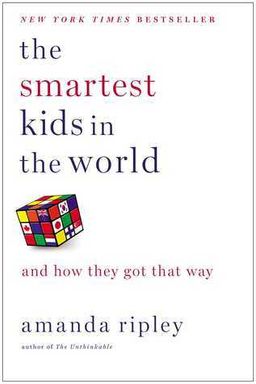
What makes some countries teach kids to think while others just teach them to memorize? Amanda Ripley’s The Smartest Kids in the World pursues that question through data, travel, and story. She argues that rigorous learning cultures share three pillars: high expectations, strong teachers, and meaningful autonomy. You follow three American teenagers—Kim, Eric, and Tom—who study in Finland, South Korea, and Poland to reveal what world-class education looks and feels like. Alongside their stories, Ripley decodes the PISA test, the global assessment that first exposed why some systems produce real thinkers and others stall in mediocrity.
The test that changed the conversation
At the heart of the book is PISA, the OECD’s international test designed not to measure recall but to measure reasoning. Andreas Schleicher’s vision was radical: ask teenagers how they’d use knowledge in realistic scenarios. PISA became a treasure map showing where countries are headed. Finland appeared at the top, revealing a system that cultivates thinking. The United States landed near the middle despite lavish spending. Korea and Poland surged upward through urgency and policy focus. Schleicher’s motto—"Without data, you are just another person with an opinion"—became Ripley’s compass.
Learning through contrast
Ripley’s structure is comparative journalism. You see Finland’s carefully selected and trusted teachers, Korea’s hypercompetitive pressure cooker, and Poland’s rapid reform experiment. Each reveals what choices matter: Finland shows excellence through trust; Korea shows results through relentless effort; Poland shows how redesigning policy can reboot an entire nation’s trajectory. In contrast, American schools’ fragmentation and low expectations stand out as cultural, not just structural, weaknesses.
Stories behind the data
Kim from Oklahoma lands in a Finnish classroom where her teacher Tiina Stara hands her a children’s version of Seven Brothers so she can join the discussion—an act showing grace and rigor intertwined. Eric from Minnesota enters a Korean high school where exhaustion and ambition coexist, and where a nation halts traffic for an exam. Tom from Pennsylvania faces chalkboard math in Poland without a calculator and learns that hard public accountability can coexist with encouragement. Through these field agents, Ripley humanizes abstract policy.
What drives excellence
Finland demonstrates that trust works only after professional capacity is built. Korea proves that pressure amplifies results but also stress. Poland shows that sequence—delaying tracking, retraining teachers, granting autonomy—matters. The U.S., by contrast, scatters effort across sports and bureaucracy while neglecting expert teaching. When Ripley takes a PISA test herself, she discovers that even a well-educated adult finds it steep, revealing just how far everyday schooling can drift from meaningful reasoning.
Culture, parenting, and drive
Achievement also depends on non-school forces: parental coaching, peer influence, and conscientiousness. Countries where parents discuss ideas and reading—rather than fundraisers or sports—tend to outperform. Students’ willingness to complete tedious survey questions even predicts national PISA success, a proxy for persistence. When families and schools transmit seriousness about learning, students internalize drive.
From systems to lessons
Ripley distills global lessons into practical criteria: watch classrooms, not slogans. Are students engaged? Are teachers selected carefully? Are failures used constructively? Are parents demanding academic stretch and reading at home? These behavioral signals tell you far more than rankings or gadgets. Across societies, lasting change followed crisis and consensus—moments when nations decided education was survival. If the U.S. wants similar results, it must align culture and policy around expert teaching and clear expectations, then give autonomy once competence exists.
The book’s central insight
World-class learning is not a mystery. It is built deliberately—through selective teacher training, sustained rigor, parental coaching, and peer norms that value thinking. Systems that balance trust with challenge create smart kids and sane societies.
By the end, you don’t just see Finland, Korea, and Poland as case studies; you see them as mirrors. Ripley’s journey teaches you that teaching thinking is the ultimate public project—and every choice, from who teaches to how parents talk about school, builds or erodes that foundation.