
Idea 1
The Anatomy of Enron’s Rise and Fall
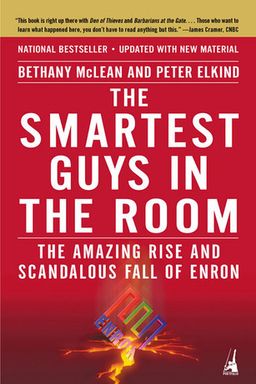
How does a world-class corporation implode in full view of investors, regulators, and its own employees? In The Smartest Guys in the Room, Bethany McLean and Peter Elkind argue that Enron’s collapse was not just about accounting fraud—it was a master class in how hubris, culture, and incentives can corrupt intelligence itself. You learn that Enron’s leaders—Kenneth Lay, Jeffrey Skilling, and Andrew Fastow—were gifted, charismatic, and visionary, but their strengths interlocked with fatal weaknesses: Lay’s aversion to conflict, Skilling’s obsession with idea over execution, and Fastow’s brilliance in bending rules for personal and corporate gain.
Leadership and hubris as foundation
Kenneth Lay painted himself as an affable statesman, cultivating Washington ties, hosting fundraisers, and selling Enron as a modern, ethical enterprise. Yet his inability to enforce discipline created a vacuum at the top. Into that vacuum stepped Skilling, the intellectual showman who reinvented natural gas as a financial product—building the Gas Bank, pushing mark-to-market accounting, and making complexity look simple. Fastow, meanwhile, engineered the financing that turned ideas into apparent profits, crafting off–balance-sheet vehicles like Cactus, JEDI, and LJM. Together they forged a feedback loop where charisma drove optimism, optimism drove accounting creativity, and accounting creativity drove personal enrichment.
Culture and incentives: a competitive cauldron
Under Skilling’s philosophy of the “guys with spikes,” Enron became a gladiator arena. The Performance Review Committee (PRC) ranked employees semiannually, firing the bottom tier and showering bonuses on top scorers. Ambitious traders learned to game the system: inflate short-term numbers, ignore ethics, and push deals through Risk Assessment and Control (RAC) before quarter-end. Loyalty and flash mattered more than prudence. That culture rewarded risk-taking and deception, which explains why so few insiders blew the whistle before Sherron Watkins did.
Financial innovation turned opaque illusion
Skilling’s trading revolution transformed Enron from an asset-heavy utility into an asset-light market maker. The Gas Bank idea let Enron trade natural gas as a derivative rather than a commodity, enabling visionary profits on paper. Fastow extended this revolution through structured finance: securitizations, prepays with Chase and Citi, and minority-interest entities like Whitewing and Osprey. These tools were legitimate in theory but abused in practice—transactions designed to look like liquidity but actually borrowed from the future.
Pattern of control failure
Early warnings came from Enron Oil’s Valhalla scandal, where traders fabricated counterparties and hid losses while headquarters looked away. Later, RAC—the supposed guardian of risk—was neutered under managerial pressure. Even Arthur Andersen, once the paragon of accounting integrity, became complicit: embedded at Enron, motivated by fees, its audit independence evaporated. Internal dissenters like Carl Bass and Vince Kaminski were sidelined when they challenged deals such as Raptors and Braveheart.
Collapse as consequence
By 2001, aggressive mark-to-market valuations and self‑hedging vehicles (Raptors) created fictitious profits. Fastow’s LJM partnerships supplied fake equity, enriching insiders through side payments and self-dealing. Skilling resigned amid stress and skepticism; Ken Lay re‑entered as CEO just as the SEC and ratings agencies began their review. The Dynegy rescue collapsed under disclosure pressure, liquidity disappeared, and Enron filed bankruptcy in December 2001.
Core lesson
You can admire Enron’s intellect and innovation without denying its corruption. When financial engineering, cultural bravado, and executive ego intertwine, illusion replaces reality—and the talent that builds greatness becomes the mechanism of destruction.
Across its rise and fall, Enron exposes how corporate systems can manufacture belief. From oil trading and Teesside’s triumphs to Raptors and Dynegy’s collapse, you see recurring forces: brilliant people, warped incentives, muted oversight, and relentless pressure to “make the quarter.” McLean and Elkind teach that complexity does not hide evil—it often reveals it, once the numbers no longer add up. (For comparison, think of Michael Lewis’s The Big Short, where similar forces turn intellect into fragility.)