
Idea 1
Sleep Isn’t a Luxury—It’s a Biological Necessity
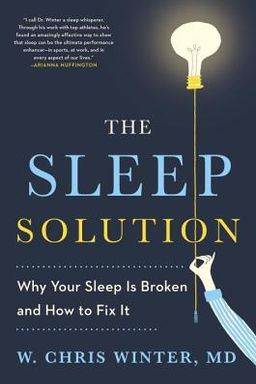
What if nearly everything you thought you knew about sleep—how much you need, what makes it good, or how to fix it—was wrong? In The Sleep Solution: Why Your Sleep Is Broken and How to Fix It, Dr. W. Chris Winter—a neurologist and sleep specialist—argues that sleep isn’t a passive state of unconsciousness or something reserved for when you have extra time. It is an active biological process that sustains nearly every aspect of health: your brain, your heart, your metabolism, your moods, and even your genetic expression.
Winter’s central thesis is simple but transformative: Sleep is a primary drive. You don’t choose to sleep; your body forces it, just like hunger pushes you to eat. That means you sleep—always. The problem is usually not that you’re not sleeping, but that your sleep is fragmented, misperceived, or sabotaged by habits, anxiety, or misunderstanding. His mission is to help you stop thinking of yourself as a ‘bad sleeper’ and instead learn the skills and conditions that let sleep’s natural rhythm work for you.
Why Sleep Matters More Than You Think
Winter opens with a provocative claim: sleep affects every organ system, from your brain’s ability to clear toxins to your heart’s ability to maintain rhythm. Recent research, he notes, even shows that insufficient or poor-quality sleep may accelerate Alzheimer’s disease by preventing the brain’s glymphatic system from removing toxic proteins. Sleep is also vital for regulating hormones like ghrelin and leptin that control appetite—meaning that too little sleep literally makes you hungrier and heavier.
Throughout the first chapters, Winter moves through one system after another: the heart (where poor sleep contributes to hypertension and arrhythmias), mood (where lack of rest worsens depression), and immunity (where fewer than seven hours of sleep makes you more likely to catch a cold). When people tell him they're too busy to sleep, he reminds them that shift work—long praised as a badge of toughness—is now classified by the World Health Organization as a probable carcinogen because of its damage to circadian rhythms.
The Misunderstood Nature of Sleep
Winter argues that our cultural confusion about sleep starts with a false assumption: that it’s either ‘on’ or ‘off.’ In reality, sleep operates on cycles and stages—light, deep (slow-wave), and dream (REM). These stages serve unique purposes: deep sleep restores your body and secretes growth hormone, while REM consolidates memories and balances mood. If these cycles are interrupted (by snoring, stress, or alcohol), you may feel awful despite technically ‘sleeping’ eight hours. Understanding these stages allows you to pinpoint what’s truly going wrong.
Moreover, many people misperceive their own sleep. Winter tells of patients who swear they haven’t slept in months, only for lab results to show six or seven quality hours. This condition—known as paradoxical insomnia—isn’t a sign of madness but of sleep state misperception: your brain can’t accurately track when you’re actually asleep. Just like you can daydream while your eyes focus on a page, you can sleep while believing you’re awake. Realizing that everyone sleeps—even you—can be incredibly freeing.
Two Forces That Rule Sleep
To master sleep, you have to understand its two major drives: the homeostatic drive and the circadian rhythm. The first (homeostatic) acts like hunger—the longer you go without sleep, the stronger your need becomes, driven by a chemical called adenosine. The second (circadian) is your internal clock, ruled by light and darkness, which orchestrates when you feel naturally sleepy or awake. When these systems are aligned—say you wake with morning light and rest at night—your sleep feels effortless. When they’re misaligned (late-night screens, irregular schedules, jet lag, shift work), everything unravels.
Because of this, Winter says, insomnia often isn’t a failure to sleep but a mismatch between your biological clock and your behaviors. Fixing it means syncing your life—your meals, exercise, and light exposure—to your body’s natural rhythms instead of fighting them.
From Science to Strategy: Fixing Broken Sleep
The rest of The Sleep Solution is structured like the second half of a medical training manual: Winter teaches you how to build the perfect environment for sleep, retrain your brain through cognitive-behavioral methods, and, if needed, navigate treatments like sleep studies or medication. The journey moves from basic hygiene—dark rooms, consistent wake times, no caffeine after lunch—to psychology: dismantling fear and perfectionism surrounding sleep, which he calls its most toxic saboteurs.
His tone is disarmingly funny (“A TV in the bedroom is like a toilet in the family room”), which makes dense science digestible. He mixes neuroscience with humor, from soldering electrodes on “snoring pigs” to explaining why lavender spray can trick your brain into thinking it’s bedtime.
Why This Book Matters Now
In an age where productivity is worshipped and sleep is treated like idleness, Winter reframes it as the foundation of every other healthy habit. You can’t meditate, exercise, or eat intelligently if your brain is exhausted. He brings compassion to people trapped in anxiety over their insomnia, insisting they stop labeling themselves as defective and instead focus on changing habits and mindsets. “You sleep,” he assures readers, again and again. “You may not feel it, but you do.”
By the end, you understand that fixing sleep doesn’t start in your bed at night—it starts in your day. From your light exposure and coffee intake to how you frame your own expectations, you’re constantly teaching your brain how to rest—or not. That, Winter promises, is the solution: understand sleep, respect it, and let your body do the work it’s been built to do.