
Idea 1
The Silk Roads and the Shape of World History
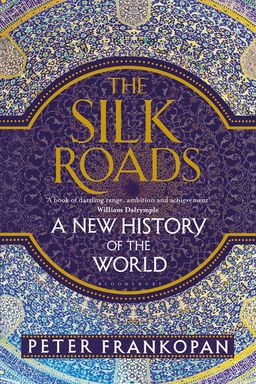
When you trace your finger across a map of the ancient world, midway between the Atlantic and the Pacific, you land in a region between the Black Sea and the Himalayas. Peter Frankopan’s The Silk Roads asks you to start history from there. His central argument is that civilization’s core—its arteries of trade, ideas and faith—runs through Asia, not exclusively westward from Greece and Rome. The Silk Roads are not one road but a web that carried material, spiritual and political energy across continents. In Frankopan’s telling, this network continually remade world power, shaping who ruled, who prospered and how the modern world emerged.
Asia as the World’s Spine
Civilization began along Asia’s rivers—the Indus, Tigris, Euphrates and Oxus—and grew from their capacity to sustain cities, bureaucracy and agriculture. Persia’s Royal Road under Darius, China’s Gansu corridor under Han emperors, and the Greco‑Bactrian cities founded by Alexander created an interlaced zone of connectivity. This region produced trade and governance systems so advanced that later empires—from Rome to Byzantium—depended on its goods, information and technologies. Frankopan invites you to see this belt not as a bridge between East and West, but the backbone of world history itself.
Trade, Power and Cultural Exchange
Economic exchange is the recurrent pulse along these roads. Silk functioned as both luxury and currency under the Han; Roman gold drained eastward to pay for spices and fabrics; Sogdian traders connected oasis markets across Central Asia. Commerce underpinned empire—whoever controlled routes, ports and taxation systems shaped economies far beyond their borders. When Rome seized Egypt or the Mongols lowered transit duties across Asia, global power shifted. Frankopan’s insight that trade itself serves as currency for power echoes through centuries, where spices, silver and oil repeatedly fuel imperial growth and decline.
Faiths on the Move
Ideas and religions traveled the same paths as merchants. Buddhism’s art transformed under Greek influence in Gandhara; Christianity developed eastern branches in Persia; Zoroastrianism and later Islam became state instruments linking faith to governance. Empires adopted religions not only for devotion but for legitimacy—as Constantine merged Church and empire or as Sasanians used Zoroastrian orthodoxy for cohesion. The Silk Roads were highways of the soul, where faiths competed, merged and evolved alongside commerce.
Nomads, Cities, and Networks
The steppe nomads—Scythians, Xiongnu, Mongols—move through Frankopan’s narrative as catalysts and connectors. They threatened settled empires but also supplied horses, military talent and transit hubs. Cities like Merv, Samarkand and Baghdad grew into pearls on this string, sustaining scholars, financiers and bureaucrats. Urban centers became global nodes, further proving that the Silk Roads were not peripheral tracks but dynamic systems of exchange shaping both ancient and modern urbanity.
Cycles of Reorientation
Across millennia, the Silk Roads endured disruptions—plague, conquest and exploration—but adapted each time. Mongol invasions created temporary destruction and then a Pax Mongolica of trade; the Black Death shifted Europe’s demographics and stimulated exploration; the Age of Discovery and Atlantic silver circuits repositioned power toward oceanic empires but still relied on Asian markets. Frankopan shows that these reorientations never erased the centrality of Eurasia—they merely rerouted its influence.
Modern Echoes of Ancient Networks
From the Industrial and imperial ages to modern energy politics and China’s Belt and Road, Frankopan argues that the Silk Roads remain alive in new forms. Oil concessions, Cold War interventions, and modern pipeline diplomacy recreate the same logic: control the routes and resources, and you shape history’s next phase. His sweeping narrative—from ancient caravan routes to 21st‑century trade corridors—frames globalization not as recent innovation but as continuity stretching back thousands of years.