
Idea 1
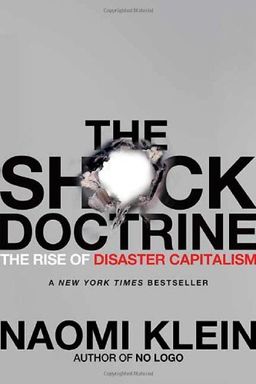
The Shock Doctrine: How Crisis Becomes Strategy
What happens when catastrophe isn’t just endured but used? In The Shock Doctrine, Naomi Klein argues that modern capitalism has learned to treat disasters—wars, coups, crises, and even natural catastrophes—not as interruptions but as opportunities. From Cold War torture labs to economic “shock therapies,” from Chile’s dictatorship to Iraq’s invasion, Klein traces a pattern: when people are too disoriented to resist, political and corporate actors seize the moment to impose radical economic transformations and privatization schemes that would otherwise face overwhelming opposition.
At the core lies what Klein calls the shock doctrine: a deliberate strategy that fuses psychological manipulation, economic fundamentalism, and coercive enforcement. This is not an accidental convergence—it’s an operating system that extends from the laboratory to the battlefield to the boardroom. You’ll see that the same logic that drove CIA-funded mind-control experiments in the 1950s later structured how economists rewired developing countries under IMF mandates, and again how military and corporate contractors rebuilt profit opportunities after wars and disasters. The pattern recurs across continents, industries, and decades.
The Engine of Shock: Crisis + Speed + Ideology
Klein builds on Milton Friedman’s dictum: “Only a crisis—actual or perceived—produces real change.” In her reading, Friedman’s Chicago School economists not only celebrated crises but designed policies to exploit them. They kept “ideas lying around” to deploy whenever chaos struck—whether a coup in Chile or a hurricane in New Orleans. The formula is simple and sinister: crisis collapses debate, ideological actors step in with ready-made reforms, and rapid implementation prevents resistance. It’s political shock therapy.
Chile’s 1973 coup serves as the prototype. Under Pinochet’s dictatorship, the Chicago Boys unleashed radical free-market reforms—mass privatization, trade liberalization, welfare cuts—backed by torture and repression. This combination of intellectual certainty and brute force became the model for later IMF programs, post-Soviet privatization drives, and war-zone reconstruction efforts.
From Laboratories to Nations
The narrative begins earlier—in Ewen Cameron’s mind-control experiments at McGill University. Supported indirectly by the CIA’s MKUltra program, Cameron sought to “depattern” minds using electroshock, sensory deprivation, and LSD—a literal erasure-and-reprogramming attempt. His clinical logic—break down, then rebuild—mirrored Friedman’s economic theory: clear away the old social order so the new can be written in its place. MKUltra morphed into operational manuals like Kubark, which taught interrogators to induce regression through control of time, space, and sensation. These same conceptual tools—shock, isolation, tabula rasa rebuilding—later guided social policies aimed at wiping states’ economic identities clean to install a purer capitalist template.
What begins as torture logic thus scales up to economic governance. The same mind-set—erase resistance, rebuild efficiency—recurs from Cold War interrogation cells to IMF offices, Pentagon reform speeches, and corporate think tanks. Klein shows how technocrats and policymakers turned human experiments into systemic methods for restructuring societies.
From Pinochet to Putin to Katrina
You track the method through history. Chile’s coup birthed neoliberal economics under terror; Russia’s “Pinochet option” in the 1990s privatized whole industries amid chaos; South Africa’s negotiated transition locked economic power behind constitutional and international agreements; Asia’s 1997 financial crisis transferred local assets to foreign investors; and Iraq’s 2003 invasion converted physical shock into corporate contracts. Each episode shows local trauma turned into market opportunity. Intellectual networks, financial institutions, and private contractors collaborated in turning crisis into a governing mechanism.
The Emerging Disaster Economy
By the 2000s, Klein argues, the shock doctrine evolved into a standing economic sector—the disaster capitalism complex. War, terror, and natural calamity became steady business flows for corporations like Halliburton, Blackwater, Lockheed Martin, and Bechtel. Security, reconstruction, and surveillance were privatized wholesale, turning the state into both client and guarantor for private profit. Disasters such as Hurricane Katrina confirmed the domestic mutation of the model: public housing, schooling, and hospitals were converted into charter systems or subcontracted services while displaced citizens became a dispersed, depoliticized population.
The Doctrine’s Core Lesson
The shock doctrine teaches that crises are not only exploited—they are cultivated. Political actors may even manufacture panic or deepen emergencies to achieve reforms that democracy would prevent. In this world, instability becomes profitable, and recovery itself becomes a privatized commodity.
Resistance and Renewal
The end of the book restores hope. Klein chronicles grassroots recoveries—from Thai fishing villages reclaiming tsunami-hit lands to Latin American nations rejecting IMF conditionality. Populations learn from memory; they build local resilience instead of surrendering to technocratic “shock treatment.” The final insight is moral as well as political: societies must defend their capacity for slow, democratic deliberation. When everything is framed as an emergency, freedom itself becomes collateral damage.
Ultimately, Klein’s argument exposes a global paradox: the more capitalism adapts to disaster, the more disaster becomes its condition of survival. The shock doctrine thus names not just a set of policies but the emotional infrastructure of modern governance—a system that depends on fear and amnesia to rewrite the world at profit’s pace.