
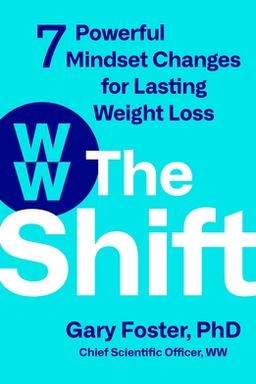
The Shift cover

The Shift

by Gary Foster

The Shift (2021) by Gary Foster reveals how changing your mindset can lead to lasting weight loss. By focusing on self-compassion, goal setting, and appreciating your body, you can achieve a happier, healthier life. Discover the seven mindset shifts that can transform your relationship with your body and yourself.

Mindset: The Real Key to Weight Loss That Lasts

Why do most diets fail, even when people start with enthusiasm and discipline? Dr. Gary Foster, Chief Scientific Officer at WW and a clinical psychologist who’s spent over three decades researching obesity, argues that the answer lies not in the food itself—but in our minds. In The Shift: 7 Powerful Mindset Changes for Lasting Weight Loss, he presents a compelling case that permanent change begins by reprogramming how we think about ourselves, our goals, and the journey of transformation itself.

As Foster puts it, “what’s in your head is as important as what’s on your plate.” His central thesis is that traditional diets fail because they fixate on what to eat and how much to move, but ignore how people think about those choices. Without the right mindset, even the best diet plan collapses under the weight of guilt, perfectionism, or unrealistic expectations. The solution? A shift from self-criticism to self-compassion, from all-or-nothing thinking to realistic planning, and from external approval to inner motivation.

Why Mindset Matters More Than Food

Through decades of clinical work at institutions like the University of Pennsylvania and Temple University, Foster observed that the most successful patients weren’t those who counted calories more vigorously or exercised longer—they were those who changed how they thought. People who viewed setbacks as part of the process, who treated themselves kindly, and who could stay flexible under pressure were the ones who kept going long after others quit.

This observation laid the foundation for his psychological approach to weight management. Borrowing insights from cognitive-behavioral therapy (CBT), positive psychology, and mindfulness, Foster identifies seven key mindset shifts that transform the weight-loss journey from a temporary fix into a sustainable lifestyle. His message is revolutionary because it reframes success not as deprivation but as emotional well-being and self-respect.

The Weight of Stigma—and Self-Perception

Foster begins with an acknowledgment that many people who struggle with obesity have long carried the burden of societal stigma. He’s candid about his own early misconceptions—once believing weight loss was purely a matter of willpower—before research revealed how wrong that was. The cultural narrative that ties moral worth to body size breeds shame and self-loathing, both of which sabotage motivation. Changing your mindset, then, isn’t only about losing pounds; it’s about reclaiming your humanity from the biases that surround body image.

As he notes, you are not your weight, and food is not a moral issue. The idea that “if I hate myself enough, I’ll change” is perhaps the most damaging myth of all. Instead, the path forward starts with compassion, understanding that progress is nonlinear and that setbacks are inevitable—and even instructive.

The Seven Mindset Shifts That Drive Transformation

Each chapter of The Shift introduces one foundational mindset change, supported by research, tools, and stories from people who’ve lived it:

  • 1. Be kind to yourself. Self-compassion, not self-punishment, fuels perseverance and resilience.
  • 2. Reframe setbacks. Learn to spot unhelpful thinking patterns (like all-or-none or “once makes always”) and replace them with realistic, action-oriented thoughts.
  • 3. Think small. Sustainable progress comes from small, specific, and consistent goals—not giant leaps that burn you out.
  • 4. Focus on strengths. Build on what’s good about you, rather than obsessing over what’s “wrong.”
  • 5. Appreciate your body now. Stop postponing self-acceptance until after you lose weight. Value your body for what it can do, not just how it looks.
  • 6. Seek connection. Nobody wins enduring battles alone. Meaningful support amplifies success, while isolation stifles it.
  • 7. Choose happiness now. Gratitude and joy aren’t rewards at the end of the journey—they are resources that make the road itself lighter.

Together, these shifts form a holistic, humane framework for change. They move you away from superficial fixes toward emotional clarity, psychological strength, and sustained well-being. Foster’s evidence-based approach integrates insights from leading experts such as Kristin Neff on self-compassion, Carol Dweck on growth mindset, and Martin Seligman on positive psychology, creating a guide that bridges science and empathy.

Why This Book Matters Now

At a time when the wellness industry thrives on guilt-driven marketing and quick fixes, The Shift stands out for its empathy and depth. Foster doesn’t promise perfection or instant transformation. Instead, he offers something better: a scientifically grounded path toward self-acceptance, resilience, and joy. He invites you to approach your health as an act of love—not as a punishment for imperfection.

“When you learn how to manage your mindset,” he writes, “eating and activity become easier. And when that happens, other elements of wellness fall into place.”

Ultimately, The Shift isn’t about weight loss at all—it’s about mental freedom. It’s a call to stop fighting yourself and start nurturing yourself. You’ll discover how thinking differently about your journey, your setbacks, and your worth can make every effort not just more effective—but more joyful. You don’t have to wait until you’ve changed your body to feel good. You can start changing your mind today.


Embrace Self‑Compassion, Not Self‑Criticism

One of the most surprising claims Dr. Foster makes is that the most powerful catalyst for weight-loss success isn’t willpower—it’s self-compassion. In fact, this is the very first mindset shift he teaches. It’s not how harshly you drive yourself, but how kindly you respond when things go wrong that determines whether you’ll stay on track. For people used to treating themselves like drill sergeants, this can sound counterintuitive, even dangerous. Yet decades of research—from scholars like Kristin Neff and Christopher Germer—show that self-compassion is linked to lasting motivation, emotional resilience, and physical well-being.

What Self‑Compassion Actually Means

Foster defines self-compassion as having three components: (1) being kind rather than critical toward yourself when you make mistakes, (2) practicing mindfulness by observing your experience without judgment, and (3) recognizing your common humanity—understanding that imperfection is the shared condition of being human. Each time you offer yourself empathy instead of blame, you choose a mindset rooted in truth, not shame.

The Power of Inner Kindness in Real Life

Meet Katie, a driven attorney and mother who started a weight program with high hopes. When a week of stress sent her off plan, she berated herself harshly: “I’m disgusting…I’ve failed again.” But Foster stopped her mid‑tirade and asked how she’d respond to a friend saying the same. “I’d tell her to be kind to herself,” she admitted. That’s the mindset shift in action: talk to yourself like a friend. Compassion doesn’t mean making excuses—it means acknowledging mistakes without equating them with moral failure.

Why Harshness Backfires

Society glorifies “tough love,” but research says it doesn’t work. Self-criticism actually decreases motivation because it triggers shame, the emotional equivalent of quicksand. People sink into hopelessness instead of rising through learning. Foster calls this the “diet mentality trap”—the belief that cruelty builds discipline. Instead, kindness builds strength. When you believe you are worth taking care of, you engage in behaviors that make care possible: mindful eating, gentle movement, proactive recovery after setbacks. Shame does the opposite—it leads you back to emotional eating, withdrawal, or quitting altogether.

“You are not your weight,” Foster reminds readers. “A wellness journey is not punishment for who you are—it’s an act of care for the person you already are.”

Overcoming Weight Stigma

The obstacles to self-compassion often come from the outside world. Foster exposes the pervasive stigma that equates body size with weakness or moral failure. When society treats larger bodies as defective, people internalize that bias and turn cruelty inward. He recounts stories of patients shamed by doctors, family members, and strangers—people told that they must “deserve” harshness to change. His counterargument is both humane and scientific: stigma doesn’t motivate, it paralyzes. When you replace the word “cheating” with “choice,” or stop viewing food as a moral test, you begin dismantling decades of self‑hate disguised as tough love.

Practical Tools for Building Kindness

Foster includes two deceptively simple exercises. The first, Talk to Yourself Like a Friend, asks you to imagine a friend describing the same setback you just experienced. What words, tone, or attitude would you use? Then mirror that kindness back to yourself. The second, Note to Self, is a reflective journal exercise where you write a compassionate letter to yourself about a struggle, recognizing it as human and temporary, not a definition of worth.

The results of such practices go far beyond the scale: reduced stress, more motivation, greater joy in physical activity, and resilience after setbacks. People like Catherine, another WW member, found lifelong transformation through self-grace: “It wasn’t about food—it was about how I spoke to myself. Once I changed that, everything else followed.”

Ultimately, self-compassion isn’t softness; it’s strategy. It keeps you engaged when old habits resurface. It’s the fuel that turns discipline into devotion. By shifting from “I must fix myself” to “I’m worth caring for,” you unlock a form of motivation that endures long after numbers on the scale have stopped mattering.


Build Helpful Thinking Styles

When you hit a snag in your wellness journey—say you overeat at a wedding or skip workouts for a week—what story do you tell yourself about what happened? For many, the story is catastrophic: “I blew it. I might as well give up.” In The Shift, Dr. Foster calls these traps unhelpful thinking styles. They distort reality, drain hope, and derail goals. Drawing on cognitive behavioral therapy (CBT), he teaches how to identify and challenge these thoughts before they dictate behavior.

Thoughts Drive Feelings—and Feelings Drive Actions

Foster grounds his approach in classic CBT: how you feel and act stems from how you think. If you change the thought, you alter the emotion, which changes the action. In one study inspired by Dr. Aaron Beck’s work, individuals who learned to reframe distorted thoughts were far more resilient in maintaining long-term change. So instead of simply tracking calories, Foster urges you to track your inner language.

Four Common Unhelpful Styles

  • All‑or‑None Thinking: The “I’ve blown it” mindset. If you deviate from your plan once, you believe the entire week is ruined. Foster compares this to crashing one tire and deciding to slash the other three.
  • Negative Filter: Focusing only on the one thing that went wrong while ignoring all that went right. When participant Ellie called her entire week a disaster because of one indulgent meal, Foster reminded her she’d met every other goal. She wasn’t failing—she was filtering.
  • Once‑Makes‑Always: Believing that one episode defines your forever pattern—“I always overeat at parties.” This fatalistic tone cements failure as identity instead of temporary behavior.
  • Don’t Worry, Be Happy: The opposite extreme—fake optimism without a plan. People say “I’ll do better next week” yet make no concrete changes. As Foster quips, “Plans beat platitudes every time.”

From Thought to Perspective

These mind traps shrink reality to a single distorted frame. To widen that frame, Foster teaches readers to play “lawyer” with their minds. When an automatic thought surfaces (“I ruined everything”), ask yourself: what hard evidence supports this? What evidence disconfirms it? Often, the facts tell a kinder, more accurate story. This act of mental cross‑examination transforms guilt into data you can use.

He also reminds readers that they are not their thoughts. Borrowing from Acceptance and Commitment Therapy (ACT), he uses the metaphor of a rude neighbor who keeps showing up uninvited—your negative thoughts. Instead of fighting them, acknowledge their existence and then get back to your “party”—your life and goals.

Practical Shifts That Work

Foster includes exercises such as the Reality Check (gathering evidence to counter distortions) and Noted and Accepted (naming an unhelpful thought and choosing an action anyway). These tools transform emotion into motion, replacing “I’ll never succeed” with “I had a hard day, but I can reset with dinner.” Over time, they help you cultivate what Carol Dweck calls a growth mindset—the ability to interpret setbacks as opportunities for development instead of proof of failure.

“Thoughts are not facts,” Foster reminds us. “They are stories we tell ourselves—until we learn to tell better ones.”

By building helpful thinking styles—realistic, flexible, and big-picture oriented—you give yourself the resilience to sustain success. Contrary to diet culture’s obsession with control, freedom comes not from forcing perfect behavior but from changing the mental filter through which you view imperfection itself.

Dig Deeper

Get personalized prompts to apply these lessons to your life and deepen your understanding.

Go Deeper

Get the Full Experience

Download Insight Books for AI-powered reflections, quizzes, and more.