
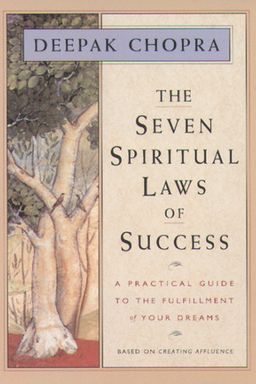
The Seven Spiritual Laws of Success cover

The Seven Spiritual Laws of Success

by Deepak Chopra

Deepak Chopra''s ''The Seven Spiritual Laws of Success'' reveals universal principles to achieve wealth, well-being, and fulfillment. By aligning with these spiritual laws, readers can tap into the universe''s energy, dissolve their ego, and manifest their deepest desires.

Dissolving the Ego to Discover Your True Self

When was the last time you felt completely at peace—perhaps while standing under an open sky, hiking through a forest, or listening to the waves roll in? In Unlock Your True Self by Dissolving the Ego, the author invites you to revisit those rare, sublime moments and recognize that they are not accidental. They are glimpses of who you really are. The book argues that every person possesses an infinite, peaceful Self—a consciousness beyond the mind and body—that becomes obscured by the ego. To rediscover this true Self, we must learn to quiet the ego, trust the natural flow of the universe, and align our choices with love and awareness.

At its heart, this book offers both a spiritual philosophy and a practical roadmap for living in harmony with the universe. It weaves together timeless wisdom—from Eastern spirituality to universal laws of energy and intention—to help you move beyond fear, scarcity, and isolation. The author doesn’t ask you to reject the physical world, but rather to see through it: to recognize that your life’s potential comes not from striving or controlling, but from surrendering to your deeper essence.

The Core Argument: You Are Not Your Ego

The book opens with a profound insight: that you are not a separate being cut off from life, but part of a vast, energetic field that connects everything. The ego—a collection of thoughts, fears, desires, and self-images—creates the illusion of separateness. It tells you that you are your body, your achievements, your possessions, and your opinions. This illusion is the root of human suffering. When you identify with the ego, you experience constant anxiety about survival, status, and approval.

The author likens this to being trapped in a glass box—you can see the world outside but feel apart from it. Only when you dissolve the ego’s grip, often through meditation and silence, do the walls of the box disappear, revealing your unity with the whole.

The Journey to Self-Realization

As you peel away the ego’s layers, what emerges is a Self that is calm, boundless, and creative. In this awakened state, fear gives way to trust, tightness to flow, and scarcity to abundance. You begin to see challenges not as punishments but as opportunities for growth. Acceptance becomes your natural response to life. This awareness forms the foundation for all the book’s subsequent lessons—from practicing acceptance and defencelessness, to detaching from material desires, using conscious choice-making, and circulating love and wealth freely.

The book then unfolds a path of transformation in seven main steps. First, you learn how to quiet the ego and reconnect with your true Self through meditation and observation. Next, you discover how to accept reality without resistance and practice defencelessness—the art of engaging others without trying to be right. From there, you explore how to detach from desires and trust the universe’s timing, and how to achieve abundance by giving and circulating wealth and love. You also learn how to make conscious choices that serve joy rather than ego, how to harness positive intentions to shape your reality, and finally, how to find your life’s purpose by serving others and aligning with the flow of universal energy.

Why These Ideas Matter

In a culture dominated by self-image, achievement, and comparison, the message of dissolving the ego can feel almost countercultural. Yet that’s what makes it powerful. The author argues that true happiness does not come from fulfilling desires or proving worth—it comes from realizing that we already contain everything we seek. When we act from our true Self, life becomes effortless. We stop fighting the current and begin to flow with it.

This theme echoes across spiritual traditions. In Hinduism, it parallels the concept of Atman, the inner self beyond illusion. In Buddhism, it aligns with anatta, the teaching of no-self. In Eckhart Tolle’s The Power of Now, similar insights appear in the call to observe the mind and disidentify from its chatter. But this book stands out because it translates those timeless ideas into clear, practical wisdom for everyday living—at home, at work, and in our relationships.

“You are not a mere brain in a body—you are an infinite field of energy expressing itself in human form.”

The book’s ultimate message is one of empowerment through surrender. By releasing the ego’s attachment to control, you gain real power. By accepting what is, you create space for transformation. By giving love, you receive more of it. And by serving others, you align with the universe’s grand design. These ideas remind us that inner peace and external success are not opposites—they are the natural by-products of awakening to your true Self.

If you’ve ever felt trapped by overthinking, self-criticism, or endless striving, Unlock Your True Self offers a path back to simplicity and strength. It’s an invitation to step beyond identity and rediscover the quiet power that has been with you all along.


Silence the Ego to Awaken the True Self

The foundation of your transformation begins with understanding the ego. The author describes the ego as the voice in your head that constantly judges, compares, and fears. It keeps you in a state of separation—from others, from nature, and even from your higher potential. This sense of isolation limits your capacity for joy and creativity. To awaken to your true Self, you must first quiet this noise.

Recognizing the Ego’s Limitations

When your ego dominates, you interpret everything through the lens of survival. You worry about status, attachment, and comparison. For instance, a person who constantly seeks validation at work may feel hollow even after receiving praise because the ego’s appetite is insatiable. The author likens this to drinking saltwater—it seems to quench your thirst but ultimately deepens it.

The ego’s purpose is protective, but its obsession with self-preservation blinds you to truth. In contrast, the true Self exists in peace, connection, and limitless awareness.

Meditation as the Pathway Beyond Ego

Silent meditation offers a direct route to realignment. By focusing on your breath and observing your thoughts without judgment, you begin to notice a separation between the observer and the observed. The ego’s chatter starts to fade, and what remains is pure awareness. In this stillness, the author notes, you can experience yourself as part of a vast, living universe rather than as an isolated individual.

This principle mirrors the teachings of mindfulness pioneers like Jon Kabat-Zinn and spiritual leaders like Eckhart Tolle, who emphasize presence as the gateway to liberation. Through practice, you come to see that the ego was never who you were—it was only a mask. Beneath it lies boundless potential, love, and unity with all existence.


Acceptance and the Art of Defencelessness

Once you begin to separate yourself from the ego, the next step is to practice acceptance. This doesn’t mean resignation—it means seeing things clearly without fighting reality. The author illustrates this with relatable stories, such as coping with a messy roommate or an unsatisfying relationship. In both cases, the ego’s instinct is to resist, complain, or blame. But resistance drains your energy and keeps you trapped in mental conflict.

Acceptance as a Path to Growth

When you accept circumstances as they are, you create space to learn from them. That roommate who frustrates you may be a teacher in disguise, helping you strengthen your boundaries or cultivate patience. Acceptance reclaims your power by shifting focus from control to understanding.

The Strength of Defencelessness

Defencelessness extends this principle to human interaction. It means letting go of the need to prove you’re right. Think of heated debates about diet or politics—when both sides dig in, no learning occurs. Approaching discussions without defensiveness allows genuine connection and mutual respect. As the author explains, openness invites wisdom; defensiveness breeds division.

This theme resonates with Buddhist non-attachment and with Don Miguel Ruiz’s The Four Agreements, especially “Don’t take anything personally.” When you drop the armor of ego, you engage more authentically—and paradoxically, become truly strong.


Detaching from Desire and Trusting the Universal Flow

Modern culture often teaches that fulfillment comes through acquisition—whether it’s the dream car, career, or relationship. But the author argues that attachment to desire breeds anxiety, not happiness. When you obsess over what you lack, you send a signal of distrust to the universe, implying that you doubt life’s generosity.

The Illusion of Security

Attachment to possessions or outcomes gives a false sense of safety. As in the example of the Ferrari dreamer, even attaining what you want doesn’t bring peace—because the ego quickly demands more. The 2008 financial crisis showed how fleeting material wealth can be, reinforcing that true security lies not in savings but in self-realization.

Letting Go to Receive

Ironically, when you release your grip on desires, you make room for miracles. The author illustrates this with those who long for love—often finding a partner only after they’ve surrendered their search. When you let go, you align with the natural flow of energy that brings the right experiences at the right time. As Deepak Chopra (in The Seven Spiritual Laws of Success) notes, detachment is the key to effortless manifestation.

Trusting this universal flow requires faith that life supports you. When you stop chasing, you start attracting.


Circulating Abundance: The Law of Giving and Receiving

True abundance, the author asserts, doesn’t come from hoarding—it comes from circulation. The universe operates as a dynamic exchange of energy, and money, love, and kindness are meant to flow through you, not stagnate. The Latin root of “currency” literally means “to flow,” a reminder that prosperity thrives in movement.

Financial Abundance Through Circulation

For example, instead of stashing away every paycheck, investing in education or skill development multiplies your long-term wealth. As the author explains, investing in yourself reflects trust in the law of return—what you give out expands. This mirrors the spiritual economic principle that generosity attracts more resources.

Emotional and Social Currency

The same principle applies to love. If you want affection, give affection. Relationships flourish not when both people focus on what they can get, but when both focus on what they can give. This is how communities and partnerships grow richer.

Ultimately, by circulating wealth and kindness, you harmonize with the universe’s rhythm. In giving, you open a channel for life’s energy to move freely through you—and that, paradoxically, is how you become full.


Making Conscious Choices Every Day

We often live on autopilot, making choices driven by habit rather than wisdom. The author urges you to reclaim awareness at the moment of decision. Every choice—what you eat, say, or spend time on—ripples outward, affecting both your life and the world around you.

Moving from Impulse to Intention

For example, mindlessly buying junk food reinforces unhealthy patterns. Instead, pausing to consider your health, budget, and environmental impact transforms a purchase into a conscious act of kindness—to yourself and others. This process of active awareness is the essence of spiritual living.

Choosing Joy over Ego

Conscious choice-making also applies to emotional situations. When insulted, you have two options: react from ego or respond from understanding. Choosing peace not only spares you suffering but subtly influences those around you. The author reminds us that the best decisions are those that maximize joy and goodwill—for all involved.

As in Stephen Covey’s 7 Habits of Highly Effective People, the key is to act based on principles, not impulses. Each conscious choice becomes a step toward a life aligned with your true Self.


Harnessing Positive Intentions to Shape Reality

The energy of your thoughts determines the quality of your life. The author explains that the universe mirrors the vibration of your predominant mindset. Negative focus invites negative outcomes; gratitude and positive intention attract fulfillment.

From Complaint to Creation

Take the example of someone unhappy with their home. Focusing on dissatisfaction radiates resistance. But gratitude for the current home—paired with a joyful visualization of improvement—aligns your energy with abundance. The universe reflects that shift, often in surprising ways.

Sustaining Momentum

Intentions require consistent attention. To transform dissatisfaction at work, for instance, you must consciously replace self-critical thoughts with affirmations of competence and gratitude. Even recognizing small wins, like writing a thoughtful email, helps sustain positive vibration.

This aligns with contemporary ideas from positive psychology and quantum philosophy—your attention shapes your reality. Direct your intention wisely, and the world rearranges itself in harmony with it.


Finding Purpose Through Service and Alignment

The final stage of awakening comes when you align your personal purpose with universal purpose. Every human being, the author suggests, has a role to play in the cosmic design—just as every star occupies its rightful place in the sky.

Purpose through Service

Instead of asking what the world can give you, ask what you can contribute. For some, this might be creativity and art; for others, compassion through healing or teaching. The point is not prestige, but authenticity. When your work serves others, energy flows through you effortlessly.

For example, someone who realizes their strength lies not in artistry but in empathy may shift from chasing art-school fame to a medical profession—finding deeper joy in care. This transition exemplifies how purpose aligns passion with service.

The Effortless Flow of Universal Support

When you’re on the right path, you feel boundless energy. Tasks no longer drain you; they nourish you. The author describes this as universal support—life itself lending its power to your purpose. This notion echoes the Taoist principle of wu wei—effortless action arising from harmony with the Tao.

In essence, discovering your purpose is not about ambition but remembrance—rediscovering the unique note you were meant to play in the symphony of existence.

Dig Deeper

Get personalized prompts to apply these lessons to your life and deepen your understanding.

Go Deeper

Get the Full Experience

Download Insight Books for AI-powered reflections, quizzes, and more.