
Idea 1
Turning Luck Into a Teachable Skill
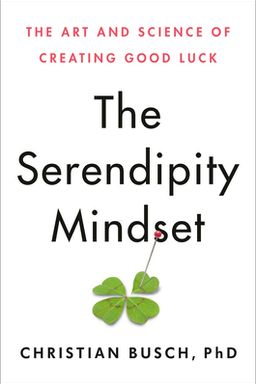
Why do some people seem to attract fortunate coincidences while others watch them slip by? In The Serendipity Mindset, Christian Busch argues that serendipity is not random luck—it’s smart luck, the ability to notice unexpected events, connect them to existing knowledge, and act purposefully to create value. Unlike passive good fortune, serendipity depends on how you think, where you look, and what you do with surprises when they arise.
Busch reframes luck as an active skillset—a cycle of curiosity, connection, and follow-through. He contends that while life is unpredictable, you can learn to cultivate conditions that make positive coincidences more likely. These include shaping environments that spark interaction, nurturing mental openness, and strengthening your capacity to act quickly on emerging possibilities.
The anatomy of serendipity
Busch defines serendipity as a three-stage process: a trigger (an unexpected event), a moment of bisociation (linking that trigger to other knowledge or ideas), and the creation of unanticipated value. When Alexander Fleming noticed mold contaminating his Petri dishes, his curiosity turned a disruption into penicillin. When Dr. Spencer Silver’s weak adhesive failed as glue, his colleagues’ imagination turned it into Post-it Notes. Each story follows the same logic: recognize the anomaly, connect it creatively, and persist until value emerges.
Busch expands this into practical types of serendipity: Archimedes serendipity (finding an unexpected route to a deliberate problem); Post-it Note serendipity (accidentally stumbling on something valuable); and Thunderbolt serendipity (discovering value in something you weren’t seeking at all). You can’t script these forms—but you can set the stage for them through open networks, diverse perspectives, and playful curiosity.
Shaping the serendipity field
Central to Busch’s model is the concept of a serendipity field—the social and mental environment in which anomalies become opportunities. This includes fostering trust-based communities, protecting "maker time" for reflection, and designing physical or digital spaces for collisions. For example, Nathaniel Whittemore’s impromptu TEDxVolcano event resulted from an ash cloud grounding flights; his readiness, network, and creative reframing turned disruption into a movement. The lesson: you can’t control chance, but you can control how ready you are to engage it.
Busch positions this in contrast to the classical entrepreneurial myth of linear planning. Instead, life unfolds nonlinearly. By tending your field—through curiosity, openness, resilience, and smart structures—you harvest outcomes that rigid plans tend to miss. Serendipity thus moves from accident to strategy, from private circumstance to a teachable mental model.
“The unexpected is only the first step—you must prepare the mind and the environment so the unexpected becomes useful.”
From mindset to movement
The book progresses from inner work—overcoming cognitive biases and cultivating curiosity—to external design—shaping networks, institutions, and communities that amplify smart luck. It blends psychology, entrepreneurship, and social innovation to show that fortune favors the connected and reflective mind. Busch’s research with startups and social enterprises (from Sandbox networks to Haier’s microenterprises) reveals that successful actors follow a shared sequence: they notice the odd, reframe the context, act fast but humbly, and persist until something valuable takes root.
Ultimately, The Serendipity Mindset invites you to replace the wish for luck with the practice of creating it. You learn to see constraints as assets, treat setbacks as raw material, use networks as discovery tools, and build organizational systems that reward curiosity. In doing so, you transform luck from superstition into skill—an ethical, repeatable way to navigate uncertainty with curiosity and courage.