
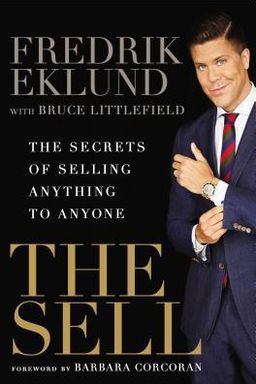
The Sell cover

The Sell

by Fredrik Eklund

The Sell reveals the secrets behind becoming a top seller, offering insights from Fredrik Eklund''s journey to becoming New York City''s premier real estate agent. Learn how to market yourself, leverage social media, and maintain a positive lifestyle to achieve unparalleled success in business and personal life.

The Art and Soul of Selling Yourself

What if selling wasn’t just about convincing others to buy—but about discovering who you really are? In The Sell: The Secrets of Selling Anything to Anyone, real-estate superstar Fredrik Eklund invites you to rethink everything you know about sales. His central claim is that you are your product. Whether you sell multimillion-dollar penthouses, freelance ideas, or even convince your kids to go to bed early, every interaction is a sale—and the success of that sale depends on how well you sell yourself.

Eklund argues that mastery of sales begins not with technique but with authenticity. His core philosophy: People don’t buy products—they buy people. Confidence, honesty, charisma, and self-awareness form the foundation for any transaction. But his approach blends psychology, self-development, and business strategy in a way that feels surprisingly human. Instead of teaching manipulation or pressure, Eklund teaches how to make people want what you’ve got by radiating passion and purpose.

From Swedish Childhood to New York Stardom

To understand Eklund’s perspectives, you need to know his story. He began selling Christmas calendars door-to-door as a seven-year-old in Sweden, hustling for a waterproof yellow Walkman. That spark of ambition led him from the icy suburbs of Stockholm to the pinnacle of New York real estate, where he now leads one of the highest-grossing brokerage teams in America. His journey—from painting apartments himself to closing billion-dollar deals—illustrates his mantra: success is a product of authenticity, enthusiasm, and persistence. He assures readers that if a Swedish kid with no connections can become the world’s top real-estate agent, you can, too.

Everyone Is in Sales

One of Eklund’s big insights is deceptively simple: everyone is a salesperson. You sell in every conversation—convincing your boss to support your idea, your partner to take a trip, your team to believe in your vision. In other words, selling isn’t about products—it’s about persuasion and influence. Every time you motivate someone to act, you’re performing “The Sell.” The skill determines whether you gain opportunities or fall behind. It doesn’t matter if you’re a teacher, artist, engineer, or entrepreneur—the ability to communicate your passion clearly and sincerely shapes how high you climb.

Success with Soul

Eklund’s vision isn’t a cold, money-obsessed one. He warns: your integrity, values, and loved ones must remain off-limits; not everything should be sold. His “important message” reminds readers that success without honesty or empathy is hollow. He believes transparency, ethical ambition, and generosity make sales—and life—richer. The subtitle about “selling anything to anyone” might sound ruthless, but the book’s heart lies in balancing ambition and authenticity. You must stay intensely driven but never sell your soul.

A Modern Sales Bible

Divided into three parts, The Sell moves from discovering yourself to mastering the pitch to expanding your empire. Part One focuses on inner transformation: be yourself, know what drives you, shadow winners, dress the part, train like a prizefighter, and make people smile. Part Two teaches outward mastery—how to build your audience, craft the perfect pitch, and close confidently. Part Three, finally, addresses long-term success: how to build teams, navigate publicity, handle failure, and enjoy the rewards.

Why It Matters

In a world drowning in self-promotion, Eklund’s lessons matter because they emphasize human connection in an age of screens and sales funnels. The book challenges you to merge personal development and professional excellence into one seamless brand: yourself. He insists that selling—when done authentically—is the most human act. Every smile, handshake, or genuine compliment becomes a micro-sale that builds trust and spreads joy. Readers finish realizing that the ultimate sale is belief—in yourself and in what you offer the world.


Be You: Authenticity Over Strategy

Eklund begins his philosophy with the most personal chapter—be you. He believes that success starts with self-awareness, not formulas or scripts. You are both the salesperson and the product, so the first step is to know what you’re selling: yourself. When you hide behind false personas, you lose the trust that fuels relationships and sales. The chapter combines memoir and pep talk, urging readers to stop watering down their true selves out of fear of what others think.

The Peril of Pretending

As a young real-estate agent in New York, Eklund tried to suppress his Swedish accent, his humor, and even his flamboyant high-kick trademark. He feared clients might not take him seriously. But the turning point came when he realized that authenticity—not imitation—makes people buy. Pretending to be someone you’re not signals insecurity; people can “smell nervousness like sharks smell blood.” Real trust comes from revealing who you are, not concealing your quirks.

Five Steps to Unleashing Your True Self

  • Look inside: identify what makes you exceptional—your humor, kindness, or strange hobbies—and use them as conversation starters.
  • Find your trademark: like his iconic high-kick, develop a memorable hallmark that expresses your personality. It’s your brand signal.
  • Get over what people think: ditch the need for approval. Happiness begins when you stop performing for others and work for yourself.
  • Know what revs your engine: identify personal motivators—achievement, power, or affiliation—and harness them intentionally.
  • Embrace failure: be open about losses and lessons. Transparency breeds connection.

The Psychology of Selling Yourself

Eklund draws on a mix of storytelling and psychology—he affectionately calls his philosophy “Freud-rik’s School of Psychodynamics”—to argue that adult insecurity stems from childhood rejection. The antidote? Reconnect with the fearless child version of yourself who found joy in self-expression. When you recover that inner spark, others feel it. “We love being around people who are comfortable in their own skin,” he writes, echoing ideas found in Dale Carnegie’s How to Win Friends and Influence People.

Turn Difference into Power

Eklund’s eccentricity has become his business superpower. He’s shown apartments to celebrities—from Leonardo DiCaprio to Jennifer Lopez—and always wins their trust by being playful yet professional. He urges readers to showcase quirks, humor, and originality unapologetically. The result? You become memorable. In a crowded marketplace, being remarkable beats being normal every time. As he puts it, “People will forgive you for being eccentric—but never for being boring.”


Know What Fuels Your Fire

After establishing authenticity, Eklund turns inward to your motivation. What drives you? He believes the secret to unstoppable success lies in understanding your personal engine. You must find the honest reason behind your ambition—money, recognition, creativity, purpose—and transform it into daily fuel. Without it, you risk running out of energy and direction.

From Jantelagen to Turbo Mode

Growing up in Sweden, Eklund rebelled against the cultural code of humility called Jantelagen, which discourages standing out. His grandmother told him, “Skit i det!”—“Screw that!” Instead of hiding his ambition, he embraced it. This decision became his propulsion system. When others feared attention, he courted it; when others scraped off the “Turbo” badge on their car to appear modest, he polished his own. The message is clear: owning your drive is the opposite of arrogance—it’s authenticity applied to ambition.

Purpose Over Paycheck

Eklund distinguishes between working for necessity and working for fulfillment. The modern worker, he insists, seeks both. Like Simon Sinek’s idea of finding your “why,” Eklund emphasizes that passion distinguishes greatness from mediocrity. Whether your fire burns for creativity, fame, or financial freedom, that passion gives life texture. If work doesn’t excite you, you’re wasting days. He wants you to design a career that energizes you—not depletes you.

Dream Big, Act Small

The book’s standout metaphor is dreaming big but taking small, actionable steps. He recalls visualizing success early—imagining himself walking through Central Park in a trench coat “as New York’s king of real estate.” Visualization, followed by micro action, turns fantasy into fact. Break down your goal—whether it’s earning your first million or launching your business—into thousands of climbable steps. Each small step, he says, is part of your “staircase to heaven.”

Different Fuels for Different Fires

Eklund contrasts his drive for achievement with his partner John Gomes’s obsession with money. Neither is wrong—each represents a different motivator. You must know yours: achievement, affiliation, or power. Once identified, you can strategically align your work around it. For Eklund, achievement pushes him to set new records constantly; for John, the thrill of the commission check keeps his energy burning. The principle is universal—know what excites you and let it power your climb.


Shadow a Winner and Learn the Game

Eklund’s advice on mentorship might be among his most pragmatic. He argues that success accelerates when you shadow someone already successful. Instead of reinventing the wheel, study winners. Work beside them, imitate their habits, then adapt them as your own. In his signature humor, he insists, “Stop sending long e-mails asking for jobs. Show up at the door with a green tea latte.”

Learning by Osmosis

After years of trial and error, Eklund realized that one day spent next to a top performer equals an entire semester of school. Shadowing lets you absorb everything unspoken—how they dress, negotiate, respond to pressure, and energize clients. This echoes apprenticeship traditions from craftspeople to modern startups (similar to Robert Greene’s Mastery), where learners mold themselves by studying their “superstars.”

Get Past the Gatekeeper

To reach a powerful mentor, you first need to charm their assistant—the gatekeeper. Be kind, curious, and creative. Eklund cites his own assistant Jordan Shea, who screens his calendar. He suggests researching gatekeepers thoroughly, making them part of the pitch, because “if you win over Jordan, you win me.” This relational insight turns networking from flattery into strategic empathy.

Flattery Done Right

Eklund teaches authentic flattery—admire something real, not something fake. When he complimented a client’s fireplace mantel, his genuine appreciation sealed the deal. Sincerity builds bridges; manipulation burns them. He insists that people “buy from people they like,” a theme echoed by Barbara Corcoran’s foreword and Dale Carnegie’s century-old wisdom.

Become Indispensable

Once inside the door, deliver excellence. Arrive early, notice details, anticipate needs, and make their success yours. Whether you’re shadowing a real-estate guru or a CEO, your job is to make yourself impossible to ignore. Eklund reminds readers that “a day shadowing a winner” can transform your career’s trajectory—but only if you act, listen, and apply what you learn with humility.


Dress the Part and Sell Your Image

Style, Eklund says, isn’t vanity—it’s strategy. Just as his mother in Sweden taught him to wrap gifts beautifully, he believes how you package yourself determines how the world receives you. “If you walk out the door not looking your best,” he writes, “it’s like presenting a Christmas gift in a brown paper bag.”

The Psychology of Presentation

Eklund connects grooming and clothing directly to confidence. Your visual appearance is the first impression—made in 250 milliseconds according to Harvard research. So he urges readers to invest in their wardrobe as seriously as they invest in their work. A well-fitted suit, a neat hairstyle, and an authentic touch (like his colorful socks) can elevate your mood and credibility simultaneously.

The Science of Style

He echoes fashion wisdom: tailor your clothes, avoid dull black and grey, use color to project confidence. Signature details make you memorable. His red-wool and denim suits, dachshund ties, and mismatched socks have become part of his brand. In marketing terms, this is your “visual logo”—a shortcut that communicates personality before you speak.

Smile as Strategy

Perhaps his simplest, most profound advice is: smile. It changes your mood chemistry, boosts endorphins, and makes you instantly more likable. Citing studies that show smiling increases trust and earnings, Eklund sees it not as superficial but biological branding—your best accessory for every meeting. “Smiling,” he writes, “is a natural drug. It sells you faster than words.”

(In this sense, Eklund parallels psychologists like Amy Cuddy in Presence, who argue that body language shapes power and confidence.)


Pitch Perfect: Selling with Emotion

Pitching, Eklund explains, is persuasion performed as art. It’s less about logic and more about emotion. Whether he’s closing a multimillion-dollar apartment or asking his partner’s parents for their blessing, his approach follows a universal rhythm: connect first, excite second, close last.

Sell Transformation, Not Transactions

Most sellers focus on features; Eklund sells futures. He doesn’t pitch square footage—he pitches who the buyer will become inside that space. By painting vivid pictures (“I can hear your dinner guests laughing in this kitchen”), he ignites emotional desire. His technique echoes Daniel Pink’s To Sell Is Human: the best pitches help people envision their upgraded selves—the 2.0 version waiting to be unlocked.

Structure of a Winning Pitch

  • Start positively—the first 30 seconds make or break everything.
  • Ask questions to build rapport and understand needs.
  • Highlight benefits with emotion, not data.
  • Acknowledge negatives briefly to build trust.
  • Finish by visualizing the transformation and prompting action.

Charm and Humor as Weapons

Humor, charm, and warmth transform pressure into partnership. When pitching, Eklund often begins with humor—sometimes giving compliments or cracking jokes—to make clients relax. People buy when they feel good, so he sells optimism before he sells property. He even incorporates playful gestures like his signature high-kick to flip stress into delight.

Emotion Beats Logic

Eklund insists that great pitching is 80% emotional connection and only 20% logic. If you can make someone feel good about their choice, logic will follow. His method blends creativity with empathy, reminding readers that every sale is fundamentally about making someone feel seen. Once you achieve that, you’ve already made The Sell.


Fail Up: Turning Setbacks Into Growth

In his later chapters, Eklund tackles failure with his characteristic candor and optimism. “Fail up,” he says, meaning use every fall as a trampoline. After all, turbulence is inevitable—especially when ambition soars high. The goal isn’t avoiding mistakes but converting them into momentum.

From Paranoia to Pronoia

He introduces the concept of pronoia, the opposite of paranoia—the belief that the universe conspires to help you. When something goes wrong, he reframes it: maybe that canceled meeting was a cosmic reminder to rest or call your grandmother. This faith in positive interpretation keeps him buoyant, echoing stoic philosophers like Marcus Aurelius who viewed obstacles as fuel for virtue.

The Seven Deadly Success Stoppers

Eklund identifies seven failure triggers: self-doubt, jealousy, impatience, disappointment, unrequited love, money anxiety, and sickness. Each can derail ambition unless consciously reframed.

  • Self-doubt: harness it as motivation. Fear signals where growth lies.
  • Jealousy: treat it as a compass pointing toward your desires, not others’ faults.
  • Impatience: remember trees—and careers—grow on their own organic timelines.
  • Disappointment: let go of expectations; lead with unconditional giving.
  • Money issues: shift focus from possession to purpose.
  • Sickness: see every setback as a reminder to savor life’s fragility.

The Art of Acceptance

For Eklund, resilience comes from acceptance and gratitude. Failure becomes seasoning—you appreciate success because of it. Like Edison’s maxim that success requires thousands of failures, he views each stumble as part of the master plan. You can’t control outcomes, but you can control perspective. “Failure,” he writes, “is like salt. It makes success taste delicious.”


Eat, Pray, Cash In: Enjoying Success Mindfully

After teaching readers how to hustle, Eklund closes with a lesson rarely found in sales books: how to enjoy success without guilt. Life, he insists, isn’t just about making money—it’s about living well and giving back. The final chapters are equal parts manifesto and meditation—his version of Elizabeth Gilbert’s Eat, Pray, Love meets Warren Buffett’s pragmatic prosperity.

Celebrate Your Wins

Eklund wants you to reward yourself for progress. From buying your favorite dinner to booking luxury travel, he believes indulgence fuels determination. Deprivation leads to burnout; celebration sustains ambition. His “Freddy’s Fun Bucket” lists ten pleasurable investments—from massages to flowers to concerts—that remind you success should feel like joy, not sacrifice.

Pay It Forward

True wealth, he says, is generosity. Use your success to uplift others. Whether you mentor newcomers or donate to causes (he supports Zimbabwe’s Forgotten Children Organization), kindness multiplies success. “There are two kinds of people,” he writes, “givers and takers. The more you give, the more you get.” Gratitude, philanthropy, and encouragement fuel a cycle of abundance.

Success with Soul

Finally, Eklund reminds you to align ambition with meaning. Work hard, yes—but use profits to enrich life. Take vacations, build relationships, and experience beauty. He describes writing the book while sitting under palm trees, sipping rum, remembering how his childhood dreams of tropical beaches became reality through persistence and imagination. The takeaway? Don’t postpone living. Success isn’t waiting at retirement’s gate; it’s available now, in moments of awe, laughter, and generosity.

The ultimate sell, he concludes, is belief in life itself.

Dig Deeper

Get personalized prompts to apply these lessons to your life and deepen your understanding.

Go Deeper

Get the Full Experience

Download Insight Books for AI-powered reflections, quizzes, and more.