
Idea 1
The Gene’s Eye View of Life
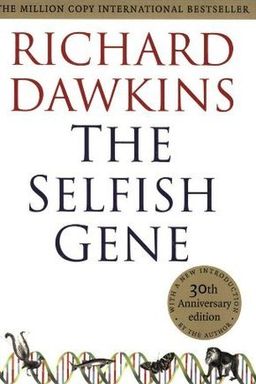
What does it mean to say that life evolves not for the good of species but for the interests of genes? In The Selfish Gene, Richard Dawkins revolutionizes how you see evolution. He argues that the fundamental units of natural selection are not organisms or groups, but genes—pieces of DNA that persist by making copies of themselves. You, and every living creature, are temporary survival machines built by genes to protect and propagate their information.
From Replicators to Survival Machines
Dawkins begins with chemistry: life emerged from a primordial soup where simple molecules occasionally replicated imperfectly. Those replicators that copied with higher fidelity and greater fecundity became more common. Over time, some discovered how to build protective structures—cells, bodies, and elaborate machinery—to ensure their replication. Every eye, wing, and instinct is a gene’s unconscious design, shaped by natural selection acting on survival machines in which these replicators ride.
Redefining the Unit of Selection
Genes are not fixed molecular entities but evolutionary units—segments of DNA likely to persist intact across generations. Crossing-over in meiosis constantly reshuffles chromosomes, but short functional units survive these recombinations. From a gene’s-eye view, organisms are mosaics of cooperating genes temporarily assembled to ensure mutual replication. This reframing clears up confusion between individual and group interests: what matters is whether a gene increases its representation in the population, not the fate of the body carrying it.
Selfishness, Altruism, and Apparent Paradox
A 'selfish gene' can produce altruistic organisms. When a bee dies defending its hive, or a bird gives an alarm call that endangers itself, those behaviours make sense if they benefit other carriers of the same gene. Dawkins dismantles group selection—the idea that individuals act for species’ benefit—and replaces it with genetic reasoning: altruism evolves when the cost to the actor is outweighed by the benefit to relatives who share the gene (W. D. Hamilton’s rule). Seen this way, cooperation, sacrifice, and even parental love are products of unconscious genetic strategies.
Behavior and Strategy in a Genetic World
You learn that gene-centered evolution naturally leads to strategic behaviour. Game theory (John Maynard Smith’s evolutionary stable strategy) explains why animals seldom fight to the death: conditional strategies like retaliator or prober-retaliator stabilize conflict. Parental investment theory (Robert Trivers) reframes reproduction as resource allocation; kin selection and parent–offspring conflict become predictable when you understand how each party’s genetic stake differs. Dawkins integrates all of these threads—conflict, cooperation, and deceit—into one logic: genes exploit bodies as tools in pursuit of replication.
Extending Evolution Beyond Genes
Finally, Dawkins invites you to extend the logic beyond biology. Memes—units of cultural transmission—also replicate through imitation and communication. Cultural evolution follows the same principles of differential survival, variation, and inheritance. Genes produce extended phenotypes—their effects ripple into nests, dams, songs, and even the manipulation of other organisms. Whether biological or cultural, every adaptive structure is best understood by asking the same question: whose replication does this behaviour serve?
Core Insight
Life’s complexity emerges from simple principles: replicators persist when they make effective vehicles. Genes are timeless strategists, shaping bodies, behaviours, and cultures to ensure their survival through endless cycles of copying and change.
By the end, Dawkins replaces the comforting narrative of organisms striving for species’ good with the exhilarating clarity of replicator logic. You see evolution as an algorithm of blind design—a world driven not by conscious purpose but by the arithmetic of survival at the genetic level.